Pesticides in Drinking Water: What to Test For and Why
Pesticides used on farms, lawns, and golf courses can sometimes
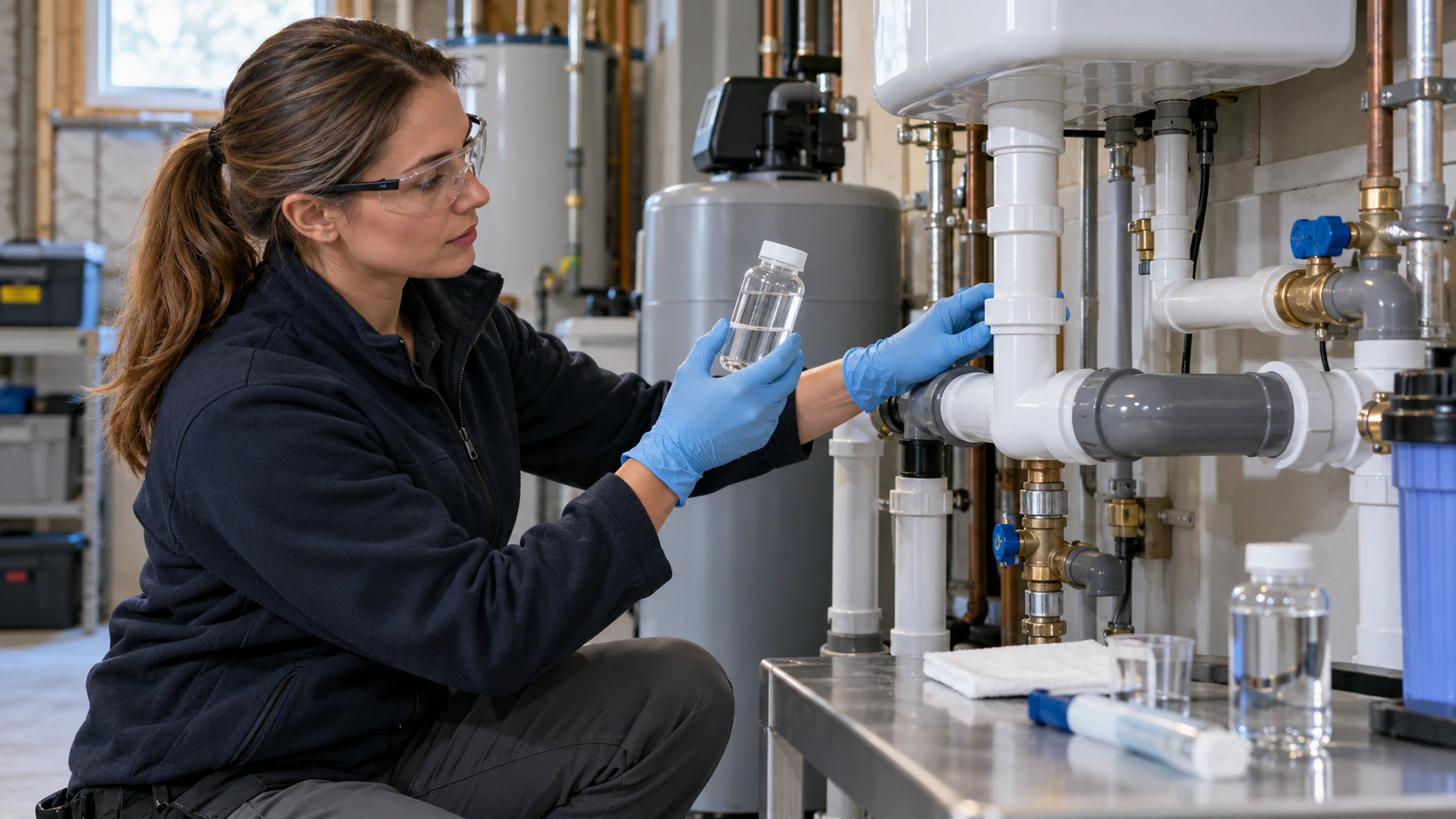
Pesticides used on farms, lawns, and golf courses can sometimes make their way into nearby water sources. This is especially concerning for private well owners, since a public utility doesn't routinely monitor their water.
But testing for pesticides isn't as simple as ordering one general water test. Many types of pesticides exist, and different laboratory tests detect different chemicals.
At ETR Laboratories, we offer several testing options for pesticides and herbicides. Below, we'll explain which chemicals may be present in drinking water, how to choose the right test, and what your results mean.
Pesticides are used to control weeds, insects, fungi, and other pests. While they help protect crops and maintain outdoor spaces, some can move beyond the areas where they're applied.
Rainfall, irrigation, and improper chemical handling can carry pesticides into nearby streams, reservoirs, or groundwater. According to the National Pesticide Information Center (NPIC), pesticide contamination can occur in both agricultural and urban areas.
Some older pesticides, including DDT, aldrin, and dieldrin, can remain in the environment long after their use has stopped.
Several factors can increase the chance of pesticides entering a private well:
The risk depends on the pesticide, soil type, groundwater depth, and well construction. Montana State University Extension notes that shallow wells may be more vulnerable to pesticide contamination.
Yes, heavy rainfall can increase the movement of certain pesticides through soil or across the ground, especially after recent applications.
However, the effect depends on local conditions and the chemical involved. Some pesticides break down quickly, while others can remain in soil or groundwater for longer periods.
If you suspect contamination following heavy rain or a nearby pesticide application, contact your local health department or extension service for advice on which chemicals to test for and when to collect a sample.
The right pesticide test depends on which chemicals may have been used near your water source. For example, pesticides used on farms may differ from those applied to residential lawns or golf courses.
Laboratories also use different testing methods for different chemical groups. That's why it's important to know which substances are included in a water testing panel before ordering.
Organochlorine pesticides were widely used in the past, but many have since been banned or restricted because they can persist in the environment.
These chemicals may still be a concern in areas with a long history of agricultural use or pesticide contamination.
ETR Laboratories' Pesticides Water Test ($200) checks for 18 organochlorine pesticides, including aldrin, chlordane, DDT, dieldrin, endrin, heptachlor, methoxychlor, and toxaphene.
Herbicides are pesticides designed to control unwanted plants and weeds. They're commonly used in agriculture, landscaping, and lawn maintenance.
Some herbicides can reach water sources through runoff, spills, or movement through soil.
Our Herbicides Water Test ($200) checks for three specific chemicals: 2,4-D, 2,4,5-TP, and 2,4,5-T.
Some pesticides used in agriculture are not covered by basic organochlorine or herbicide panels.
For example, atrazine, simazine, alachlor, and metolachlor are herbicides associated with agricultural applications. Other compounds, including chlorpyrifos and lindane, have different uses and regulatory histories.
For broader testing, ETR Laboratories offers:
Not every agricultural pesticide is included. If you're concerned about a specific chemical, check the full analyte list or contact our team before ordering.
Glyphosate is a widely used herbicide, but it requires specific consideration when selecting a water test.
Our current online pesticide and herbicide panels do not list glyphosate among the chemicals they measure.
If glyphosate is your main concern, contact ETR Laboratories to confirm available testing options before ordering a panel.
For more background, read our article on glyphosate and public water testing.
If you don't know which pesticides have been used nearby, start by checking with your local agricultural extension office or state environmental agency. They may be able to identify chemicals commonly applied in your area. You can then compare those chemicals with the laboratory's analyte list and choose a test that covers them.
Not every private well needs the same pesticide testing schedule. Your risk depends on nearby land use, well construction, and any known contamination in the area.
Consider pesticide testing if:
Pesticide levels can change throughout the year, especially after applications or periods of heavy rainfall.
Testing after the local application season may help identify seasonal contamination. However, the best time depends on the chemicals used, soil conditions, and groundwater movement.
If you're testing after a known spill, seek advice from your local health department before collecting a sample.
For more information about agricultural contamination, see our guide to testing well water for agricultural runoff.
Which ETR Test Fits Your Situation
ETR Laboratories offers several testing options for pesticides, herbicides, and other organic chemicals. The best choice depends on the substances you're concerned about and the testing coverage you need.
| Water test | Price | Chemicals tested | Best suited for |
| Pesticides Water Test | $200 | 18 organochlorine pesticides, including DDT, aldrin, and dieldrin | Concerns about older, persistent pesticides |
| Herbicides Water Test | $200 | 2,4-D, 2,4,5-TP, and 2,4,5-T | Testing for these specific herbicides |
| Semi-VOCs Water Test | $500 | More than 100 semi-volatile organic compounds, including listed pesticides | Broader testing for organic contaminants |
| Environmental Scan | $695 | Listed pesticides, herbicides, and other environmental chemicals | Concerns about multiple types of contamination |
| Ultimate Well Water Test | $899 | 249 substances, including listed pesticides and herbicides | Comprehensive well water testing |
Before ordering: Check the full list of chemicals included in each test. A larger panel doesn't automatically include every pesticide, and a compound missing from the analyte list will not be covered.
If you're unsure which test to choose, our water quality experts can help you review the options. You can also browse our water testing kits or read our guide to choosing the right water testing panel.
Laboratories use analytical methods that can detect specific pesticides at very low concentrations. The method depends on the chemicals being tested, since pesticides have different chemical properties.
Common laboratory techniques include gas chromatography and liquid chromatography, often combined with mass spectrometry. These methods help identify and measure individual compounds in a water sample.
Each testing method has its own detection capabilities, which is why pesticide panels cover specific lists of chemicals rather than every pesticide on the market.
When choosing a laboratory test, check that it includes the compounds you're concerned about and uses reporting limits low enough for the relevant drinking water guidelines.
Your laboratory report should identify the pesticides tested, their measured concentrations, and any substances that were not detected.
Pesticide concentrations are often reported in micrograms per liter (µg/L), which is equivalent to parts per billion (ppb) in water.
To understand your results, pay attention to three things:
The EPA sets maximum contaminant levels (MCLs) for certain pesticides in public drinking water systems.
For example, the EPA's drinking water regulations establish limits of:
Private wells are not covered by these federal public water system requirements, although state and local rules may apply. The EPA limits can still provide useful reference points when reviewing private well test results.
Our guide to MCL vs. MCLG explains the difference between enforceable limits and health-based goals.
A "not detected" result means the laboratory did not find the pesticide at or above the applicable detection or reporting threshold. It doesn't necessarily mean the chemical is completely absent.
For example, a test with a reporting limit of 1 ppb may not be able to reliably report a concentration of 0.5 ppb.
Our guide to detection limits and non-detect results explains how to interpret these findings.
Not every pesticide has an EPA maximum contaminant level. Some older chemicals, including DDT, aldrin, and dieldrin, do not have federal MCLs under the current national primary drinking water regulations.
For these substances, look for applicable state guidelines, EPA health advisories, or other official health-based values.
If you're unsure how to interpret a result, contact your state or local health department for guidance.
You can also follow our step-by-step guide to reading a water test report to understand the measurements in your laboratory results.
If your water test detects a pesticide, the next steps depend on the chemical and its concentration. A detection doesn't automatically mean your water is unsafe, but you should review it against the appropriate drinking water guidelines.
Here's what to do:
Not all treatment systems remove the same chemicals. Our guide to well water treatment options covers common methods and their applications.
After installing treatment, retest your water to check that the system is reducing the pesticide of concern.
Proper sample collection is important for accurate pesticide testing. Different laboratory methods may require specific bottles, preservatives, and shipping conditions.
Always follow the instructions included with your ETR Laboratories test kit. Do not rinse the sample bottles, as some may contain preservatives needed for the analysis.
For general sampling instructions, see our guide to collecting a water sample.
Most household water test strips cannot reliably detect pesticides at the low concentrations relevant to drinking water. Laboratory analysis is generally needed to identify specific pesticide chemicals. You can collect a sample at home using a mail-in test kit, but the actual analysis is performed in a laboratory.
No. Boiling is not a reliable method for removing pesticides from drinking water. Although it can kill many harmful microorganisms, it does not reliably eliminate chemical contaminants. Some dissolved chemicals may become more concentrated as water evaporates. Learn more in our guide to what boiling water can and cannot remove.
There is no single pesticide testing schedule that applies to every private well. Testing may be recommended more often if your well is near agricultural land, pesticide application areas, or known contamination. A nearby spill or significant change in local pesticide use may also justify additional testing. Check your state or local health department's guidance for recommendations specific to your area.
Yes. Public water systems must monitor certain pesticides regulated under federal drinking water standards. However, routine testing doesn't include every pesticide. You can review your utility's annual Consumer Confidence Report to learn about reported water quality results and contact the utility if you're concerned about a specific chemical.
There is no single safe concentration for all pesticides. Each chemical has different health risks, and some have specific EPA drinking water limits. For example, the federal limit for atrazine is 3 ppb, while the limit for 2,4-D is 70 ppb. Other pesticides may have state-specific guidelines or health advisories instead of federal limits.
If you know which pesticide you're concerned about, choose a laboratory test that specifically includes it. ETR Laboratories offers separate panels for certain organochlorine pesticides and herbicides, along with broader tests for additional organic chemicals. If you're unsure what may be present, contact our team to discuss the most suitable testing options before ordering.
Not sure which pesticides may be present in your water? ETR Laboratories offers testing for several pesticide and herbicide groups, including our Pesticides Water Test and Herbicides Water Test.
We also offer broader testing panels that cover additional chemicals. Every test includes a free consultation with our water quality experts to help you understand your results.
If you need testing for a specific pesticide, call us at 800-344-9977 before ordering to confirm that it's included.
For more information about other chemicals that may affect drinking water, read our guide to emerging contaminants.