Free Shipping on Orders of $100 or More

Pesticides Water Test

$200.00

This test screens for pesticides in water from 18 organochlorine compounds, including DDT, chlordane, aldrin, dieldrin, lindane, and toxaphene. These older insecticides break down very slowly, so they can still reach wells decades after they were used. It is a good fit for homes on former farmland or orchards, properties near golf courses, and older houses where chlordane may have been used for termite control.

This panel does not include weed killers. If you want 2,4-D and related compounds checked too, our Herbicides Water Test is the companion test, and both can come from the same trip to the tap. Weed killers such as 2,4-D are a different chemical family from these older insecticides, so the two panels answer separate questions.

What are pesticides in water?

Organochlorines are an older family of insecticides built around carbon and chlorine, a structure that makes them last for decades. They cling to soil particles and can slowly work down into groundwater.

Here are common sources:

  • Old farm fields and orchards
  • Chlordane injected around foundations for termites
  • Past dumping or spills where pesticides were stored

Sandy soil, a shallow water table, and a well with a short casing all make it easier for these compounds to reach your tap. National groundwater studies by the USGS have found pesticides or their breakdown products in a large share of sampled wells, usually at low levels.

Is this test right for me?

This test is a good match for wells on or near former farmland or orchards, homes near golf courses, and older houses where chlordane may have been used for termite control. It also helps when you are buying rural property and nobody knows how the land was used.

DDT, aldrin, dieldrin, and chlordane were banned or restricted decades ago, so a well can carry them even if no one has sprayed nearby in your lifetime.

Studies of golf courses have found turf pesticides in some groundwater below them, usually under health limits. Our golf course pesticide article covers what that research found.

Shipping info

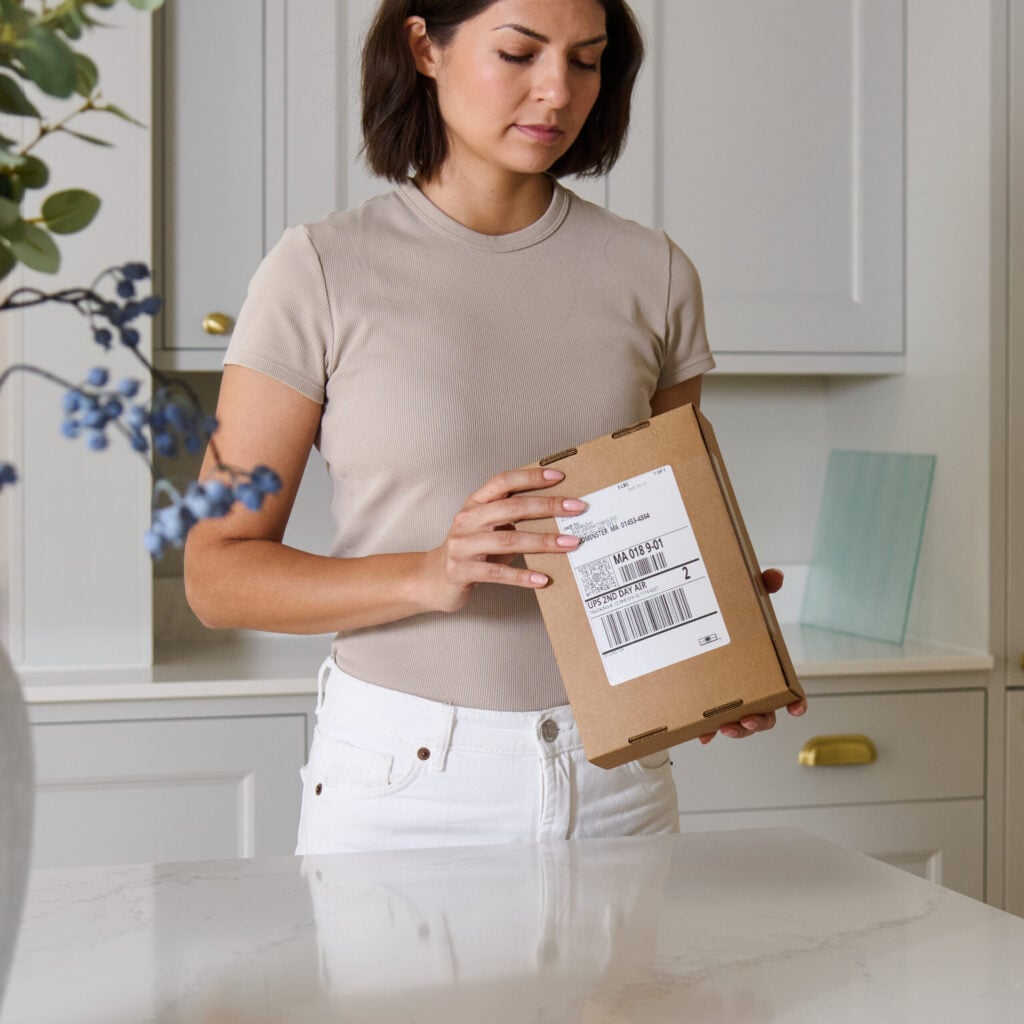
This test ships free to you, and the prepaid label in your box covers the trip back to our lab. Collect and ship as soon as possible after sampling, and keep the box out of direct sun and heat while it waits for pickup. Please pack the bottles snugly so they do not shift in transit.

Tested in Our Accredited Lab

We analyze your sample in our accredited lab, using established testing methods and quality controls.

We have tested water since 1995.

Free Expert Consultation

Every test includes a free consultation with one of our water experts. We go over your results with you, explain what the numbers mean for your home, and help you decide on the appropriate next step, including any filtration approach.

What does this test check for?

Results are reported in micrograms per liter (ppb).

  • Aldrin
  • alpha-BHC, beta-BHC and delta-BHC
  • gamma-BHC (lindane), EPA limit 0.2 ppb
  • Chlordane, EPA limit 2 ppb
  • 4,4'-DDD, 4,4'-DDE and 4,4'-DDT
  • Dieldrin
  • Endosulfan I and endosulfan sulfate
  • Endrin (EPA limit 2 ppb) and endrin aldehyde
  • Heptachlor (EPA limit 0.4 ppb) and heptachlor epoxide (0.2 ppb)
  • Methoxychlor, EPA limit 40 ppb
  • Toxaphene, EPA limit 3 ppb

These compounds are also part of our Ultimate Water Test.

Order Kit

Ships free to your door
Collect Sample

Takes under 5 minutes

Ship to Lab

Free return shipping

Get Results

Expert Consultation

Order Kit

Ships free to your door

Collect Sample

Takes under 5 minutes

Ship to Lab

Free return shipping

Get Result

Expert Consultation

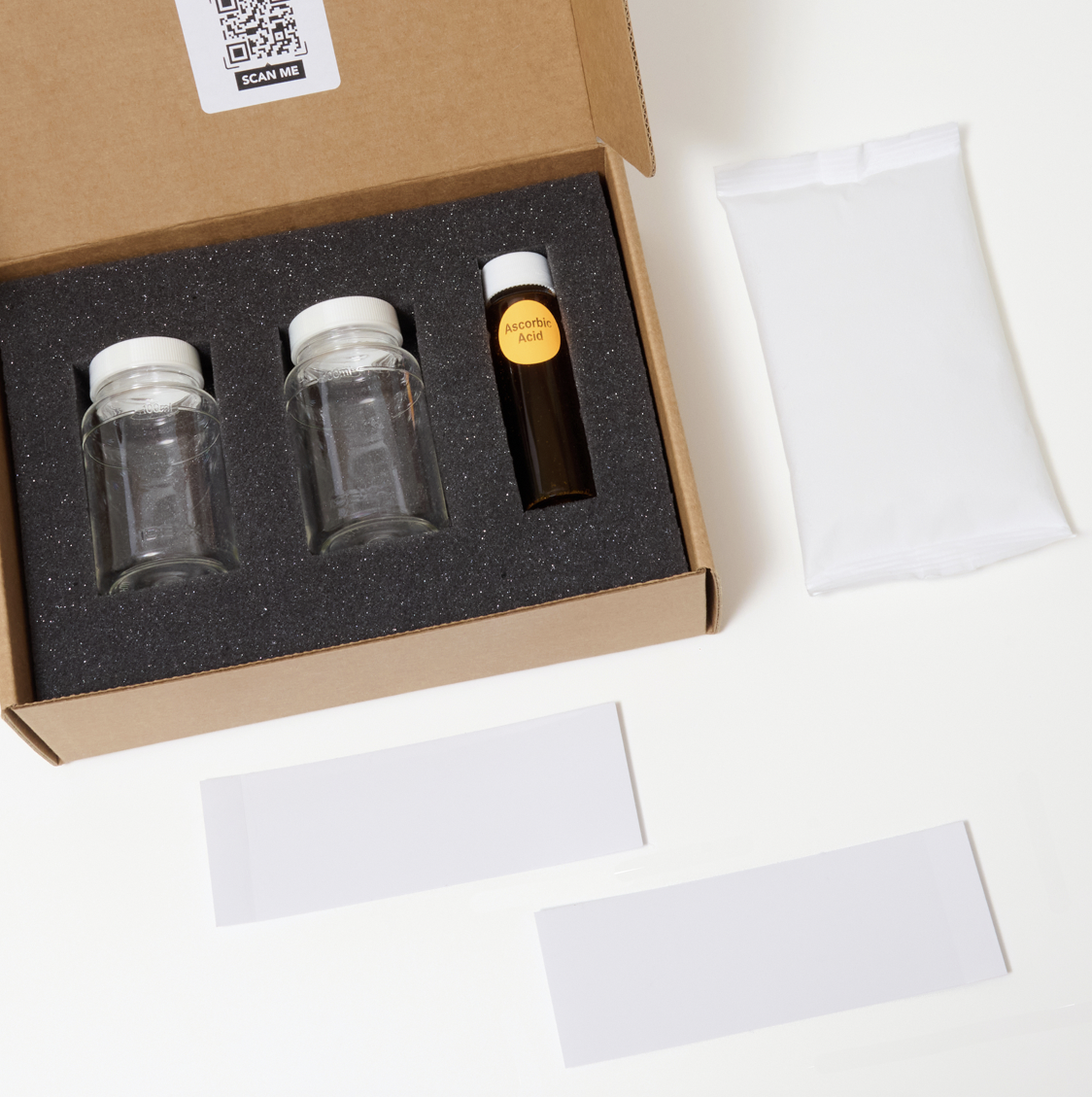
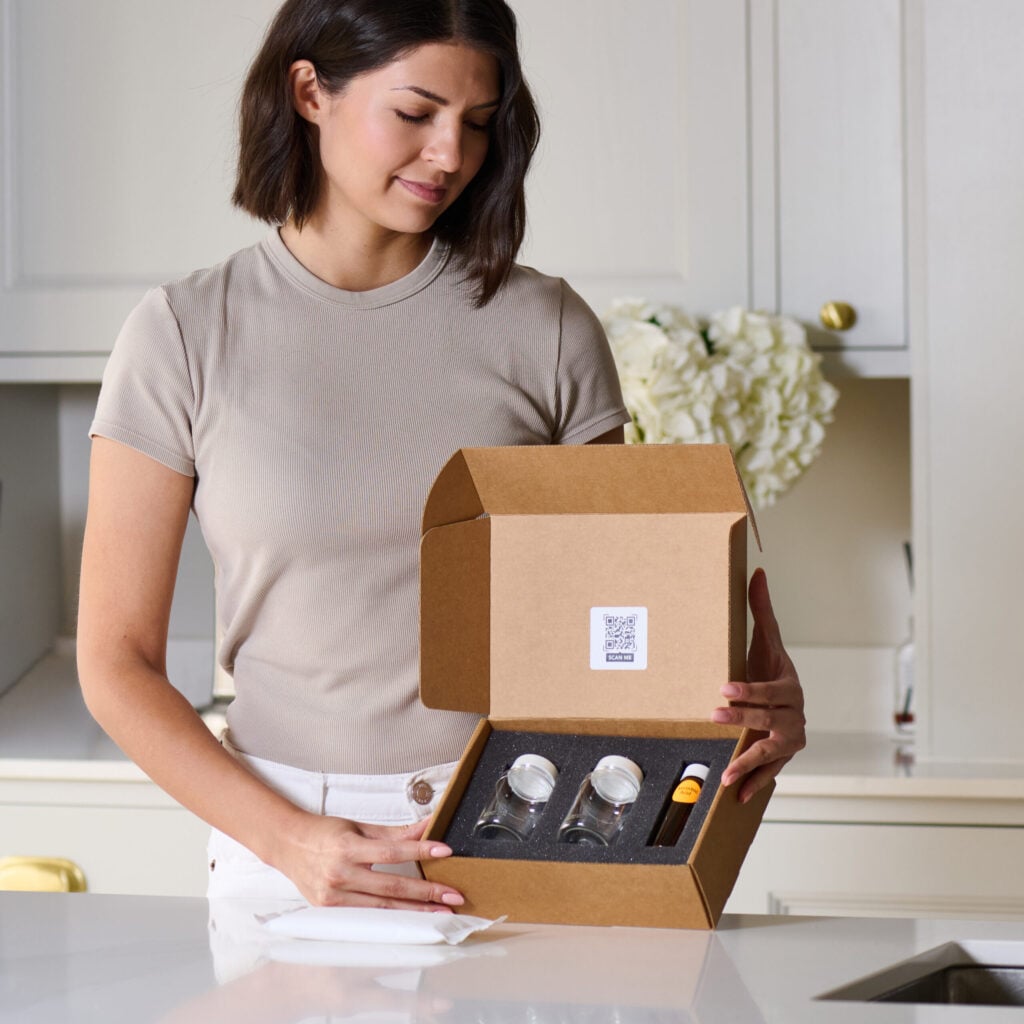
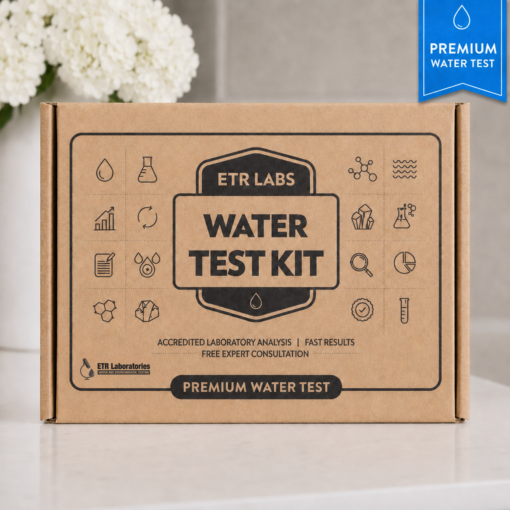
What’s Inside Your Testing Kit?

Sampling Instructions

Every test comes with step-by-step instructions on how to prepare your water source, collect your water sample, and prepare your sample for return shipment to our lab.

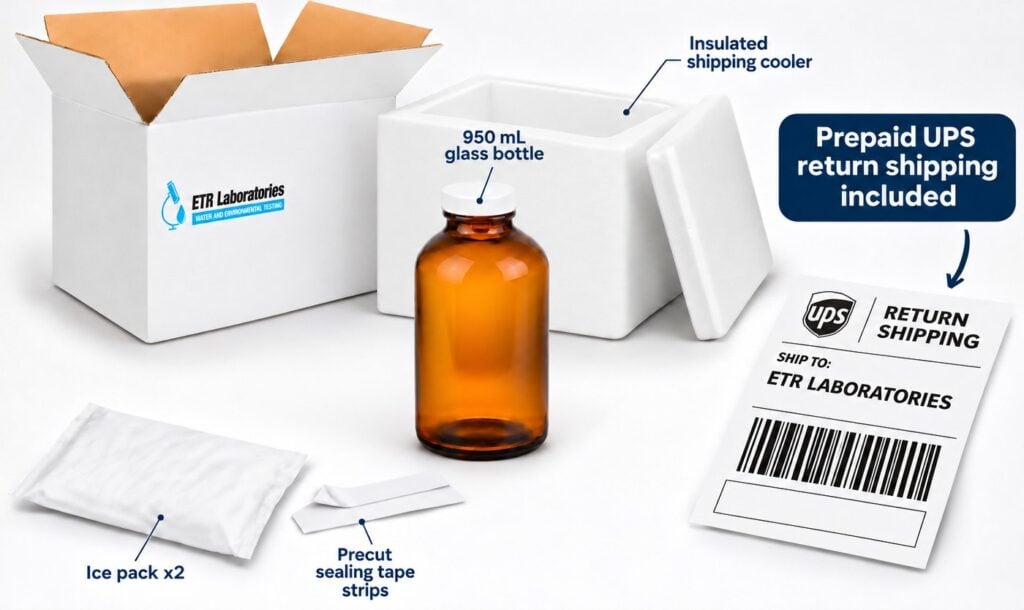
Single 950 mL Glass Bottle Kit

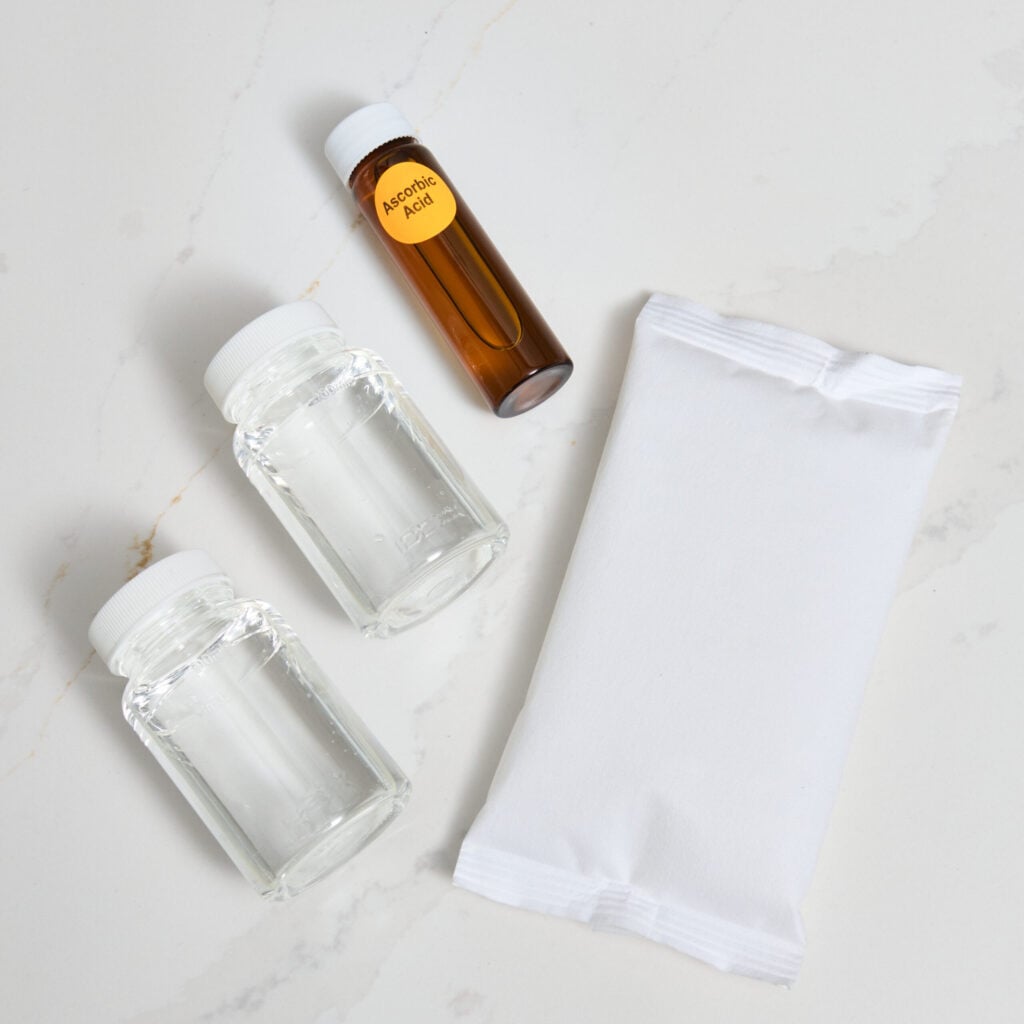
The appropriate sample containers are provided with sterility and sample volume requirements taken into consideration.

Sample Information Form

A short form to fill out with basic information about your water source. This helps our lab technicians process your results accurately.

Prepaid Shipping Label

A pre-paid return shipping label is included — just drop the sealed package in any mailbox or hand it to your mail carrier. No extra cost.

Single 950 mL Glass Bottle Kit

Our Reviews

★★★★★
ANGI

“The test was simple—collect a water sample from a faucet in the home. We sent the test to the lab and received a water quality analysis within a few days. The test included analysis of the water sample for the presence of: coliform bacteria, E. coli, iron, lead, pH, turbidity, and nitrates/nitrites.”

Taylor L.

★★★★★
TRUSTPILOT

“Incredible lab, they really care about their customers. As someone who doesn’t know a whole lot about water quality, they took their time to help me understand everything about my water quality situation.”

Brad R.

★★★★★
GOOGLE

“I’ve used ETR for several tests, both water and air. The test kits are easy to understand and the reports are very comprehensive. But what really makes them stand out is their quality of service. There is a lot of terminology in these reports that I don’t understand, but their staff is very knowledgeable and always available to assist. They really take their time to review the results with you on the phone, and answer any questions you may have.”

John T.

4.8

Average Rating

across all platforms

500K+

Water Tests Sold

nationwide since 1995

342+

Reviews on Angi

verified homeowner reviews

Why Choose ETR Labs to Test Your Water

Results You Can Trust

Accuracy is at the core of everything we do, and through strict quality standards and a commitment to scientific excellence, we deliver results you can trust.
 

No Middleman

We run every test inside our own lab in Leominster, Massachusetts. Your results come straight from us, not a subcontractor. That keeps our pricing fair and our quality consistent across every kit we send out.

Free Follow-Up Consultations

Most labs stop at handing you a report. We do not. Every result comes with a free call to one of our water quality experts, so you understand what your numbers mean and what to do next.

Respected Name in the Water Industry

ETR Laboratories has run water tests for over 30 years. We hold membership in the national Water Quality Association and the Massachusetts Ground Water Association.

We're Trusted by Our Customers

Our reviews reflect the work we do. We hold a 4.8 out of 5 rating on Google, a 4.8 out of 5 rating on Angi from 342 reviews, and five-star ratings on Trustpilot.

Our Recommended Test

We recommendPremium Water Test

Premium Water Test

Our Premium Water Test screens your water for 113 substances in one round, including bacteria, radon, heavy metals, and industrial chemicals, providing homeowners and landlords with a thorough assessment for peace of mind. We have run…

  • Bacteria
  • Radon
  • Heavy Metals
  • Industrial Chemicals
  • Minerals & Water Attributes
$249.00

FAQs

Are pesticides in drinking water harmful?

They can be, depending on the compound, the amount, and how long you drink it. Long-term exposure to organochlorines has been linked to effects on the nervous system, liver, and hormones, and some are classed as possible or probable carcinogens. Because these compounds build up in fat over time, steady low-level drinking is the concern rather than a single glass. A detection well below the limit carries much lower risk, but it is still useful to know the compound is there.

How much pesticide in water is too much?

The EPA limits are tiny. Lindane and heptachlor epoxide are capped at 0.2 ppb, heptachlor at 0.4 ppb, chlordane and endrin at 2 ppb, toxaphene at 3 ppb, and methoxychlor at 40 ppb. These limits are set with a safety margin for lifelong drinking. Any detection still shows the compound is reaching your well, so a yearly retest helps you track it.

Can you filter pesticides out of water?

Yes, for many of them. Treatment options exist that reduce organochlorine pesticides. The right type and size depend on which compounds are present and at what level, so our free consultation helps you decide on the appropriate filtration approach. Testing first tells you what you are treating, and a second test after installation confirms the system is doing its job.

Does this test check for glyphosate or atrazine?

No. This panel covers 18 organochlorine insecticides. Atrazine is part of the semi-volatile organic compound list in our Ultimate Water Test, and glyphosate is not on either test. If weed killers are your main concern, our Herbicides Water Test covers 2,4-D, 2,4,5-TP, and 2,4,5-T, and you can add it to the same order.

How long does it take for pesticide-contaminated water to make you sick?

For the low levels usually found in wells, there are no quick symptoms. The concern with organochlorines is long-term exposure over months and years, since they build up in body fat. High-level poisoning from a spill is a different situation and needs immediate medical care. For everyday wells, testing gives you the information to act before exposure adds up.

Do pesticides in water affect children more?

Children may be more sensitive, because they drink more water for their body weight and their nervous systems are still developing. The EPA sets its limits with sensitive groups in mind, using safety margins for lifelong exposure. For households with young children or a pregnancy, any detection is worth discussing during your free consultation. A retest every year or two shows whether a detected level is steady, falling, or rising.

Are pesticides more likely in well water than city water?

Wells are more exposed. Public water systems must test for regulated pesticides and meet EPA limits, and their yearly water quality reports list any detections. Private wells have no required testing. Shallow wells in sandy soil near farmland, orchards, or old termite-treated foundations are the most likely to pick up residues. Our lab test is the only way a well owner learns which pesticides in water, if any, are reaching the tap.

Does boiling water remove pesticides?

No. Boiling does not break down organochlorine pesticides, and as water steams away, the residue left behind becomes slightly more concentrated. Boiling helps against germs, but it does nothing useful for these chemicals. If a test finds pesticides, bottled water for drinking and cooking is a sensible stopgap. Our free consultation then helps you decide on the appropriate filtration approach, and a retest after installation confirms it is working.

Statement of Confidentiality

No shared results. Our laboratory holds our clients privacy to the highest regard, your results and information will never be shared. Be aware that state certified laboratories may be required to report your results to various government agencies.