Baseline Water Test Before Nearby Drilling or Mining
A lease offer arrives, a permit notice goes up, or
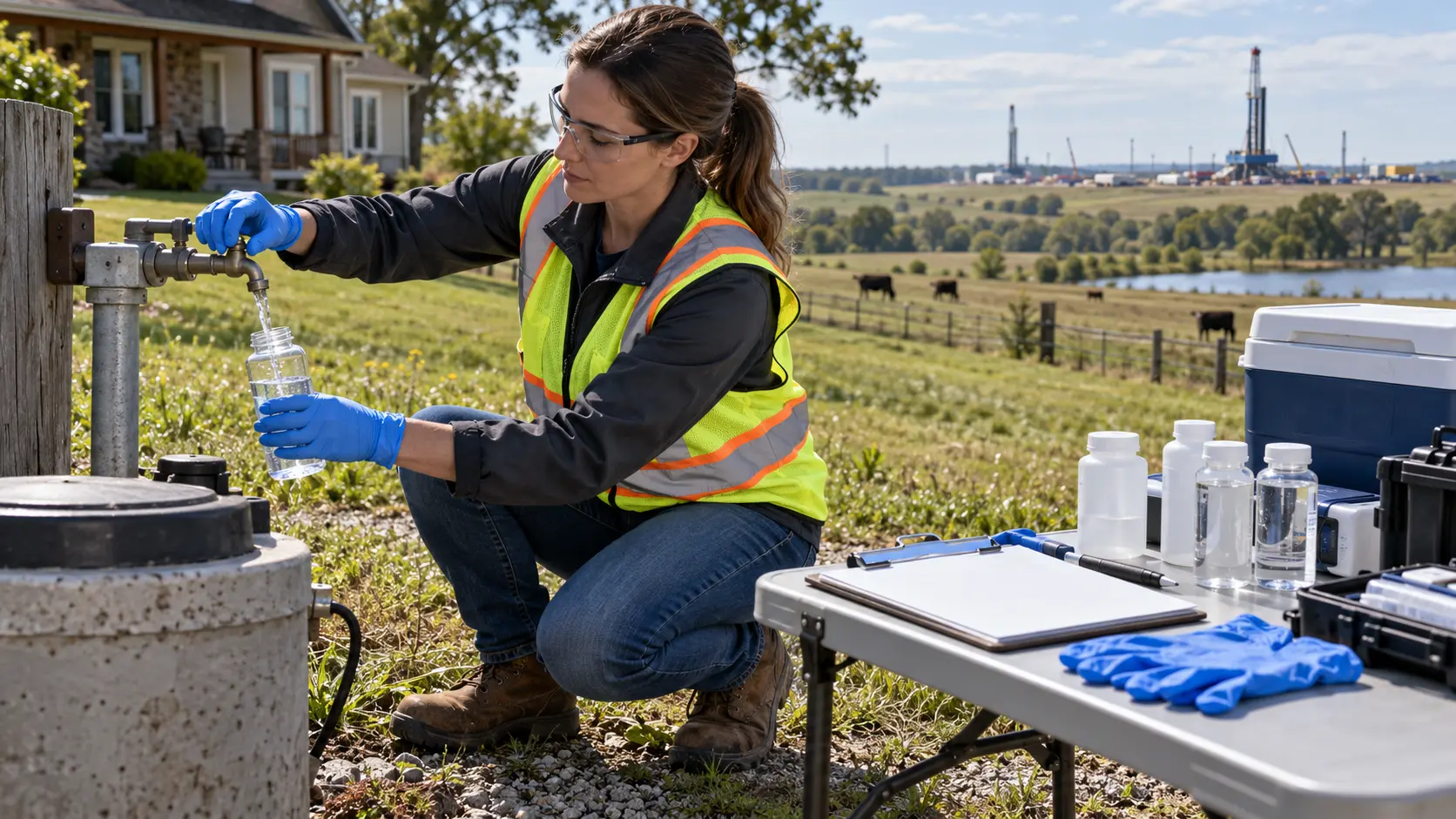
A lease offer arrives, a permit notice goes up, or a drill rig appears down the road, and you realize nobody has a record of what your well water looked like before any of it started.
Baseline water testing before drilling gives you that record. A laboratory tests your water before nearby activity begins so that later results have something to be compared against.
At ETR Laboratories, we test private well water by mail from our lab in Leominster, Massachusetts. In this article, we cover when to test, what to include for oil and gas or mining, how to build a panel, and why collection matters if you may need to rely on the results later.
If a project has already finished, our guide to well testing after nearby construction is the better fit.
A baseline water test is a laboratory analysis collected before drilling, mining, quarrying, or another nearby activity begins. It records your baseline well water quality so later results can be compared with the starting condition. A first test collected only after something changes cannot show what was already present beforehand.
The Kansas Geological Survey describes baseline sampling as establishing the pre-existing quality of groundwater. Ohio State University Extension similarly explains that pre-drilling results give a landowner a record of water quality before drilling.
A pre-drilling water test is therefore a record, not a prediction or proof of future contamination.
The U.S. EPA’s hydraulic fracturing assessment concluded that hydraulic fracturing activities can affect drinking water resources under some circumstances, while also noting limitations in the available data.
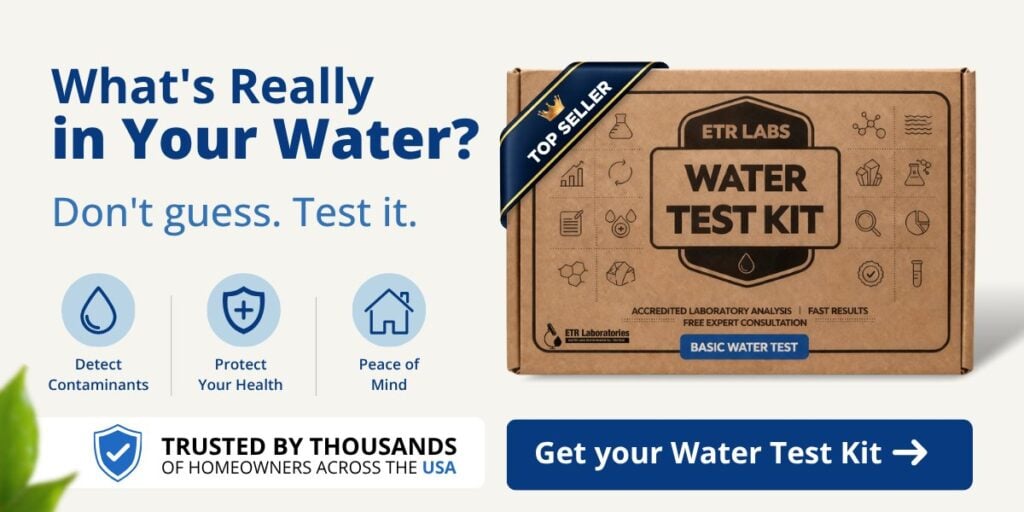
Test before nearby activity begins. The more time you have to establish your normal water quality, the more useful the baseline can become.
NDSU Extension guidance on oil-development areas recommends collecting baseline water samples roughly 2 to 12 months before activity, then collecting another sample around two months after drilling begins. Guidance referenced by High Country News from a Colorado well-water program recommends beginning at least six months before nearby oil and gas activity when possible.
These are examples from particular programs, not universal legal requirements, but they show why waiting until the drill rig is already operating can weaken the value of a baseline.
A practical timeline is:
There is no single retesting schedule that applies everywhere. The Kansas Geological Survey notes that timing depends on the situation. Our guide to why well water test results change over time explains why season, rainfall, and other conditions can also affect results.
For oil and gas activity, a baseline usually includes general mineral chemistry, salts, selected metals, and volatile organic compounds.
If you are looking for well water testing near fracking, published guidance gives a useful starting point.
The Kansas Geological Survey lists parameters such as:
Its second tier also adds benzene, toluene, ethylbenzene, xylenes, and isopropanol.
Ohio State University Extension similarly lists total dissolved solids, chloride, sodium, barium, pH, strontium, and conductivity, and identifies dissolved methane as another useful indicator.
ETR’s Premium Well Water Test lists many of those parameters, including barium, strontium, chloride, nitrate, sulfate, sodium, pH, conductivity, total dissolved solids, benzene, toluene, ethylbenzene, and xylenes.
ETR’s current well panels do not list dissolved methane, bromide, or diesel range organics. If your lease, state regulator, or local program calls for one of those, contact us before ordering to discuss what is available.
For standalone additions, ETR offers a VOC drinking water test and a total petroleum hydrocarbons test. Because a TPH test is not automatically the same thing as a state-specific drilling baseline, confirm that it fits your situation before ordering.
Water testing before mining or quarrying usually emphasizes metals, minerals, pH, sulfate, total dissolved solids, sediment, and radiological parameters that depend on the local rock.
EPA guidance on mine drainage explains that water quality effects depend heavily on rock mineralogy and the availability of water and oxygen. Acid mine drainage can also mobilize metals from mine waste.
Useful components may include:
Quarry blasting can add a physical well concern as well. Vibration or nearby construction activity can affect well components, so inspecting the well cap and casing alongside testing may be useful.
ETR’s well panels do not list radium or gross alpha, so ask the lab if your regulator or local geology makes them necessary.
A well panel can provide the core chemistry, with separate tests added for concerns that are not included.
| Panel | Price | Substances | What It Lists |
| Basic Well Water Test | $179 | 53 | Bacteria, metals including barium, strontium and uranium, nitrate, sulfate, chloride, pH, conductivity, total dissolved solids, and radon |
| Premium Well Water Test | $249 | 113 | Everything in Basic plus VOCs such as benzene, toluene, ethylbenzene, and xylenes |
| Ultimate Well Water Test | $899 | 249 | Everything in Premium plus additional compounds including SVOCs, herbicides, and pesticides |
For many landowners near oil or gas activity, the Premium panel is a useful starting point because it adds VOC coverage to the minerals and metals found in the Basic panel. Basic offers a narrower screen without VOCs, while Ultimate provides the broadest of the three well panels.
Our Basic, Premium or Ultimate panel guide explains the differences in more detail.
For broader industrial or agricultural pollution concerns, ETR also offers an Environmental Scan for $695. It is a broad screen, not a state-specific drilling or mining baseline.
ETR provides laboratory testing rather than treatment equipment. The purpose here is to document what is in the water before deciding whether any further action is needed.
Order your baseline early enough that there is a record before nearby activity begins.
If you may need to rely on a result in a dispute, how the sample was collected and documented matters.
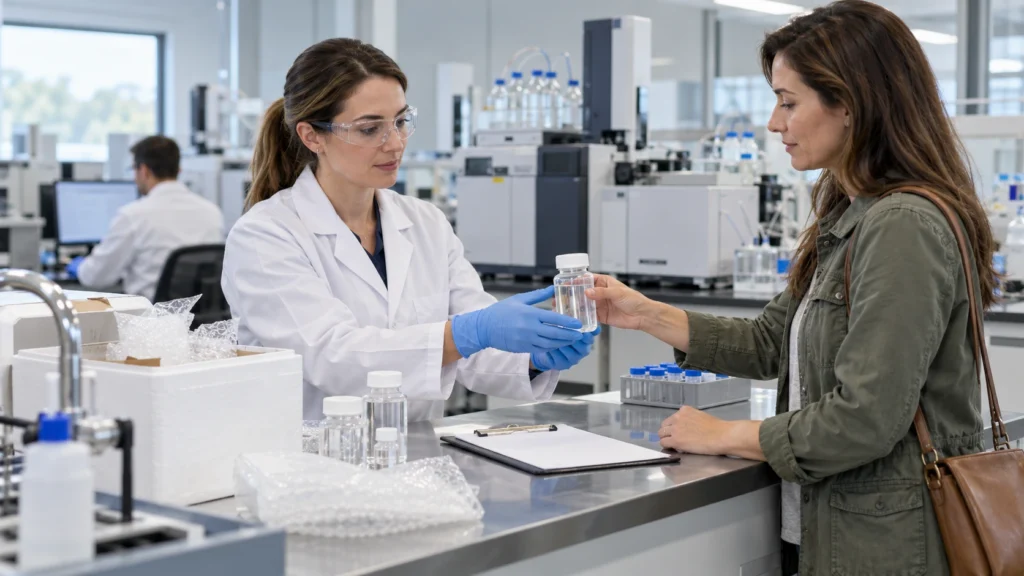
A sample you collect yourself may be useful for your own decisions, but it does not provide independent evidence of who collected it or how it was handled.
Chain of custody is a written record showing who held the sample, when it changed hands, and how it was handled. Our guide to chain of custody for water samples explains how that documentation works.
Some extension guidance recommends third-party sampling where results may later be used as evidence. Ohio State University Extension says neutral third-party collection may carry more weight, while Kansas Geological Survey also recommends professional collection for baseline groundwater samples.
Requirements are not the same in every state.
Some states or permit programs may require operators to test nearby wells, while others may not require baseline testing at all. Your state oil and gas or mining regulator should be the first source for current rules.
If a legal claim is possible, an attorney can advise on what documentation is needed. ETR is a testing laboratory and cannot determine whether a result will be legally admissible or prove causation.
If a documented collection process is important to you, call ETR at (800) 344-9977 before sampling to discuss what options are available.
A baseline is most useful when later samples can be compared against it.
Use the same panel where practical, and retest sooner if you notice:
Some baseline programs also use inexpensive indicators such as conductivity between more comprehensive tests when that parameter is useful for the local water. That should complement, not replace, the laboratory panel used to establish the baseline.
Our water sample collection guide explains general collection practices that can help keep later samples consistent with the first.
Test before any work begins. NDSU Extension guidance recommends baseline sampling about 2 to 12 months before activity, while another Colorado-focused guide recommends starting at least six months ahead when possible. Those timelines are guidance rather than universal rules, so also check your state program.
No. A baseline records what was present before nearby activity. If the water changes later, the baseline provides a point of comparison, but determining the cause is a separate question and may require additional testing, investigation, regulatory review, or legal advice.
You generally pay for a test you order yourself. In some locations, an operator may have testing obligations under permit rules or a lease agreement. Check your lease and ask your state regulator what requirements apply before paying for testing solely on the assumption that you must arrange it yourself.
Yes, repeat testing can make the baseline more useful. Samples taken in different seasons can show how much your well normally varies, while later samples show whether results have moved outside that pattern. Using the same laboratory panel each time also makes comparisons easier.
If drilling, fracking, mining, or quarry activity is planned nearby, test early enough to document what your well water looks like before the activity starts. Use a consistent panel, keep your reports, and consider documented collection if the results may later need to support a claim.
ETR’s Premium Well Water Test provides a broad starting point for many drilling-related concerns, while the Ultimate Well Water Test offers the widest of ETR’s well panels. You can compare all three options in the Basic, Premium or Ultimate panel guide.
Additional VOC, heavy metals, uranium, radon, or petroleum testing may be appropriate depending on the nearby operation and local requirements.
If you are unsure which panel fits, or you want to ask about documented sampling before collecting anything, call ETR at (800) 344-9977.