Ammonia in Well Water: Causes, Risks and How to Test
A lab result, a sharp smell from the tap, or
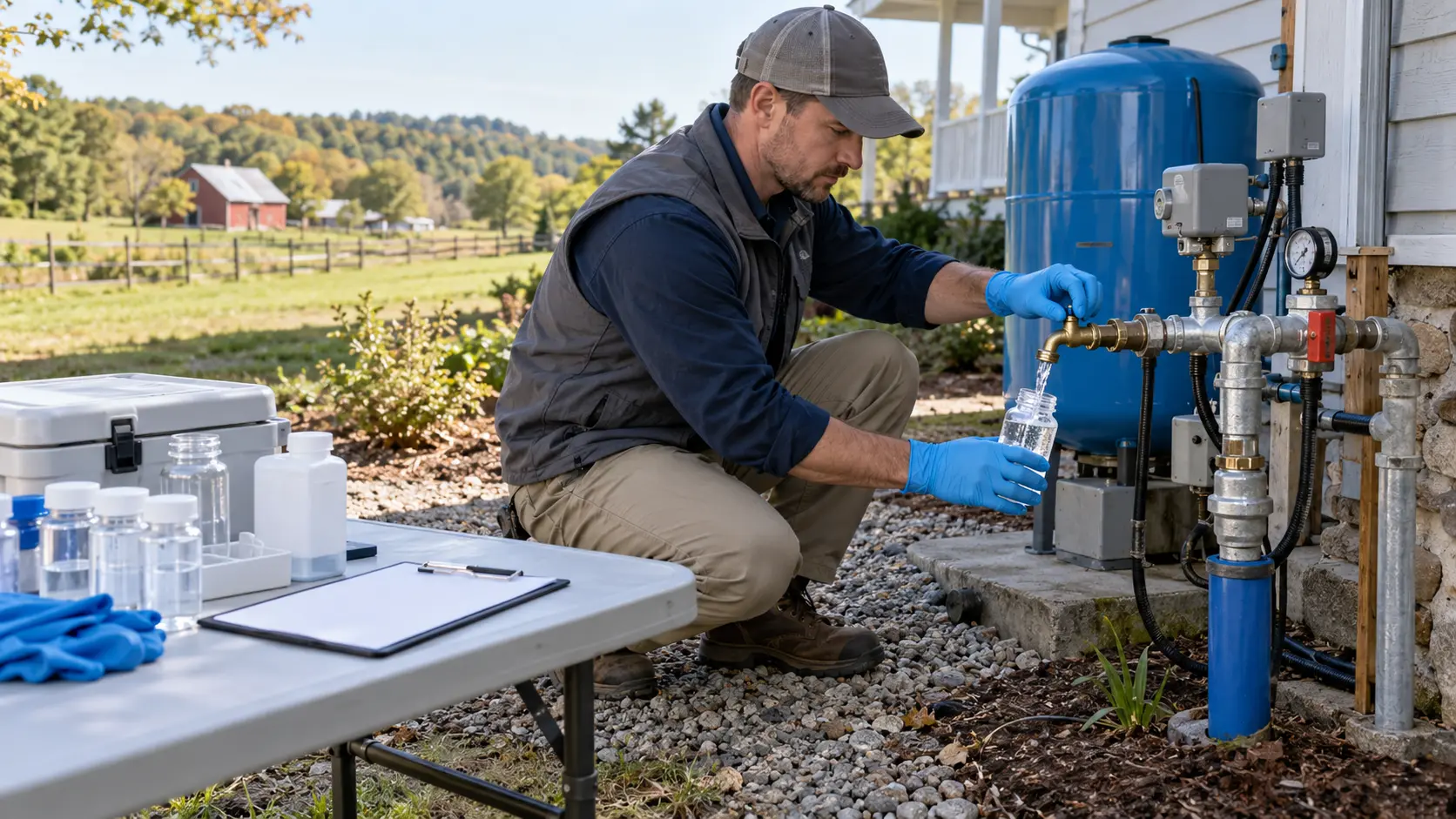
A lab result, a sharp smell from the tap, or a chlorine residual that will not hold can all lead to the same question: is my well polluted? Ammonia in well water is a signal about what may be happening upstream of your well, but one result does not identify the source on its own.
It can point to waste, manure, fertilizer, or natural conditions underground. Your other nitrogen results, bacteria results, and the conditions around your well help put that number into context.
ETR Laboratories has tested water since 1995. In this article, we explain what ammonia means, where it comes from, how it connects to nitrite and nitrate, and which tests to run next.
Ammonia is a nitrogen compound formed as organic matter breaks down. In well water, it can point to fresh sewage, manure, fertilizer, or naturally occurring groundwater conditions. The laboratory reports it as a concentration, and the meaning depends on the level, your well construction, nearby land use, and your other test results.
In water, ammonia can exist partly as ammonium, a closely related form of the same nitrogen compound. It can also indicate very fresh biological waste.
Ammonia can reach a private well from waste, agricultural activity, or the geology and chemistry underground. Multiple sources may contribute, so a single ammonia result does not identify the cause.
Well construction matters too. A damaged casing, loose cap, shallow well, or dug well can give surface contamination an easier route into the supply.
Ammonia is an early form of nitrogen in household waste. If it appears in a shallow well near a septic system or leaking sewer line, it can suggest that the waste source is relatively close or recent.
A USGS study of shallow wells in eastern Nebraska found higher ammonia in shallower wells and wells closer to septic drain fields, where the nitrogen had not yet fully converted to nitrate.
Our guide to nearby septic systems explains how contamination can move toward a well. Local health departments set setback requirements, so check the rules that apply where you live.
Barnyards, manure storage, livestock facilities, and fertilized fields all release nitrogen. Runoff or a poorly protected wellhead can carry that material toward the well.
One useful check is simply where those sources sit in relation to your wellhead. If a manure pile, livestock area, or heavily fertilized field is nearby or uphill from the well, mention that when discussing the results with the lab or health department.
Ammonia can also occur naturally, so finding it does not automatically mean sewage.
WHO reports that natural ammonia in groundwater is often low, although higher concentrations can occur in strata rich in humic substances or iron, such as areas with decayed organic matter or iron-rich conditions.
That is why bacteria, nitrite, and nitrate results matter. The pattern across those tests can help distinguish a possible contamination source from naturally occurring ammonia.
If your tap is supplied by a public utility rather than a private well, ammonia can also come from chloramine, a disinfectant made from chlorine and ammonia.
The chloramine vs. ammonia distinction matters because chloramine is intentionally used for disinfection, while ammonia by itself can have several other sources. Our guide explains how chloramine is made.
A private well that has never been connected to a municipal water system would not receive ammonia from municipal chloramine treatment.
At concentrations typically found in drinking water, ammonia is mainly a water-quality and contamination signal rather than a contaminant with its own federal drinking water limit.
WHO concluded that ammonia is not of direct health importance at concentrations normally expected in drinking water and did not establish a health-based guideline value. EPA’s national primary drinking water regulations set enforceable limits for nitrate and nitrite, but ammonia is not listed with its own federal MCL.
State and local guidance can differ, so ask your health department how to interpret your specific result.
Possible signs of ammonia in well water can include:
WHO reports an odor threshold around 1.5 mg/L and notes that ammonia can consume chlorine during disinfection. Those figures are useful for understanding why people may notice a problem, but they should not be treated as a universal “safe level.”
Ammonia, nitrite, and nitrate are stages of the same nitrogen cycle.

Waste or fertilizer releases ammonia. Bacteria then convert ammonia to nitrite and eventually nitrate. How far that conversion progresses depends on oxygen, soil conditions, distance, and time.
That means each result can suggest a different stage:
Those patterns are not a diagnosis by themselves.
You can test each stage with a nitrite water test or a nitrate water test. Nitrite in well water deserves particular attention because ETR’s product information notes its effect on how blood carries oxygen, with bottle-fed infants at highest risk.
EPA sets drinking water limits of 10 mg/L as nitrogen for nitrate and 1 mg/L as nitrogen for nitrite in public water systems. For the health details on nitrate, see our guide to the effects of nitrate in drinking water.
Read the three results as a set. The pattern can suggest how far nitrogen conversion has progressed and what to investigate next.
| Pattern in Your Results | What It Can Suggest | Next Step |
| Ammonia high, nitrite and nitrate low | A relatively fresh source close to the well | Test for bacteria and inspect the wellhead and nearby waste sources |
| Ammonia and nitrite both elevated | Nitrogen conversion may still be in progress | Test for bacteria and nitrate and review well construction |
| Nitrate high, ammonia low | Older or more fully converted contamination, such as fertilizer or septic history | Review the nitrate result with your health department |
| All three low | No obvious nitrogen signal in that sample | Continue routine testing |
This table is a screening guide, not a diagnosis. Oxygen, soil, groundwater flow, and distance can all change the pattern.
Our guide to how to read a water test report explains the units, limits, and reporting language on your report.
Not sure which result you have? You can order the ammonia test or add nitrite and nitrate, then use the phone consultation included with ETR’s ammonia test to go through the numbers.
Use a state-certified or accredited laboratory for the result rather than relying on a pool or aquarium strip. A laboratory provides a documented measurement and sample-handling process that is more appropriate for a drinking water decision.
A simple process looks like this:
Our guide on how to collect a water sample covers the general collection process.
ETR currently offers:
For sample volume, turnaround, holding time, analytical method, or accreditation scope for a specific analyte, confirm with ETR before ordering.
Start with bacterial testing.
Ammonia can come from waste sources, while coliform and E. coli results indicate bacterial contamination. ETR’s coliform and E. coli test is $65.
A sensible follow-up order is:
Our guide to coliform contamination in well water explains the common ways bacteria enter a well.
While you wait for results, ask your local health department for guidance. If an infant in your household drinks formula mixed with tap water, ask your pediatrician or health department whether another water source should be used until the results are clear.
Treatment comes after testing. Once you know what is in the water, a water treatment professional can determine what, if anything, needs to be addressed.
It depends on the concentration and the cause. Ammonia may signal other contamination, so test for bacteria, nitrate, and nitrite before making a decision. If an infant uses the water for formula or someone has a specific health concern, ask your health department or clinician about interim water use.
No. Ammonia can come from sewage, manure, fertilizer, or natural groundwater conditions. Bacteria results and the ammonia, nitrite, and nitrate pattern help narrow down the possible source. An elevated ammonia result together with positive bacterial indicators deserves closer investigation.
A sharp odor can come from ammonia, but smell alone cannot identify the cause. Sulfur compounds and bacterial activity can create different odors as well. WHO reports an ammonia odor threshold around 1.5 mg/L, but laboratory testing is what confirms what is actually present.
CDC recommends testing private wells at least once a year for common contaminants including nitrate, with additional testing after flooding, repairs, nearby waste activity, or changes in taste, color, or smell. Ammonia testing can be added when local conditions or previous results make it relevant.
Ammonia is a signal, not a diagnosis. Reading ammonia alongside nitrite, nitrate, and bacteria gives you a better picture of what may be happening around the well and what deserves attention next.
ETR offers individual ammonia, nitrite, and nitrate tests at $35 each, a separate coliform and E. coli test, and the Basic Well Water Test for a broader screen.
You can also read our guide to water quality parameters labs measure to see what else may appear on a broader report.
Call ETR at (800) 344-9977 or use our contact page if you want help deciding which test fits your situation.