Chain of Custody for Water Testing Samples: A Complete Guide
Chain of custody is a documented record of every person
Free Shipping on Orders of $100 or More
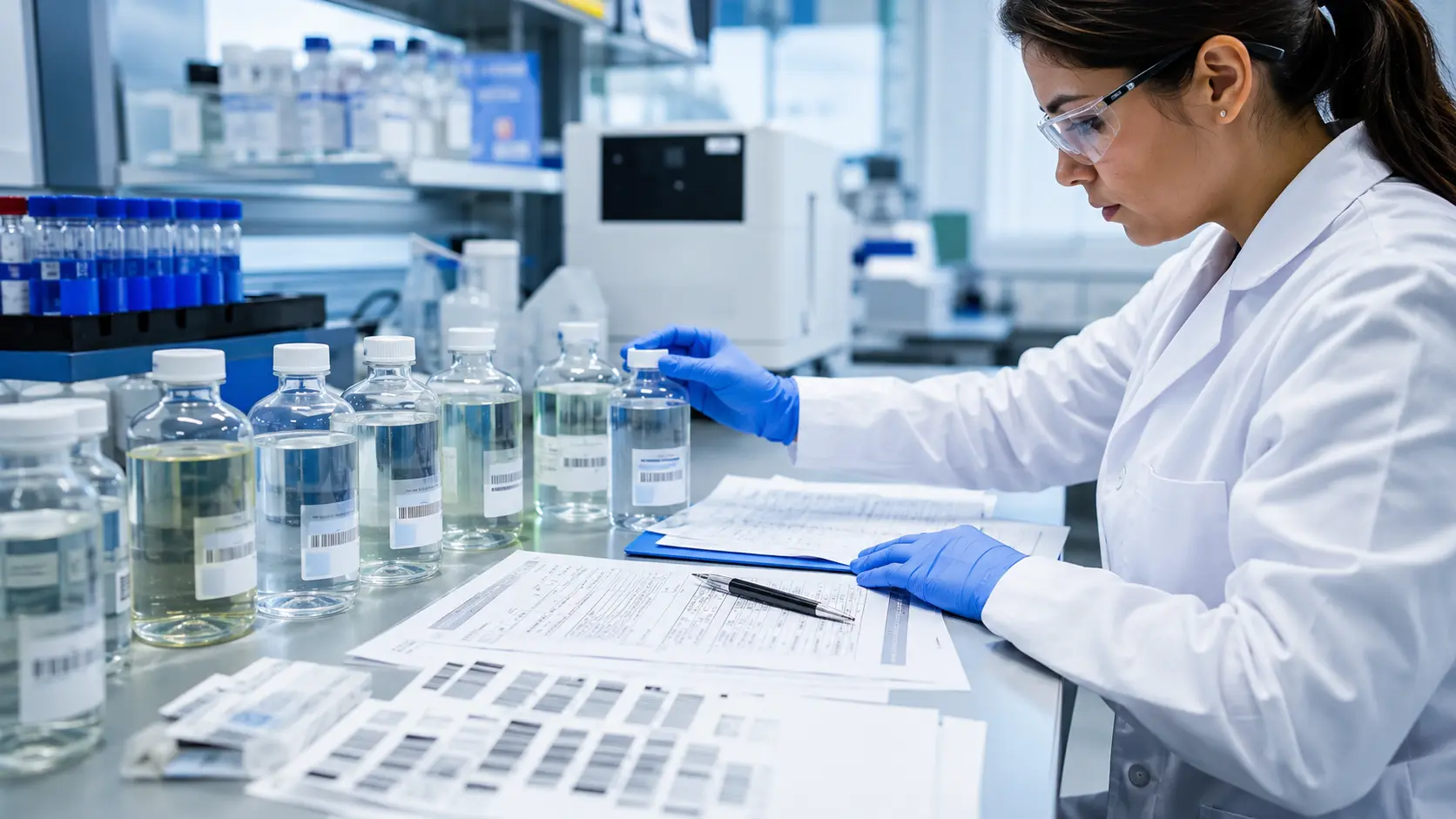
Chain of custody is a documented record of every person who held a water sample, when they held it, and under what conditions. Without it, even a passing result can be picked apart. A buyer, lender, or attorney can question how the sample was handled, and there’s nothing on paper to answer them. That gap can stall a closing or sink a claim. A complete chain of custody form closes it.
Custody documentation answers one simple question. Can someone reading this result a year from now trace the sample the whole way? Every handoff needs a name, a date, and a time. That record is what makes the number defensible instead of just accurate.
Collecting your own sample works differently. You fill the bottle, mail it in, and the lab reports what arrived. That result is real and useful for your own decisions. It carries no outside proof of who drew the water or where. A chain of custody sample adds that proof, which is why transactions call for it.
Custody does not start when the lab opens the cooler. It starts earlier, with the prepared bottle leaving the lab, and it runs through collection, transport, receipt, storage, analysis and final disposal.
The point is complete traceability. Somebody reviewing the file later should be able to rebuild the whole life of that sample from the record alone. A gap anywhere in the sequence is a gap in the result.
A sample is in your custody while you physically hold it or keep it within your sight. It stays under custody when it sits in a secured place that blocks unauthorized access or tampering.
That distinction matters more than people expect. Leave a cooler by an unlocked back door and custody is already questionable. Nobody has to touch it. You cannot show that access was controlled.
Requirements come from the party relying on the result, not from the lab. Use the list below as a starting point, then confirm the rule in writing for your situation.
Every field exists because somebody later needs that detail. Work top to bottom before the bottle leaves your hand.
The form proves who handled the sample. It also tells the lab what you want measured. A contaminant does not land on the report because you assumed it was included.
So check the boxes against your list, not from memory. Bacteria and other transaction-required parameters get missed this way more often than any other field. Confirm every one before you sign the relinquishment line.
The sequence below is what inspectors and samplers repeat on every job. It only fails when a step gets skipped in a hurry.
The lab sends the right bottle for each test, and many already hold a measured preservative or come sterile. Never rinse one. Rinsing pours out the preservative or breaks the sterile surface, and the analysis is finished before it starts. Our sample collection guide covers the bottle-by-bottle rules in detail.
A kitchen cold tap, an outside spigot and the well tank answer different questions. Plumbing adds metals, an outside line may sit ahead of treatment, and the tank shows the raw source. Write down which one you used, in plain words.
Lead calls for a first draw after the water has been still for several hours. Bacteria calls for a flushed line, so the sample reflects the supply rather than the faucet.
Fill to the line, handle the bottle by the outside, and cap it right away. Bottles for volatile organics must be filled with no air bubble left inside. Label each one before it leaves your hand, never later at the truck.
Chilled samples go on ice in a cooler as soon as they are capped. Write the collection time on the form at that moment. That entry starts the hold clock, and everything downstream is measured from it.
An unsigned line breaks the chain no matter how well you did the rest. The signature is what converts your careful work into a record somebody else can rely on. Sign, date, and note the time as you hand the cooler over.
Hold times are maximum windows between collection and analysis, and they start at collection rather than at shipping. Common windows include the following.
The practical effect shows up on Fridays. A bacteria sample drawn late Friday afternoon often cannot reach a lab that will analyze it in time, so the job waits for Monday morning.
Every change of hands needs three things on the form: who released the sample, who took it, and the date and time. Handing a cooler to a coworker or a courier does not preserve custody on its own.
When you cannot deliver in person, seal the cooler, keep the tracking number, and let the shipment stand as a documented leg of the chain.
Want the paperwork in front of you before your next job? Contact us for a blank chain of custody form and keep a stack in the truck.
A good sample can still fail on paperwork or handling. Some failures cause outright rejection. Others produce a qualified result, a delay, or a number nobody can use for a permit or a court file. Many of these overlap with the everyday collection errors covered in our guide to sampling mistakes, since a broken chain often starts as an ordinary sampling slip.
The lab has to be able to say the sample stayed protected after collection. A loose cap, a broken custody seal, or an obviously opened bottle removes that certainty. Fix: seal the sample exactly as instructed, and never reopen a bottle after collection.
Signatures show who was responsible at each stage. An unsigned handoff leaves a stretch of time nobody has claimed, which is a break in possession even if the sample was fine. Fix: complete the signature, date, and time at the moment custody changes.
Each method has a maximum period between collection and analysis, and the clock starts when you fill the bottle. Perfect paperwork cannot rescue a sample that is no longer analytically valid. Fix: plan collection, shipping, and lab arrival around the shortest hold time on your list.
For chilled analyses, temperature is part of the sample condition record. The lab checks and logs it at receipt, and a warm cooler can compromise the sample even with a flawless form. Fix: chill the sample immediately and transport it the way the lab instructs.
Container type and preservation both depend on the analysis. Pouring water into a household jar, grabbing the wrong lab bottle, or rinsing away preservative can make the sample unusable for the requested method. Fix: use only the containers supplied or approved for that specific test.
A sealed, labeled sample still becomes questionable if nobody can account for a stretch of its trip. Locked storage is fine. A cooler sitting in an open hallway is not. Fix: document every transfer, and secure samples whenever they are out of your hands or out of sight.
Missing times, illegible handwriting, vague sample IDs, and thin location notes all slow the lab down. It has to stop and ask, which delays the report and can leave the result unusable for compliance. Fix: read every field for completeness and legibility before you relinquish the sample.
This is worse than a missing signature, because the whole handoff is absent from the record. An undocumented courier, coworker, or inspector leaves a hole in the traceable history. Fix: record each change of possession as it happens, with both names, the date, and the time.
Coolers parked outside a building, bottles in an unlocked vehicle, samples in a shared break room refrigerator. The problem is not evidence that somebody interfered. It is the inability to show access was controlled. Fix: keep the sample in hand, in view, or locked away.
A wrong, duplicated, or missing ID stops the lab from tying a physical bottle to its collection details and requested tests. That is a traceability failure rather than a tidiness problem. Fix: check that every bottle ID matches its custody record exactly before transport.
The form is also the work order. Leave coliform, metals, or volatile organics off it, and the lab cannot assume you wanted them. During a closing, the gap usually surfaces with the report when the deadline is close. Fix: compare the requested analyses against the lender, regulator, contract, or testing goal before signing.
Shipping does not remove the chain. It just becomes another documented leg of it. Pack the bottles in a sealed cooler and apply tamper-evident seals where the program calls for them. Keep the paperwork in a bag so melting ice cannot ruin it.
Save the tracking number and the receipt. At the other end, the lab inspects the seals, records the temperature, and notes the condition of each bottle.
Timing deserves real thought. A sample shipped Friday can blow its hold time sitting in a facility nobody is staffing over the weekend. Ship early in the week for short-hold parameters.
Behind the door, the record keeps going. Receiving staff log the sample in, check the bottles against the form, and verify preservation and temperature where the method requires it.
From there, it moves into secured storage, then to the analyst who runs the method. Results, calibration records, and reviewer initials attach to the same file.
This half of the chain is easy to overlook. A defensible result depends on the lab holding traceability as tightly as the collector did, through analysis and disposal.
Water testing for real estate runs on a short clock. The buyer or the buyer’s agent usually orders during the inspection period. A licensed inspector or a lab technician collects, rather than either party to the deal.
Commonly requested parameters include total coliform and E. coli, nitrate and nitrite, lead, and arsenic. Lender, state, and county requirements differ, and contract language can add more. Confirm the exact list in writing before collection.
Bacteria results need incubation time, so build the calendar backward from your contingency deadline. Ask the lab for its current turnaround time before you promise a date. Our real estate transaction testing page explains how the process fits a closing.
Five minutes of checking ahead of the appointment prevents a recollection later. Run through this before anyone drives out.
Finding out from the report that a required parameter was never ordered is the expensive version of this conversation. It means a new collection, a new wait, and a deadline you may not make.
A home inspection water test is one of the easier add-ons in the business. Set up an account with a certified water testing lab, then keep bottles and forms stocked in the vehicle. Watch the expiration dates on preserved and sterile containers.
Scheduling is the real skill. Draw water early in the inspection so the sample reaches the cooler sooner. Ask your lab what its cutoff time is for same-day receipt.
When a result comes back positive, report the finding and stop there. Send health questions to the health department, the EPA drinking water pages or a physician. Let a licensed treatment professional handle solutions. That protects your license.
Run the same seven moves on every job, and the errors mostly disappear.
Consistency protects you from missed parameters, rejected samples, delayed closings, and arguments over who collected what.
Short answers to what agents, inspectors and buyers ask most.
Usually not for a closing. The purpose of custody documentation is an independent collector, so a party to the deal is the wrong person to hold the bottle. Collection normally falls to a lab technician, a certified sampler or a licensed home inspector. Some states do allow homeowner collection for well permits, so check your local rule.
Yes, though the extra charge buys collection time and travel rather than better chemistry. The analytical fee for the same panel is identical either way. Site collection is normally billed as a trip charge plus labor. A rejected sample and a second visit cost far more.
In practice, bacteria results are often accepted for 30 to 90 days before closing, and chemical results sometimes longer. The lender, the state program or the contract sets that window, not the laboratory. Ask for the requirement in writing early, because a result that ages out means collecting again.
The lab either rejects the sample or reports it with a qualifier explaining the problem. A qualified result rarely satisfies a lender, a regulator or an attorney. That means a fresh sample, a second collection fee and another wait. The wait is what hurts a closing.
It depends on what the number will be used for. A personal check on your own well needs no custody record. A disclosure, an insurance claim or legal water testing does. PFAS sampling also carries extra restrictions, since many everyday plastics and personal care products can contaminate the sample. Our PFAS guide covers those rules.
Responsibility moves with the sample. The collector owns proper collection and the first entries on the form. Each person receiving or releasing it owns documenting that transfer. The lab owns receipt, storage, internal handling, analysis and its own records. The chain works because accountability is written down instead of assumed.
Sometimes, under the laboratory’s own procedures for clarifying missing information. What cannot happen is quiet backfilling that hides who changed an entry and when. Some omissions cannot be repaired at all and require a new sample. Call the lab as soon as you spot the problem, and do not alter a completed custody record yourself.
Water sample collection habits separate a number from a defensible record. Agents and inspectors who build custody into the routine stop losing days to rejected bottles. Over a year of transactions, that reliability is worth more than any single test.
Set up an account for transaction testing, or ask us about a blank chain of custody form to start with your next inspection. Call or email us, and we will walk your team through the workflow.
Chain of custody is a documented record of every person
Rinse the bottle before you fill it, and the lab
Search for a home water test, and three different products
Related Post.
Chain of Custody for Water Testing Samples: A Complete Guide
Chain of custody is a documented record of every person who held a water sample,
13 Well Water Sampling Mistakes That Void Your Results
Rinse the bottle before you fill it, and the lab has to reject your sample.
Lab Testing vs Mail-Order Water Test Kits: An Honest Look
Search for a home water test, and three different products show up. Test strips and
Water Test Strips vs Lab Testing: Why Results Disagree
The strip turned the right color, and the water still smells like a struck match.
Well Water Testing Near Me: How to Find a Certified Lab
People who search for well water testing nearby usually want a sample moving right away.
Water Test Kits Compared: Which One Do You Actually Need?
Search for a way to check your water, and four different products show up.
What Makes a Water Testing Lab Certified? A Full Guide
Certification means a state or accrediting body has checked that a lab can run
How to Read Your Water Test Report
It’s normal to get a report that has 40 rows of information on the report.
Can You Trust Your Water Test Results? 13 Red Flags
A water test is only as good as the lab behind it. The number on
Algal Blooms and Cyanotoxins in Water Supplies
Every summer, as lakes and ponds warm up, you’ll start seeing the headlines: a beach
The 2026 Cyclospora Outbreak: What It Actually Means for Your Water
If you’ve seen headlines this summer about a fast-growing outbreak of diarrheal illness sweeping across
White Residue on Fixtures and Dishes: What It Means
Run a glass through the dishwasher and pull it out cloudy. Wipe down the shower