How to Read Your Water Test Report: A Line-by-Line Guide
Your report arrived, and it has 40 rows with three
Free Shipping on Orders of $100 or More
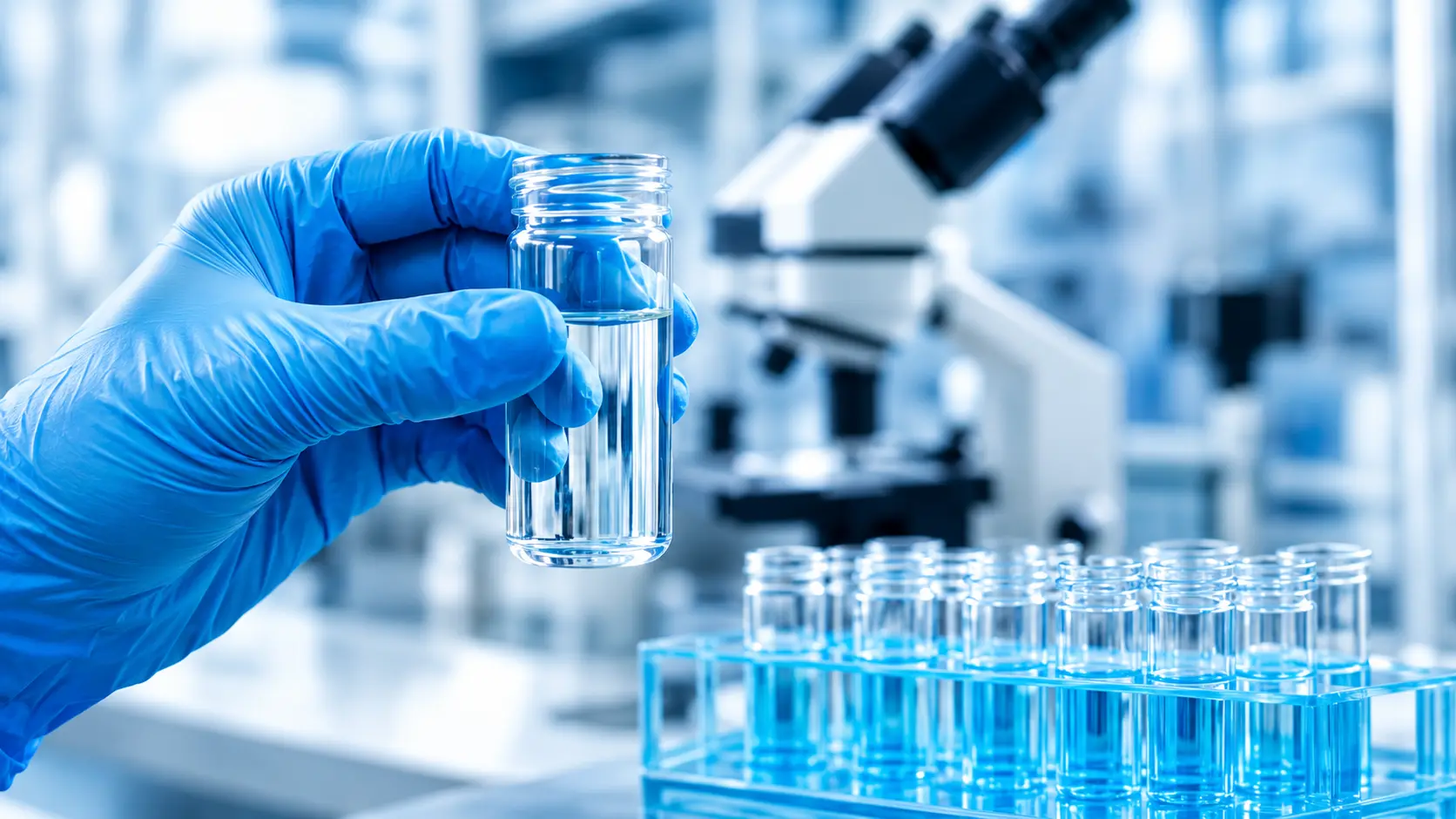
A water test is only as good as the lab behind it. The number on the page looks the same whether a state-certified laboratory produced it or a salesperson did. But below are 13 red flags that tell you which one you are holding, and what to do about each.
A real water test runs through five stages. You collect the sample into a bottle the lab supplied. That bottle usually holds a preservative matched to the parameter being measured. The sample then travels to the lab under temperature control.
At the lab, an analyst prepares the sample using a published method. Each method carries an EPA or Standard Methods number. The instrument measures the parameter, and the software compares that reading against a calibration curve built the same day.
The last two stages are where trust is won. The lab checks the result against its reporting limit, which is the lowest number it can stand behind. Then it prints the result next to the legal limit for that parameter. A report that skips either step is telling you less than it appears to.
Two honest tests on the same well can disagree. That surprises people, and it is usually the sampling rather than the lab. Water sitting in your pipes overnight picks up metals from the plumbing. Water drawn after a two-minute flush comes from the main instead.
Time of year matters too. Well water shifts with rainfall, snowmelt, and the water table. A spring sample after heavy rain can read differently from a dry August sample taken from the same tap.
Hold times are the third cause. Coliform bacteria have a short window between collection and analysis. A sample that sat over a weekend can produce a reading that describes the trip rather than the well. None of this makes a lab wrong. It makes the sampling details part of the result.
Each flag below follows the same shape. What it looks like, why it happens, and the one thing to do about it. You do not need all 13 to be worried. Two or three together usually mean the result cannot carry a real decision.
A technician comes to the house, runs a few drops through a kit, and shows you a color change. The hardness reading is often accurate. The problem sits in the next sentence, where the reading becomes a reason to buy a softener that afternoon.
Nobody here is committing fraud. The tester measures a handful of parameters that a softener happens to address, and the parameters that would send you to a lab never get measured. Ask who pays the technician. If the answer is the company selling the equipment, treat the visit as a sales call with a chemistry demo attached.
Every certified laboratory holds a certificate number issued by its state program. That number belongs on the report, usually in the header or the footer. It is the only part of the document a stranger can independently check.
Watch the wording carefully. “Certified lab partner” and “lab tested” are marketing phrases, not certifications. The certification attaches to the laboratory that ran the method, not to the brand printed on the box. Search the number against your state environmental laboratory list before you trust anything else on the page.
Next to each result, there should be a method, written as an EPA number or a Standard Methods reference. That column is how anyone else confirms the analysis was run the accepted way.
A result with no method cannot be defended. Bring it to a real estate closing or an insurance claim, and the other side has nothing to check. Ask for a report that names the method for every line.
Non-detect does not mean zero. It means the lab did not find the parameter above the lowest number it can report. That number is the reporting limit, and it should appear next to the result.
PFAS shows why this matters. The federal limits for the regulated PFAS compounds sit in parts per trillion. A lab reporting PFAS in parts per billion could return a clean non-detect on water that exceeds the limit a thousand times over. Compare the reporting limit against the legal limit for your parameter before you read the result as good news.
Bacteria samples have the tightest clock in water testing. The window between collection and analysis is measured in hours, not days, and it starts the moment you fill the bottle.
This is why overnight shipping is built into a real kit rather than sold as an upgrade. Temperature matters as much as speed, which is why kits arrive with an ice pack. Confirm the hold time for the parameter you ordered, then plan the collection day around it rather than the other way round.
Some parameters can be read on site. pH, temperature, free chlorine and conductivity all give an immediate answer with the right meter. Those readings are legitimate.
Others cannot move that fast. Coliform bacteria need time in an incubator before anything grows. Metals need instrument time and a calibration run. A same-day full panel is a screening dressed up as an analysis.
A TDS meter measures total dissolved solids, which is a bulk reading of charged particles in the water. It is a real measurement of a real thing. It is not a safety check.
Lead, arsenic, PFAS and coliform bacteria barely move a TDS meter. Water can read low on TDS and still be unsafe, and it can read high purely because of harmless calcium and magnesium. Water test strips have the same ceiling. Use them to track change between lab tests, and use a lab when the answer has to hold up.
Report structure is a trust signal. An independent report puts the results first, the context second, and treatment options last, if it offers them at all.
Flip that order, and you are reading a proposal. When the first page names a product and the numbers appear further down, the document was built to sell rather than to inform.
Every number needs a unit beside it. Water reports use mg/L, µg/L, ppm and ppb, and the difference between them is a factor of a thousand.
The same figure means very different things depending on which unit is attached. Ten in one unit can be routine, and ten in another can be an exceedance. A report that prints bare numbers is asking you to guess.
Lead and copper come from your plumbing rather than the source. A first draw sample, taken after the water has sat still for at least six hours, measures what your pipes contribute. A flushed sample measures what arrives from the main.
Both are valid, and they answer different questions. Run the tap for two minutes before a lead sample and you may get a clean number from a house with a lead service line. Check which protocol the kit called for and whether it was followed.
Bacteria bottles arrive sterile. A fingertip on the rim or the inside of the cap is enough to produce a positive result on a clean well.
Rinsing causes the opposite problem. Preserved bottles are dosed for an exact fill volume, so rinsing pours the preservative down the drain and invalidates the analysis. Handle the bottle by the outside, fill it as it arrives, and cap it straight away.
Softeners, carbon filters, reverse osmosis units and UV lamps all sit between the source and the tap. Sample after one of them, and the report describes the treated water, not the well.
This is how a contaminated well produces a passing result. Before you choose a tap, walk the line and find every device on it. If you want to know what the source is doing, sample ahead of the treatment or at the wellhead.
A water test describes one sample, from one tap, on one day. It is a snapshot rather than a warranty.
Private wells change. Rainfall, nearby construction, a new septic system, seasonal shifts, and well repairs can all move a result. A clean report from four years ago tells you the well was fine four years ago. Build a testing history instead, since a pattern is far more useful than a single number.
Turn those flags around, and you get a short checklist. Hold your report next to it and see how many rows it covers.
Four steps, and the whole thing takes about ten minutes.
First, find the certification number on the lab’s site or on a sample report. Second, open your state environmental laboratory certification list and search that number. Third, confirm the parameter you care about appears on the lab’s approved scope, since certification is granted parameter by parameter. Fourth, ask for a blank sample report and check it against the list above.
That last step is the one people skip. A lab that will not show you a sample report before you order has told you something useful.
Home tests get unfairly dismissed, and they have real uses. Tracking hardness after a softener regenerates works fine with a strip. So do pool and spa chemistry, aquarium water, and a monthly check between annual lab tests.
The line falls where the result leaves your kitchen. A real estate closing, a mortgage requirement, a well permit, a health concern, a new baby in the house, or a PFAS question all need a certified result. Anything a lender, a buyer, a health department, or a lawyer will read has to come from a lab that can stand behind it.
They give useful approximate readings for a small set of parameters. Accuracy depends on technique, storage, expiry date, and the light you read them under. Two people often read the same pad differently. Treat a strip as a band rather than a number, and confirm anything that matters with a lab.
Yes. Handheld meters drift out of calibration, collect residue on the probe, and read differently at different temperatures. Sensors also age. Beyond that, a meter reading is not a contaminant test. A TDS or pH meter reports one property and says nothing about lead, PFAS or bacteria.
Calibrate it with the correct reference solution on the manufacturer’s schedule. Rinse and store the probe as the manual describes rather than leaving it dry. Take the same reading three times and see whether the numbers agree. If a decision depends on the answer, confirm it with a certified lab.
Mass spectrometry can identify compounds from their molecular characteristics, and specialist labs use it for exactly that. A routine water panel does not work that way. It is targeted, meaning the lab looks for a defined list. Broad screening for unknowns is a separate service you have to request.
There is no single number that makes a report good. Each parameter is judged on its own against the EPA or state limit, any health guideline, and the lab’s reporting limit. A useful report shows all three next to the result so you can see where you sit.
Check the certification number against your state environmental laboratory list. The number usually appears in the report header or footer, and on the lab’s about page. Confirm your specific parameter sits on their approved scope, since a lab certified for bacteria may not be certified for PFAS.
The readings can be accurate, and the interpretation is where the risk sits. These tests usually cover hardness, pH, iron, chlorine, and sometimes TDS. They rarely cover bacteria, nitrate, lead, arsenic, or PFAS, which are the parameters with health limits attached.
Sampling is the usual answer. A different tap, a different time of day, a flush before one sample and not the other, or a longer trip to the lab will all move numbers. Season matters for wells. Compare the collection details on both reports before assuming one lab got it wrong.
No. Both are measured at concentrations far below what color chemistry on a paper pad can resolve. Lead matters at parts per billion and PFAS at parts per trillion. Those need instrument analysis in a laboratory.
A bacteria-only test sits at the low end, a standard homeowner panel in the middle, and a full panel with PFAS at the top. Price tracks the number of analyses and the instrument time each one needs rather than the number of bottles.
A certified result is worth more than a fast one. It holds up at a closing, it survives a second opinion, and it gives you a baseline to measure the next test against. ETR Laboratories has run accredited water analysis since 1995, and every report names the method, the reporting limit, and the standard beside each result.
Send us a sample, or call the lab and ask what a panel for your situation should cover. Either way, you will know what is in your water and what the number actually means.
Your report arrived, and it has 40 rows with three
A water test is only as good as the lab
Every summer, as lakes and ponds warm up, you’ll start
Related Post.
How to Read Your Water Test Report: A Line-by-Line Guide
Your report arrived, and it has 40 rows with three acronyms in each one. That
Can You Trust Your Water Test Results? 13 Red Flags
A water test is only as good as the lab behind it. The number on
Algal Blooms and Cyanotoxins in Water Supplies
Every summer, as lakes and ponds warm up, you’ll start seeing the headlines: a beach
The 2026 Cyclospora Outbreak: What It Actually Means for Your Water
If you’ve seen headlines this summer about a fast-growing outbreak of diarrheal illness sweeping across
White Residue on Fixtures and Dishes: What It Means
Run a glass through the dishwasher and pull it out cloudy. Wipe down the shower
Water Testing Labs Near Me: How to Choose the Right Lab
A search for water testing near you usually turns up dozens of companies claiming to
Whole-House Reverse Osmosis System vs. Under-Sink RO
From the Lab by ETR Laboratories Reverse osmosis has been a common option for treating
Tannins in Well Water: Causes, Signs, and Treatment
Most people would blame the presence of iron when they see their water take on a yellow or tea-colored tint. Maybe your white laundry is slowly turning beige, or you have noticed an earthy smell coming from the tap.
What Are Emerging Contaminants? Types, Sources, and Risks – 2026
It’s almost natural to pinpoint lead or bacteria as typical water contaminants since they have been part of the public conversation for decades, but scientists have now begun paying attention to a different group of substances called emerging contaminants.
Legionella in Water: Home Plumbing and Water Heater Risks
It’s easy to assume nothing is wrong inside your pipes if your water looks clear and tastes normal. Most people overlook the effects of Legionella in water for exactly that reason. It’s a kind of bacteria that can build up inside home plumbing
The World Health Organization Just Updated Its Drinking Water Guidelines. Here’s What It Means.
On June 18, 2026, the World Health Organization released an updated edition of its Guidelines for Drinking Water Quality, the most authoritative global reference document on what safe drinking water actually means and how to achieve it
What a Polluted San Diego Bay Tells Us About the Water Closest to You
Mission Bay in San Diego draws an estimated 15 million visitors a year. It’s one of the most popular recreational water destinations in the country. And according to a report released in June 2026, it has a serious water quality problem that isn’t going away when it stops raining.
Related Post.

Your report arrived, and it has 40 rows with three acronyms in each one. That is normal. A lab report...

Every summer, as lakes and ponds warm up, you'll start seeing the headlines: a beach closed for a "harmful algal...
If you've seen headlines this summer about a fast-growing outbreak of diarrheal illness sweeping across the country, you're not imagining...