How VOCs Are Tested in Well Water: Lab Method Explained
A VOC kit arrives with small glass vials, a preservative
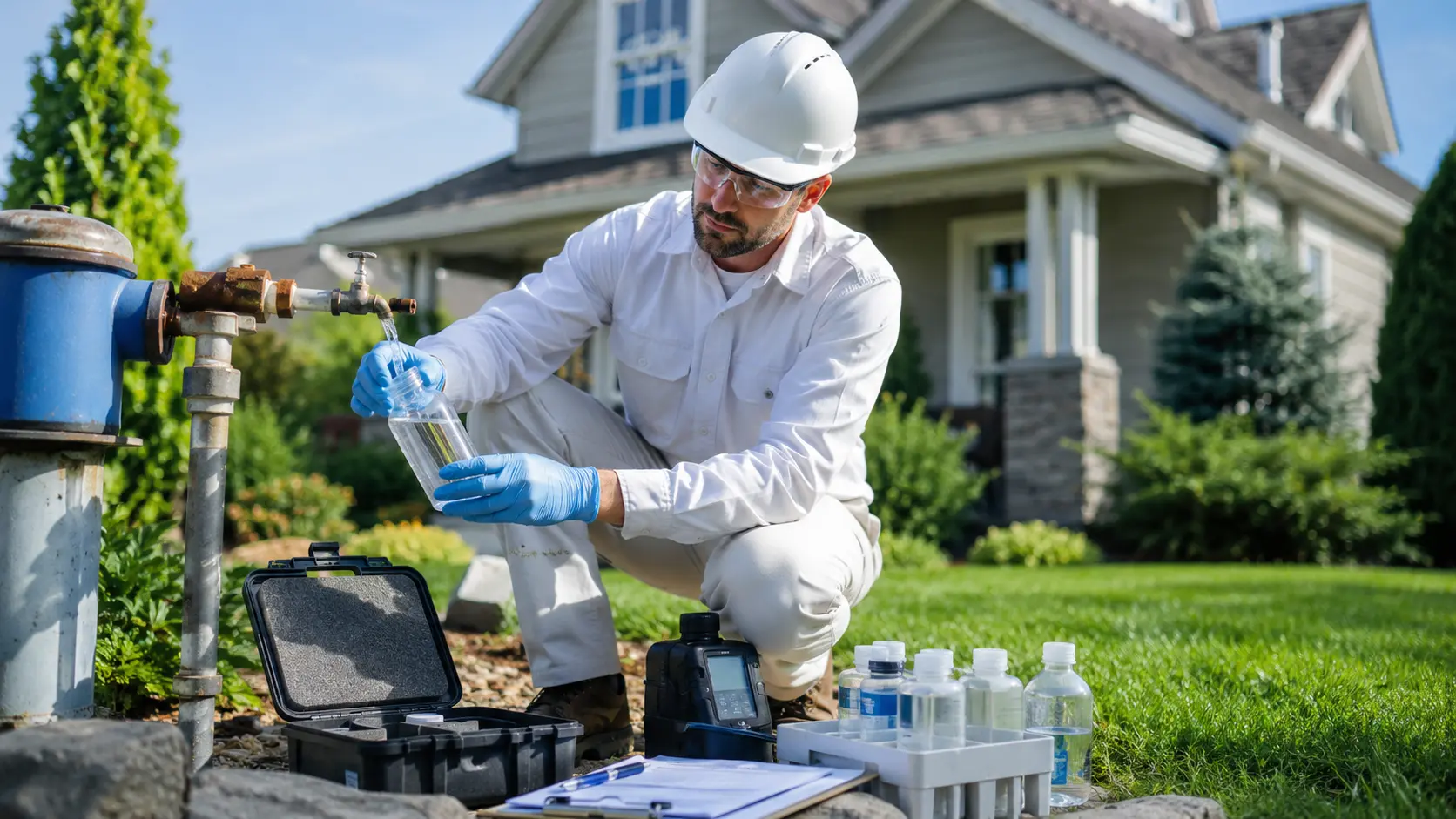
People who search for well water testing nearby usually want a sample moving right away. Two routes get you there. Drop your sample at a state-certified lab close to home, or collect it yourself and ship it overnight to an accredited lab. Both routes can get you a result you can act on.
Distance is the wrong thing to chase. What matters is the certification the lab holds for your specific analytes, and how fast the sample reaches the bench. This guide shows you how to check both, and how to pick the route that fits where you live.
Everything below fits into one of two paths. You carry the sample to a lab yourself, or a lab sends you the bottles and you ship the sample back. Both paths can end at a properly certified lab running approved methods.
The difference comes down to logistics, not credibility. A drive-in sample isn’t more valid than a shipped one. Your result depends on the lab that opens the box, the method it runs, and the condition the sample arrives in.
This route starts with a phone call. Contact the lab, tell them what you need tested, and confirm the analyses fall within their certified scope. They will supply the right containers and written collection instructions, and tell you which hours they accept samples.
Then you collect the sample as instructed and deliver it inside the required window. Don’t fill a household jar and show up at the counter. Labs reject samples in the wrong container every week, and you lose the trip along with the result.
A mail-in water test flips the order around. The lab or testing service ships you sterile bottles, preservatives already measured out, an ice pack, a submission form, and a return label. You collect at your own tap, pack the box as instructed, and send it back under the shipping conditions they specify.
The lab doing the analysis matters far more than the miles between you and it. An accredited lab four states away with an overnight courier can return a solid result sooner than a nearby lab that only batches work weekly. Ask who actually performs the testing before you order.
Four steps, in this order. Skipping the third one is how people end up paying for a test that gets rejected later.
One habit protects you through all four steps. Ask the lab to confirm in writing that your analyte and method appear on its current certificate. A website that says “certified laboratory” tells you nothing about your particular test.
Two different things get called by the same name. State drinking water certification is a program run by a state agency. The agency audits a lab and approves it to run named methods for compliance work. That approval is granted analyte by analyte, and it can lapse.
Laboratory accreditation is broader. ISO/IEC 17025 accreditation covers a lab’s quality system, staff skill, and calibration practice, and an accrediting body issues it rather than a state. Some places also recognize national or regional accreditation programs for particular purposes.
The practical test is simple. Check the lab’s scope for the analysis you want, then check what the agency, lender, or buyer asking for the test will accept. A long row of logos on a website is worth less than one line on a current scope document.
Every state runs its own list, and the lists sit in different places under different names. Some states publish a searchable database. Others post a PDF updated a few times a year. A few hand part of the work to a regional or national accreditation program.
Until a full directory lives here, use this method to find yours. Search your state agency site for drinking water laboratory certification, open the current list, then filter it for a lab certified for your analytes. Call the lab to confirm it still accepts private well samples, since some certified labs work only for utilities.
Read this as a side-by-side look at the two routes on the things that actually change your result.
Give your local lab a fair shot here. If it holds certification for what you need, opens six days a week, and answers the phone, it’s a strong choice. Order an overnight kit when that description doesn’t match what you found.
Every analysis has a maximum time between collection and the start of testing. Past that window, the result no longer represents your water, and a good lab will reject the sample instead of reporting it. This one rule beats geography every time.
Bacteria sets the tightest clock. Coliform samples for drinking water are commonly held to about 30 hours after collection, and shorter windows apply to some source waters. Unpreserved nitrate runs to about 48 hours. Volatile organics are usually held to 14 days, and acid-preserved metals to roughly six months.
Now do the math. A lab 90 minutes away receives your sample at four on a Friday. The coliform test may not start until Monday, by which point the clock has already run out. An overnight kit collected Monday morning reaches the bench Tuesday with hours to spare.
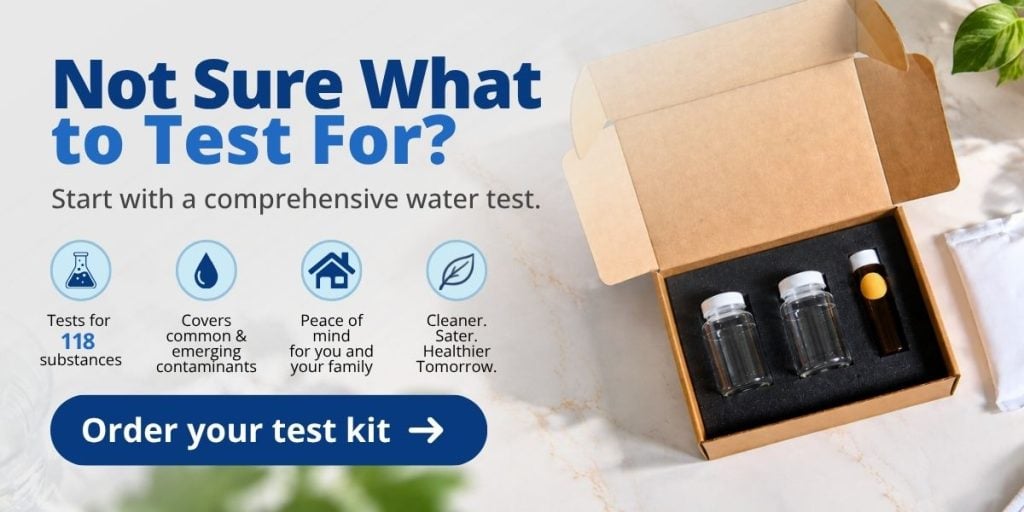
Finding a lab is half the job. The lab will ask what you want tested, and private wells sit outside federal drinking water rules, so nobody has made that call for you. Start with the public health baseline, then add whatever your own situation calls for.
The additions come from your surroundings. Nearby farming, a septic system, an old landfill, mining history, fuel storage, and past flooding all point to specific analytes. So does lead solder in the plumbing and known local groundwater problems. Your state geological survey and county health office can tell you which ones show up near you.
Public health guidance from the EPA and CDC points private well owners toward an annual check for total coliform bacteria and nitrate. pH and total dissolved solids often ride along in the same panel. That combination catches the two problems that show up fastest and cause the clearest short-term harm.
Recommended frequency and content shift by agency and by state, so check your current state guidance rather than treating one panel as a national rule. Arsenic, uranium, radon, and manganese get recommended on a longer cycle in areas where the local geology carries them.
Some events call for testing outside the annual cycle. Flooding over the wellhead, a well repair or pump replacement, and a new septic field or spill nearby all warrant a fresh sample. So does a change in taste, color, or odor, or a neighbor reporting a problem.
This is also useful language for the phone call. Tell the lab what changed and when, and they can suggest the analyses that fit. Saying the water started smelling like sulfur after the spring thaw gets you a better panel than asking for a general test.
Prices shift with region and with the type of lab. A basic total coliform and E. coli test usually costs $25 on the low end and can reach $60 at a private lab. A standard well panel covering bacteria, nitrate, metals, and general chemistry usually starts around $150 and can climb toward $400.
Three things drive that spread. Local demand and lab capacity set the base rate, and a lab with open instrument time prices lower. Specialist analyses such as PFAS or volatile organics cost more, since the instruments and clean handling involved are expensive. On-site collection with custody documentation adds a visit fee.
Our full cost breakdown compares panels line by line, including what each tier includes and where the money actually goes. Read that before comparing two quotes, since a cheaper number often covers fewer analytes.
Many county health departments run free or low-cost bacteria testing for private wells, and some add nitrate too. Coverage varies a lot county to county. Where the program exists, it’s a good starting point, and paying a private lab for that same single test doesn’t make much sense.
Know the limits before you rely on it. These programs rarely cover metals, PFAS, volatile organics, or radon, and results can take longer since they run on a set schedule. Some require collection during specific hours on specific days.
Use the county option for the annual bacteria check. Use a private lab when you need a wider panel, a faster answer, or documentation for a sale or a permit.
Water treatment companies often offer a free in-home test, and some of them do honest work. The problem is structural. The company measuring the problem is also the one selling the fix. The on-site test is usually a quick field check rather than a full lab analysis.
Ask four questions before you accept one. Who actually performs the analysis, a lab or a technician with a field kit? Which parameters and methods are included? Is that lab certified for those analytes? Does the person handing you the result earn a commission on the equipment they recommend?
A free hardness check ahead of a softener quote is fine on its own. Once the result will drive a purchase running into the thousands, pay for an independent lab test first. It’s the cheapest part of the whole project.
Anyone comparing options after searching for a water testing lab near them can settle it with one phone call. Six questions do the work.
A lab that answers all six clearly will handle your sample properly. Hesitation on the first question is the one to walk away from.
Add this question when a contaminant matters at very low concentrations. A lab can honestly say it tests for PFAS while reporting down to a limit far above the level that concerns health agencies. Your result then reads non-detect on water that actually has a problem.
Ask which compounds are included and what limit each is reported to. Compare those limits against the health advisory or state action level you care about. For lead, arsenic, and PFAS, the reporting limit is the number that decides how useful your report will be.
An accurate result isn’t automatically an acceptable one. Home sales, mortgage conditions, building permits, septic approvals, and license applications can each require a particular lab, method, analyte list, collection procedure, or third-party collector.
So ask the requesting party first. Call the lender, the county office, or the closing attorney, get their requirements in writing, then bring that list to the lab. Doing it in the other order is how people end up paying twice inside the same month.
Plenty of well owners have no certified lab within a sensible drive. The overnight kit route was built for exactly this, and it’s straightforward once you know the sequence.
Collect on a Monday or Tuesday morning where you can. The sample lands at a staffed lab the next day, well inside the bacteria hold time, and your results start moving right away.
Yes, for the great majority of homeowner testing. Labs design their kits around self-collection, and a careful homeowner following written instructions produces a perfectly valid sample. Read the instructions before you start, keep your fingers off the bottle rim, and record the collection time.
Some situations call for someone else to do it. Real estate closings, lender requirements, permits, regulatory filings, and disputes with a neighbor often need a third-party collector and a signed chain of custody. The difference is about evidence, not technique.
Ask yourself who needs to believe the result. A homeowner wanting to know what’s in their own water needs an accurate number. Anyone whose result will be read by a lender, an agency, or a lawyer needs an accurate number plus proof of how it was collected.
Two places: a state-certified lab that accepts drop-offs, or an accredited lab that ships you an overnight kit. Find the first through your state certification list, linked in the directory section above. Pick between them based on hold time rather than distance, since a sample that misses the window is worthless no matter how short the drive was.
A single bacteria test usually costs around $25 on the low end and $60 on the high end, and a full well panel usually starts near $150 and can climb toward $400. Regional demand and lab capacity move those numbers around. A county health department bacteria test is often free or a few dollars, which makes it the cheapest place to start. Our cost breakdown covers the full picture.
Many counties do offer free or low-cost bacteria testing for private wells, though coverage varies widely by county. The limit is scope. These programs rarely include metals, PFAS, volatile organics, or radon, so they answer one question well and leave the rest open. Call your county environmental health office to check what’s offered.
Bacteria results can come back within one to three business days of the lab receiving the sample. A full chemistry panel usually takes one to three weeks. Overnight shipping plus next-day receipt is what shortens the front end of that timeline. Some labs offer rush processing for an added fee, so ask when you order.
Yes, and it happens every day. Two conditions apply. The lab must hold certification recognized for your purpose, and the sample has to arrive within the hold time for each analysis. The exception is a permit or regulatory filing where the state requires an in-state lab, so check that requirement first.
For self-collection, you take the sample yourself, so the timing is entirely up to you. For a custody sample, a technician needs access to the tap, which means setting an appointment. Lead testing adds one condition either way. The water must sit unused for at least six hours before the first draw, which usually means an early morning sample.
Work through four checks. Find it on your state certification list rather than through an ad. Confirm your analyte and method appear on its scope. If you’re ordering through a service rather than a lab directly, ask which lab actually performs the analysis. Then confirm the report names that lab, the methods used, and the reporting limits.
For lab testing, yes, almost always. Bacteria needs a sterile bottle holding a dechlorinating agent. Metals need an acid-preserved bottle, and volatile organics need a sealed glass vial with no air space. Get the containers from the lab before you collect. A household jar invalidates the analysis.
The right lab is the one certified for your analytes that can receive your sample within the hold time. Sometimes that’s fifteen minutes down the road. Sometimes it’s an overnight box. Either way, one good annual result tells you more about your well than years of guessing at the taste.
ETR Laboratories has been analyzing drinking water since 1995 and accepts samples from well owners nationwide. Order an overnight kit, collect the sample early in the week, and ship it the same day.