Pool Water Testing: What a Lab Scan Adds to Test Strips
Your test strip looks fine, yet the pool is cloudy,

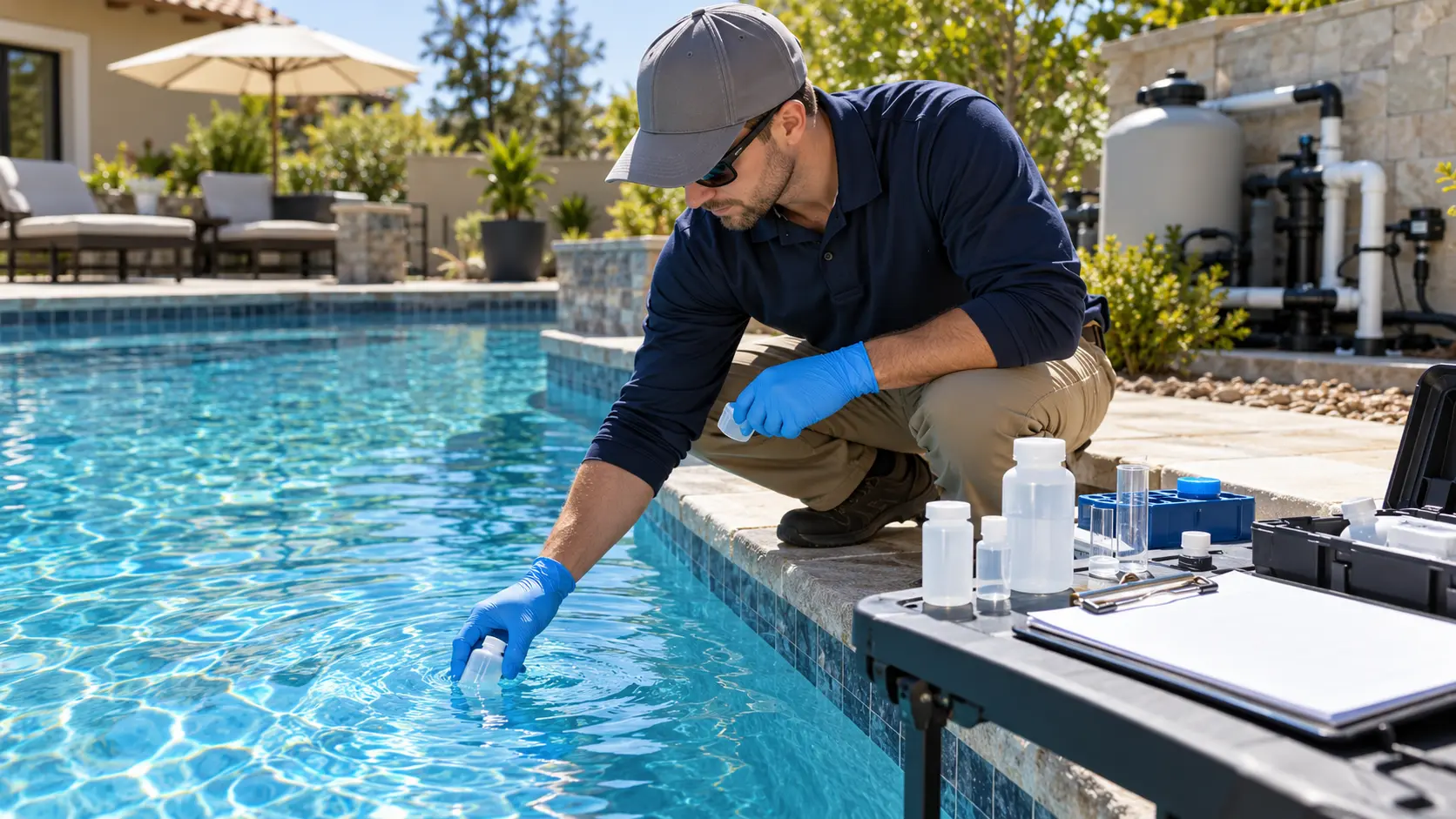
Your test strip looks fine, yet the pool is cloudy, the water has a green tint, or someone climbs out with an itchy rash. Home strips are still the right tool for weekly pool water testing because they give you a quick read on everyday chemistry.
A lab scan answers a different question: what else is in the water that a strip cannot show?
ETR Laboratories is accredited to ISO/IEC 17025 by ANAB for specific testing listed within our scope of accreditation. Our swimming pool scan reports bacteria, microorganisms, pH, alkalinity, chlorine, copper, iron, and salt. This article explains what strips do well, what a lab scan adds, when one may be useful, and how to collect a sample.
Home strips work well for the chemistry you check during normal pool maintenance, including chlorine, pH, and alkalinity. They are quick, inexpensive, and useful for seeing whether the water is drifting between regular maintenance checks.
Our guide to water test strips vs lab testing takes the same position: strips are useful for routine pool and spa chemistry, while laboratory testing answers different questions.
Strips also have limits:
If you want a refresher on pool sanitizer chemistry, our article on chlorine in water covers the basics.
ETR’s swimming pool scan reports bacteria, microorganisms, pH, alkalinity, chlorine, copper, iron, and salt. It complements routine strip testing by giving you laboratory results for parameters that strips may not cover or cannot show at all.
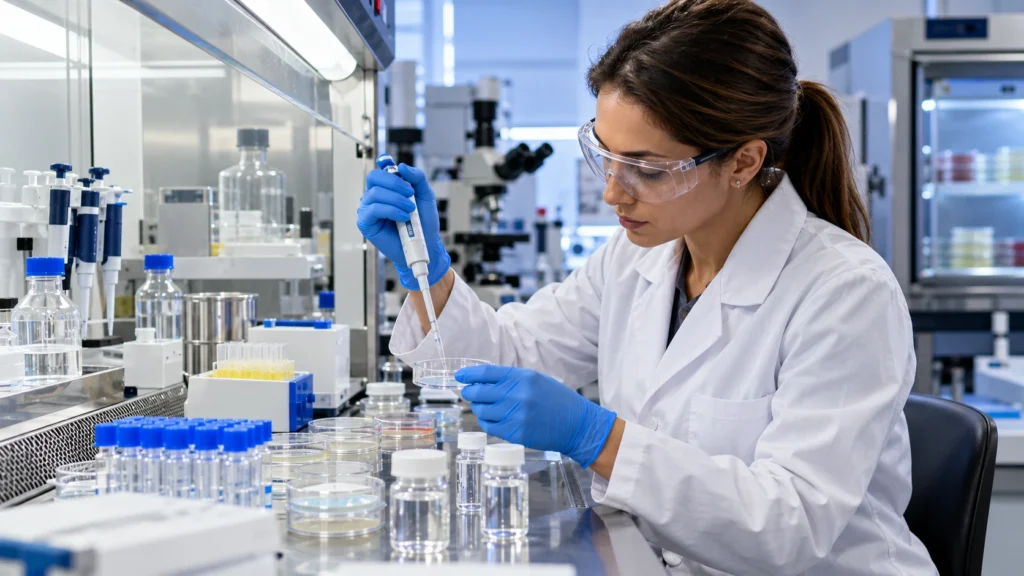
The table below compares the two approaches:
| What You Want to Know | Home Test Strip | Lab Pool Scan |
| Chlorine, pH, and alkalinity | Quick color reading | Included in the scan |
| Bacteria and microorganisms | Not shown | Included in the scan |
| Copper, iron, and salt | Depends on the strip | Included in the scan |
| Best use | Routine chemistry checks | Baseline testing or investigating a problem |
If you want a first laboratory look at your pool water, you can order the initial pool water scan for $150.
Bacteria can still matter even when a strip shows an acceptable chlorine reading because disinfectants do not kill every germ instantly.
The CDC explains that chlorine or bromine kills most germs in properly treated recreational water within minutes, while some germs survive longer.
Public-health laboratories may test pools and spas for specific organisms such as coliform bacteria and E. coli, depending on the program. ETR’s pool scan page lists bacteria and microorganisms generally, but it does not specify which organisms are individually reported. If you need testing for a particular organism, confirm that with ETR before ordering.
Our guide to bacterial water testing explains how laboratory bacteria testing works more broadly.
Chlorine, pH, and alkalinity are connected. Changes in pH and alkalinity can affect how the water behaves and how well the sanitizer performs.
A laboratory reading shows where each value stood when the sample was collected. If a result needs correction, follow the chemical label or work with your pool professional rather than treating the lab report as a dosing guide.
Our guide to pH values of water explains the pH scale, while the Langelier saturation index covers how water balance relates to corrosion and scale.
Copper and iron can cause staining or equipment problems, and ETR’s pool scan includes both.
Salt is also relevant in pools that use a salt-chlorine system because the scan reports the salt concentration along with the other listed parameters.
A laboratory result confirms what was present in the sample. It does not automatically identify the source. Metals may come from fill water, equipment, plumbing, or other sources, so use the result as a basis for discussion with your pool professional.
A lab scan is most useful when your pool behaves in a way routine strip testing can’t explain.
Common examples include:
The scan gives you data rather than a diagnosis. If you want that baseline, you can order the initial pool scan.
Hot tub rash is often associated with folliculitis, an infection involving the hair follicles.
A CDC report on Pseudomonas dermatitis and folliculitis associated with pools and hot tubs describes outbreaks linked to recreational water and notes problems with disinfectant control in the reported cases.
If you or someone in your household develops a rash, speak with a doctor first. Water testing can provide additional information about the pool or spa, but it cannot diagnose or treat a skin condition.
Legionella is a separate issue. Our guide to Legionella water testing covers spas and hot tubs as systems where the organism may be a concern, and ETR offers a separate Legionella water test.
ETR’s pool scan page does not state whether it accepts hot tub samples, so call 1-800-344-9977 before collecting one.
Start with the initial scan.
The initial pool water scan costs $150 and is intended for an initial analysis. The pool scan follow-up costs $100 and follows an initial swimming pool scan.
A simple sequence is:
The follow-up gives you a before-and-after comparison rather than another isolated snapshot.
Before collecting the sample, call ETR at 1-800-344-9977 to confirm the correct bottle, sample volume, and shipping instructions for the pool scan. The product pages do not specify those details.
ETR’s general guide on how to collect a water sample covers the habits that help protect sample quality.
For pool samples, public-health laboratories commonly use steps such as these:
Southwest Utah Public Health, for example, instructs pool and spa customers to collect at least six inches below the surface and gives its own temperature and delivery requirements. Those are that agency’s procedures, not automatically ETR’s, so use ETR’s instructions for an ETR sample.
If you recently shocked the pool or added chemicals, mention that when you call before sampling.
A laboratory result is a snapshot of the sample you collected on that day.
Pool chemistry can change after heavy rain, heavy swimmer use, maintenance, or chemical additions, so one report does not describe the pool forever.
If a result says ND, our guide to non-detect results explains what that wording means and why the reporting limit matters.
Take unusual chemistry results to your pool professional, who can help determine what maintenance response makes sense. Take medical concerns, including a persistent rash or ear symptoms, to a clinician.
If something on the laboratory report is unclear, contact ETR and ask what that particular result means.
Home chemistry checks are typically done weekly during the swimming season and may be done more often with heavy use. Laboratory scans are not meant to replace those routine checks. They are better used as a baseline or when you are investigating a problem that your normal strip readings do not explain.
Standard home pool strips mainly measure chemistry and do not identify bacteria. Laboratory testing is needed when you want information about bacteria or other microorganisms. ETR’s pool scan lists bacteria and microorganisms, but the product page does not specify which individual organisms are reported, so confirm with the lab if you need a specific one.
Hot tub rash is commonly associated with Pseudomonas folliculitis and has been linked to inadequately controlled recreational water. If you develop a rash after using a pool or hot tub, speak with a clinician. Testing the water can provide additional information for whoever manages the pool or spa.
ETR offers a separate Legionella water test, and our Legionella article discusses spas and hot tubs. The pool scan page does not state whether hot tub samples are accepted, so call ETR at 1-800-344-9977 before ordering or collecting a sample.
Home strips remain the practical tool for routine chlorine, pH, and alkalinity checks. A laboratory scan complements them when you want a closer look at bacteria, microorganisms, metals, salt, or a pool problem that routine chemistry does not explain.
You can begin with the first pool water scan for $150 and use the pool scan follow-up for $100 after an initial scan if you want to compare the same reported parameters.
If you have questions about sample bottles, collection, or whether a hot tub sample is appropriate, contact our team or call 800-344-9977 before you collect.