Testing a Shared Well: Who Pays and What to Test For
Sharing a private well with your neighbors means sharing responsibility
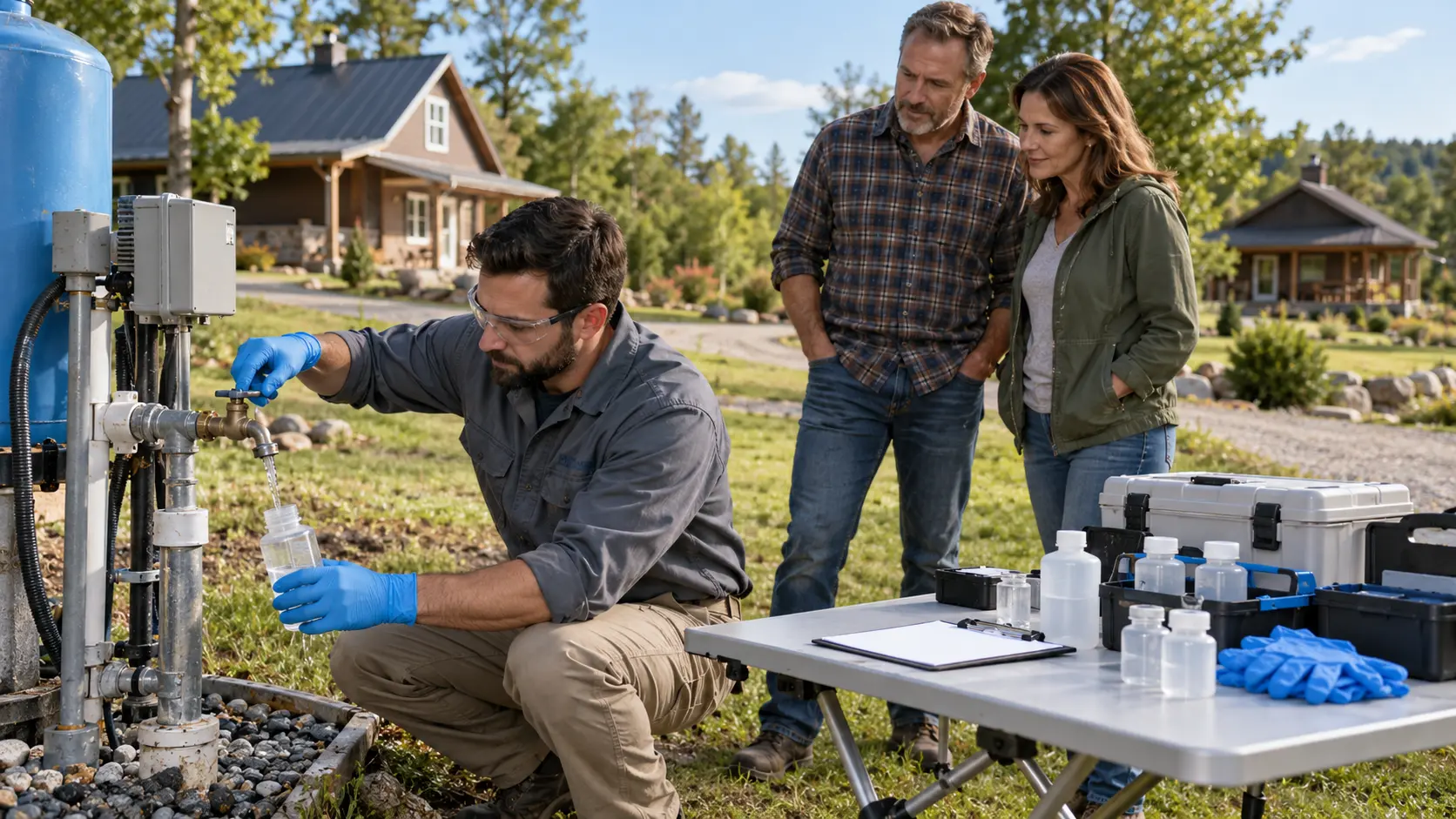
Sharing a private well with your neighbors means sharing responsibility for the water your households use. But when it’s time to test the water, questions can come up. Who should arrange the test? How should you split the cost? And does one water sample tell you everything you need to know?
Regular water testing helps identify potential contaminants and keep your drinking water safe. However, with a shared well, you should also agree on a testing schedule, sampling location, and how you’ll share the results.
In this guide, ETR Laboratories explains how shared well water testing works, who typically pays for it, which contaminants to test for, and how to create a simple testing plan that works for everyone.
Your shared well agreement decides who pays for water testing. Without one, the cost often falls on whichever household orders the test, so settle the split in writing before anyone needs a result.
EPA says that private well owners are responsible for delivering safe drinking water to their households, so the cost rule is up to you and your neighbors.
Here are the common ways to split the lab fee:
Our well water test kits ship free both ways, so the only cost to divide is the lab fee. Here is the cost per home at our current prices.
| Homes sharing the well | Basic Well Water Test ($179) | Premium Well Water Test ($249) |
| 2 homes | $89.50 each | $124.50 each |
| 3 homes | $59.67 each | $83.00 each |
| 4 homes | $44.75 each | $62.25 each |
Split the bill with a single kit, then share the report. Our guide to well water testing cost explains what drives the price of a panel.
Once the cost rule is settled, the same agreement can cover every other testing detail your households need to agree on.
It should say who orders and schedules tests, how often you test, which panel you use, who collects the sample, how the report is shared, how the cost is split and what happens after a failed result. Writing those points down turns shared well water testing into a routine task instead of a negotiation, which also supports shared well agreement testing later.
Here is a checklist for your agreement:
Here is a sample clause you can adapt: “The households will test the shared well once a year at the agreed sampling tap. The household that orders each test will give every household the invoice and the full report, and the households will split the fee equally.”
Treat that wording as a starting point, because this article is general information and not legal advice. A property-law attorney can review the final wording.
Once the agreement names a panel, you need to know which tests belong on it.
Start with bacteria, nitrate, nitrite, lead, arsenic and pH, then add tests that fit your setting. Your local health department can tell you what is common in groundwater near you, which helps you judge shared well water quality.
Here is how our panels fit a shared well:
Our Basic, Premium or Ultimate panel guide walks you through the choice, and every test includes a free expert consultation.
Each panel is a single sample from a single tap, so it does not cover every home’s plumbing. Lead from a household’s own pipes would need a separate sample from a tap inside that home.
Once you choose the panel, every test needs to come from one tap.
To test a shared well, choose one agreed tap, name one person to collect, follow the kit instructions and share the full report with every household. Our guide on how to collect a water sample covers every bottle, and your kit instructions come first.
Here are the steps in order:
If neighbors disagree about a result, a sample drawn by a third party with a signed form gives everyone a record of who handled the water. Our guide to chain of custody says a legal dispute always calls for one. If your neighbors live in different places, our guide on how mail-in water testing works walks through the kit, the sample and the shipping.
The same tap and steps each time keep results comparable, so the next decision is how often to repeat them.
Test at least once a year, because EPA recommends that you test a private well every year for total coliform bacteria, nitrates, total dissolved solids and pH. That schedule is public health guidance with no legal weight by itself, so your agreement can make it a firm habit.
EPA also lists situations that call for a test sooner. Here are the ones that fit a shared well:
For a quick bacteria check after a repair or a flood, our coliform and E. coli test costs $65, and results arrive 1 to 2 business days after the sample reaches our lab.
The number of homes on the well can change the rules too. EPA defines a public water system as one that provides water to at least 15 service connections or serves an average of at least 25 people for at least 60 days a year, and those systems follow different rules than a private well. If your well serves several homes, ask your state drinking water agency whether it counts as one.
A steady testing schedule with dated reports also helps when one of the homes changes hands.
A lender, agent or buyer may ask for a written shared well agreement and a recent water test, and what applies depends on the lender, the loan and your state.
A shared well mortgage water test follows the same pattern as any private well test. The lender sets which contaminants to test, who may collect the sample and how recent the result must be. Ask for those details in writing before you order. Our article on well testing when buying or selling a home covers panels and timing, and our guide to well water testing requirements by state links each state to its official source.
For lender-driven testing, ETR real estate water testing includes a private consultation with our staff at no additional charge.
That paperwork goes smoothly when every neighbor cooperates, so it helps to have a plan for when one does not.
Put your request in writing, attach the lab’s price and offer a split that every household can see.
Here are practical steps:
A property-law attorney can advise on disputes, since the answer depends on your agreement and local law. Your local health department is also a good place to ask about any result that may affect someone’s health.
Here are short answers to common questions about shared wells.
Not usually for a simple water test, but your agreement may require notice or approval before anyone orders one. Check the agreement first, and if it is silent, tell your neighbors before you collect the sample. Sharing the full report afterward keeps every household informed.
Yes, if your agreement allows it or your neighbors agree. Keep the invoice and the full report, and send both to every household with the amount each one owes. Agreeing on the split before you order makes the request easy for neighbors to accept.
State rules and lender limits decide, so check with your state drinking water agency and your lender. EPA defines a public water system as one with at least 15 service connections or an average of 25 people for 60 days a year, and public systems follow different rules.
Avoid drinking the water until you know the cause, and ask your local health department what to do for the result you received. Then fix the cause as your agreement directs and retest. If the cause is unclear, a Premium or Ultimate panel screens more substances.
ETR Laboratories can help your household put the plan into practice, starting with a written cost rule, one sampling tap and a yearly test. For your first test, order the Basic or Premium Well Water Test, and our free expert consultation can walk everyone through the results.
If you want help choosing a panel, call us at (800) 344-9977 for a free consultation. Our well water test kits ship free both ways, so you can start your shared well water testing plan with one kit and one shared report.