Free Shipping on Orders of $100 or More

Legionella Water Test

$350.00

Our Legionella Water Test checks a water sample for Legionella, the bacteria behind Legionnaires’ disease and Pontiac fever. Legionella grows in warm, stagnant water, so water heaters set too low, unused bathrooms, hot tubs, and long hot water lines are common trouble spots. It suits homeowners with an older or at-risk household member, and property managers following a water management plan.

A clean city water report does not rule out Legionella, because the bacteria usually grow inside a building rather than in the water mains. Water heaters, storage tanks, and pipes where disinfectant has faded are the usual places. A sample from the shower or tap you use gives the answer the city report cannot.

What is Legionella?

Legionella is a bacterium that lives naturally in lakes and streams in small numbers. It becomes a problem when it settles into building plumbing, where the CDC notes it grows best between about 77 and 113°F.

Here are common places it grows:

  • Water heaters set below 140°F
  • Unused showers, faucets, and closed wings of buildings
  • Hot tubs, decorative fountains, and cooling towers
  • Biofilm, the slimy layer inside pipes, tanks, and showerheads

People can get sick by breathing in fine mist that carries the bacteria. The CDC's Legionella pages cover prevention in more detail.

Is this test right for me?

Testing makes sense if someone in your household is over 50, smokes, has chronic lung disease, or has a weakened immune system. Those groups face the highest risk of serious illness.

It also fits after a home or building has sat empty for weeks, or after a case of Legionnaires' disease has been linked to a building. Testing helps too when you are unsure your hot water stays hot all the way to the tap.

Property managers and facilities with spas, cooling towers, or long hot water loops may need sampling under a water management plan. Our Legionella testing guide explains how to choose sample points.

Shipping info

Orders of $100 or more ship free, and orders under $100 ship for an $8 flat rate. The cooler kit includes an overnight return label.

Legionella samples are temperature sensitive, so pack them with the ice packs and use the overnight prepaid label rather than regular mail. Ship as soon as possible after you collect.

Tested in Our Accredited Lab

We analyze your sample in our accredited lab, using established testing methods and quality controls.

We have tested water since 1995.

Free Expert Consultation

Every test includes a free consultation with one of our water experts. We go over your results with you, explain what the numbers mean for your home, and help you decide on the appropriate next step, including any filtration approach.

Order Kit

Ships free to your door
Collect Sample

Takes under 5 minutes

Ship to Lab

Free return shipping

Get Results

Expert Consultation

Order Kit

Ships free to your door

Collect Sample

Takes under 5 minutes

Ship to Lab

Free return shipping

Get Result

Expert Consultation

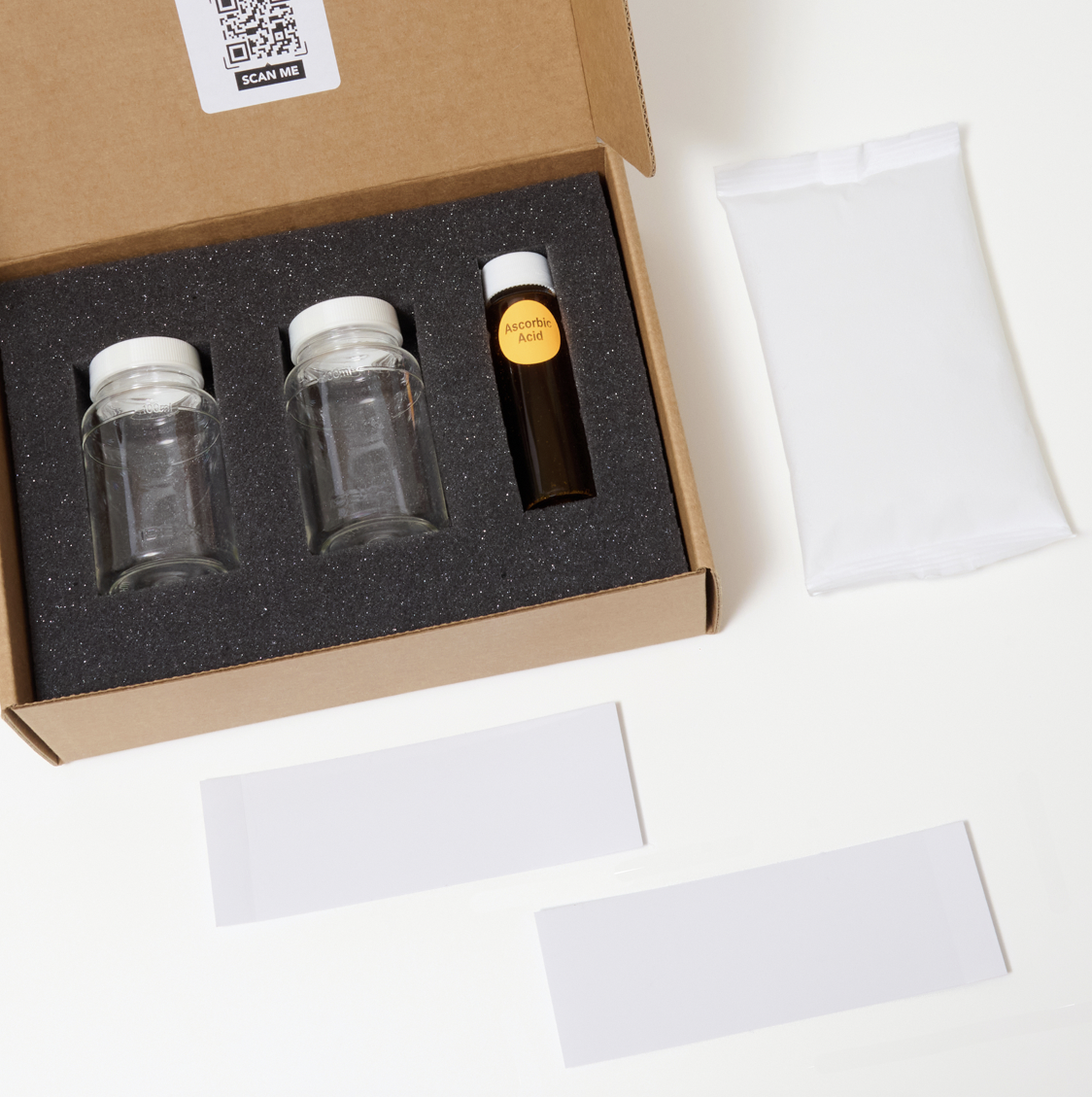
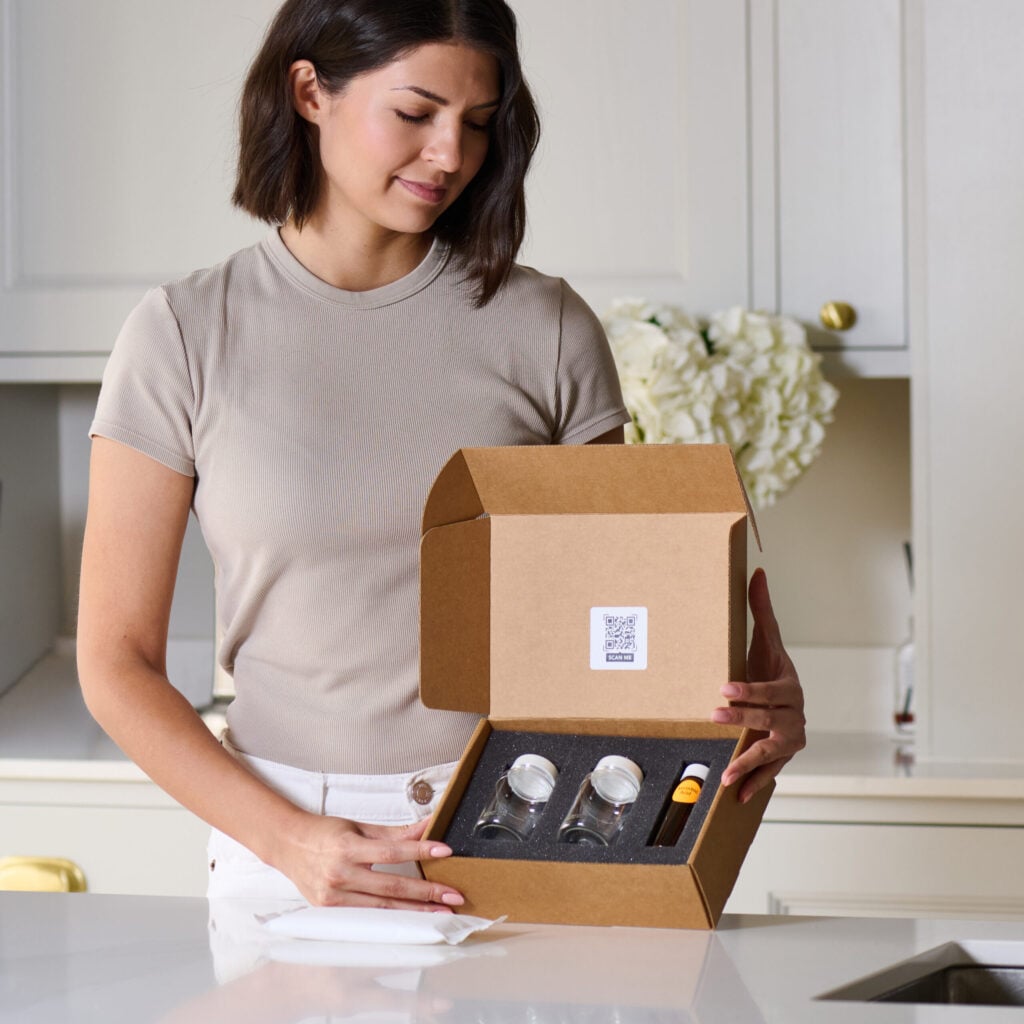
What’s Inside Your Testing Kit?

Sampling Instructions

Every test comes with step-by-step instructions on how to prepare your water source, collect your water sample, and prepare your sample for return shipment to our lab.

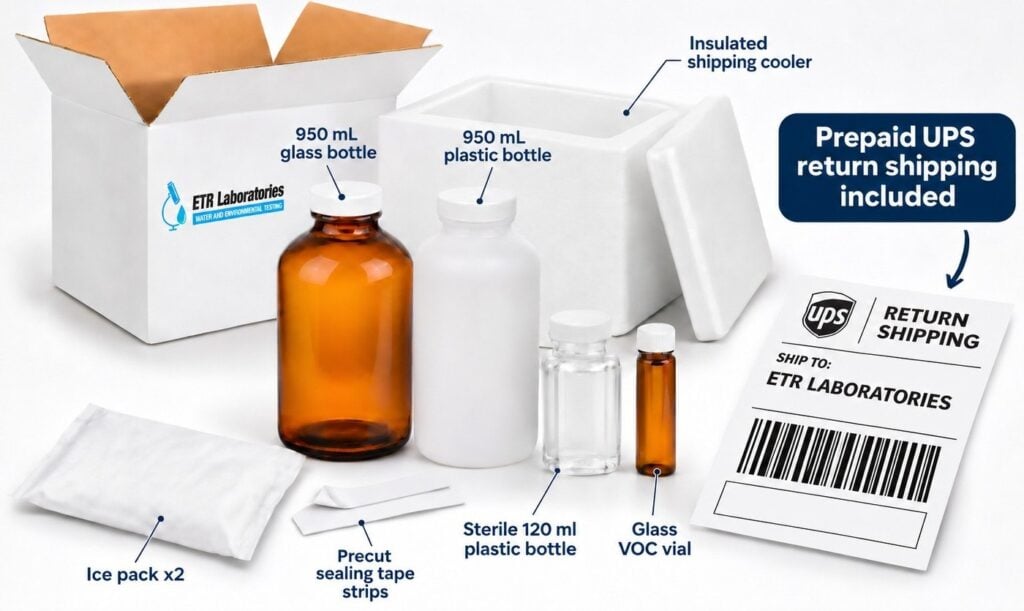
Sterile Insulated Cooler Kit

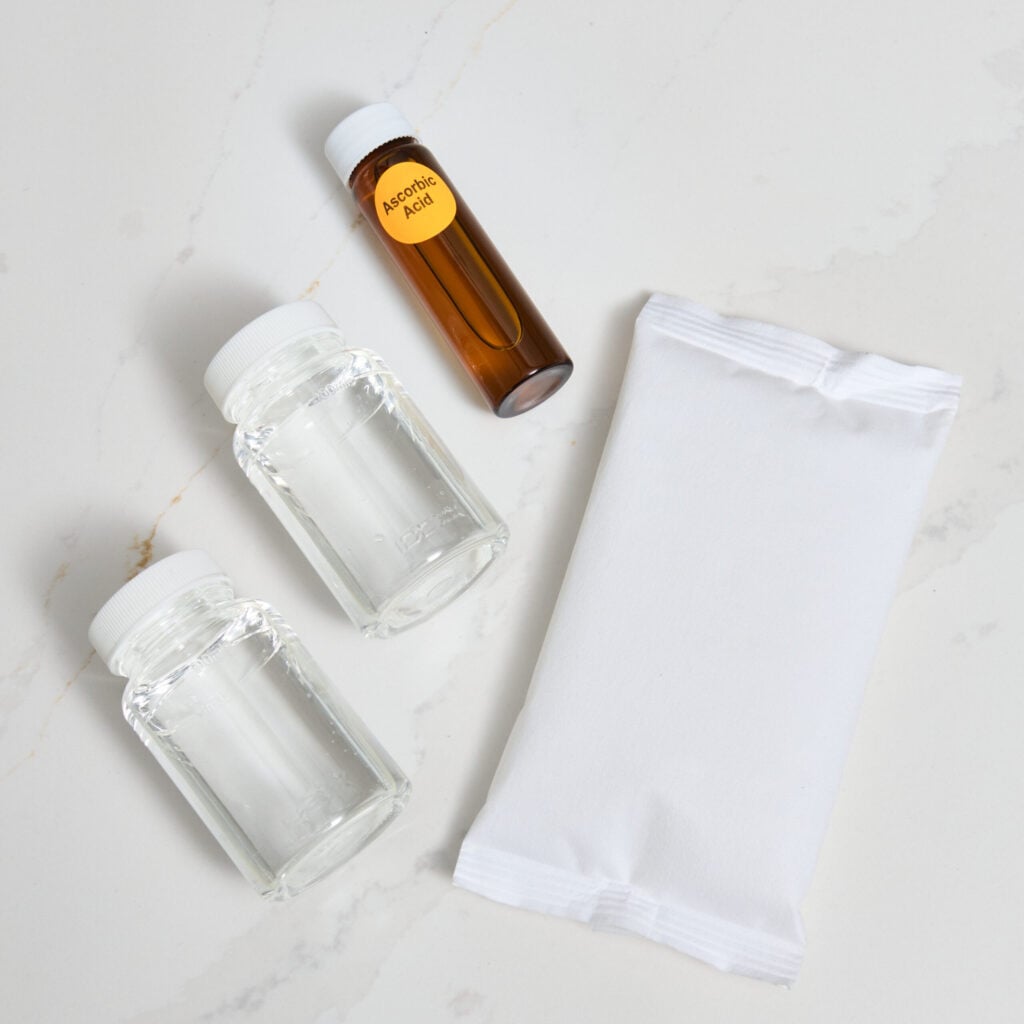
The appropriate sample containers are provided with sterility and sample volume requirements taken into consideration.

Sample Information Form

A short form to fill out with basic information about your water source. This helps our lab technicians process your results accurately.

Prepaid Shipping Label

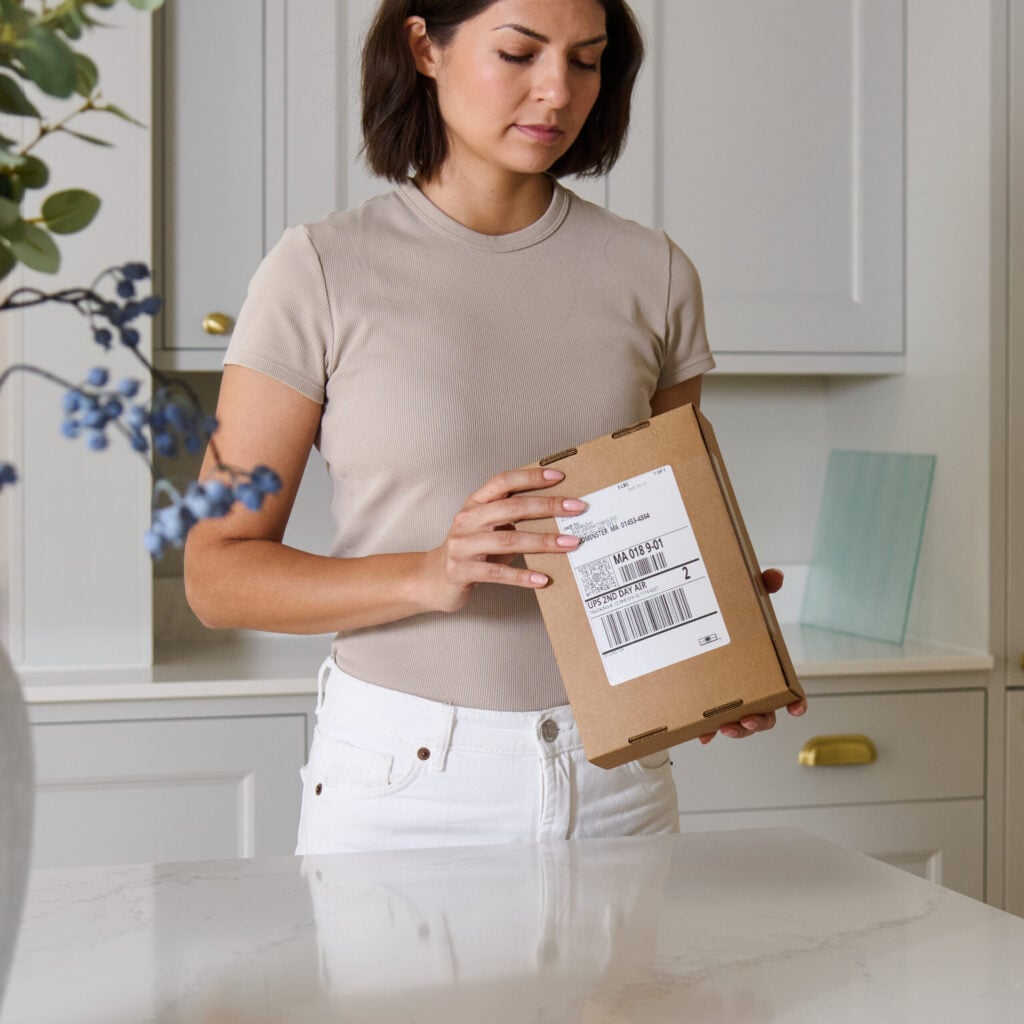
A pre-paid return shipping label is included — just drop the sealed package in any mailbox or hand it to your mail carrier. No extra cost.

Sterile Insulated Cooler Kit

Our Reviews

★★★★★
ANGI

“The test was simple—collect a water sample from a faucet in the home. We sent the test to the lab and received a water quality analysis within a few days. The test included analysis of the water sample for the presence of: coliform bacteria, E. coli, iron, lead, pH, turbidity, and nitrates/nitrites.”

Taylor L.

★★★★★
TRUSTPILOT

“Incredible lab, they really care about their customers. As someone who doesn’t know a whole lot about water quality, they took their time to help me understand everything about my water quality situation.”

Brad R.

★★★★★
GOOGLE

“I’ve used ETR for several tests, both water and air. The test kits are easy to understand and the reports are very comprehensive. But what really makes them stand out is their quality of service. There is a lot of terminology in these reports that I don’t understand, but their staff is very knowledgeable and always available to assist. They really take their time to review the results with you on the phone, and answer any questions you may have.”

John T.

4.8

Average Rating

across all platforms

500K+

Water Tests Sold

nationwide since 1995

342+

Reviews on Angi

verified homeowner reviews

Why Choose ETR Labs to Test Your Water

Results You Can Trust

Accuracy is at the core of everything we do, and through strict quality standards and a commitment to scientific excellence, we deliver results you can trust.
 

No Middleman

We run every test inside our own lab in Leominster, Massachusetts. Your results come straight from us, not a subcontractor. That keeps our pricing fair and our quality consistent across every kit we send out.

Free Follow-Up Consultations

Most labs stop at handing you a report. We do not. Every result comes with a free call to one of our water quality experts, so you understand what your numbers mean and what to do next.

Respected Name in the Water Industry

ETR Laboratories has run water tests for over 30 years. We hold membership in the national Water Quality Association and the Massachusetts Ground Water Association.

We're Trusted by Our Customers

Our reviews reflect the work we do. We hold a 4.8 out of 5 rating on Google, a 4.8 out of 5 rating on Angi from 342 reviews, and five-star ratings on Trustpilot.

Our Recommended Test

We recommendPremium Water Test

Premium Water Test

Our Premium Water Test screens your water for 113 substances in one round, including bacteria, radon, heavy metals, and industrial chemicals, providing homeowners and landlords with a thorough assessment for peace of mind. We have run…

  • Bacteria
  • Radon
  • Heavy Metals
  • Industrial Chemicals
  • Minerals & Water Attributes
$249.00

FAQs

Is Legionella in water harmful?

It can be when people breathe it in. Fine mist from a shower, faucet, or hot tub can carry Legionella into the lungs and cause Legionnaires' disease, a serious pneumonia, or Pontiac fever, a milder flu-like illness. Drinking water normally is not the usual route. Adults 50 and older, smokers, and people with weakened immune systems face the highest risk. Anyone with pneumonia symptoms after a possible exposure is wise to see a doctor.

How much Legionella in water is too much?

There is no safe level set for home plumbing, and the EPA health goal for Legionella in public water is zero. Federal rules do not set a numeric limit for a house, so any detection is worth acting on. Larger buildings often follow action levels written into their own water management plan. Our team can help you decide how to respond to your number.

Can you tell if water has Legionella?

No, not by looking, smelling, or tasting it. Water with Legionella can appear perfectly clear. The warning signs are conditions in your plumbing rather than anything in the glass, such as a cool water heater, unused fixtures, slime in showerheads, or a building that sat closed for weeks. A Legionella water test is the only way to confirm it.

Which temperature kills Legionella?

Hotter water kills Legionella faster, and guidance usually calls for storing hot water at 140°F or above. Growth slows sharply once water rises above the warm range it prefers, and the higher the temperature, the shorter the time needed to kill it. That protection only holds if water stays hot all the way to the fixture, so long pipe runs and unused branches deserve attention too.

How common is Legionella at home?

Legionella can turn up in home plumbing, but homes with properly heated water and regular use usually do not have a problem. Reported outbreaks are more often tied to large buildings such as hotels, hospitals, and apartment complexes with complex water systems. Homes face more risk when water heaters run cool, fixtures sit unused, or someone in the household has a weakened immune system.

What should I do if my water tests positive for Legionella?

Common next steps include setting the water heater to at least 140°F, with a mixing valve or care at the tap to avoid scalding, and flushing fixtures that sit unused. Cleaning showerheads and faucet tips and keeping hot tubs well maintained also help. Larger buildings usually respond under their water management plan, which may include disinfection and follow-up sampling.

How often should I test for Legionella?

It depends on your building. Homes usually test when something raises the risk, such as weeks of vacancy, a water heater that runs cool, a household member with a weakened immune system, or a Legionnaires' case linked to the property. Buildings with a water management plan follow the schedule written into it, which often includes routine sampling plus extra tests after repairs or shutdowns. A clean result after any fix confirms the change worked.

Does chlorinated city water prevent Legionella in my pipes?

No. City water carries a disinfectant, but it fades as water sits in pipes, tanks, and water heaters, and biofilm inside plumbing can shelter Legionella from it. That is why growth depends more on conditions inside a building than on the water source. Well water has no disinfectant at all, so warm, still water in a home on a well deserves the same attention. Keeping hot water hot and fixtures in use helps on either supply.

Statement of Confidentiality

No shared results. Our laboratory holds our clients privacy to the highest regard, your results and information will never be shared. Be aware that state certified laboratories may be required to report your results to various government agencies.