
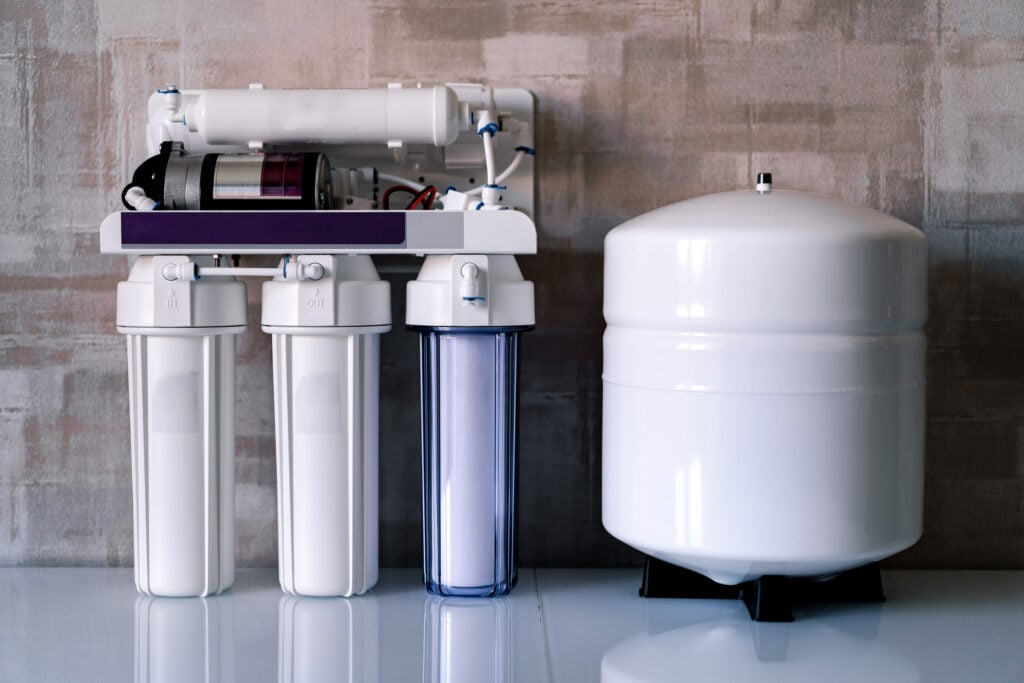
Interest in home water filtration is at an all-time high this year. However, deciding on the right filtration system for your home can be confusing because there are so many different filters on the market. ETR Laboratories helps you get started on the decision-making process to help you supply your home with healthy, good-tasting water by answering your most pressing questions.
1. What contaminants should I be most concerned about in my tap water?
The “big four” most people should think about are microorganisms, heavy metals, industrial chemicals, and disinfection byproducts. Microorganisms include bacteria, viruses, and parasites that can slip into water from broken pipes or sewage contamination. Wells can become damaged and microorganisms can enter drinking water. Metals like lead, copper, and arsenic can leach from older plumbing or natural rock. Chemical pollutants include pesticides, industrial chemicals, and “forever chemicals” such as PFAS. Disinfection byproducts are new chemicals formed when chlorine reacts with natural materials in water. To determine which of these contaminants you would need to filter out, you’ll have to start with professional water testing.
2. What’s the best way to find out which filtration method removes specific chemicals or impurities?
This is a two‑step process. First, you need to learn what’s in your water. Then you can choose the right filtration system to remove it. A good lab report will spell out which contaminants were found and at what levels, often with the recommended limits for each contaminant. From there, you can use buying guides and scientific certifications to help you make your decision. If you need to remove lead, nitrates, or PFAS, you can choose between carbon, reverse osmosis, ion exchange or other systems certified to remove these substances.
3. What’s the difference between activated carbon, reverse osmosis, ion exchange and UV filtration?
Each technology tackles the problem of water contamination in a different way. Activated carbon is like a sponge for many chemicals. It will remove chlorine and many other chemicals. It will also improve taste and odor. Reverse osmosis pushes water through a very fine membrane that keeps out many dissolved substances like metals, nitrate, fluoride, and some microorganisms. Ion exchange swaps unwanted substances such as hardness minerals (mostly calcium and magnesium) or some metals for less troublesome ones. UV doesn’t remove anything. It uses ultraviolet light to eliminate harm from microorganisms. You may need more than one of these systems to get the quality of drinking water you want.
4. Is a whole-house water filtration system better than point-of-use filters?
Your right choice depends on what you want to protect. A whole-house system treats water as it enters your home, so every tap, shower, and appliance gets filtered water. That’s ideal if your water contains minerals, sediment, chlorine, or other contaminants that can harm skin, hair, plumbing or appliances. Point‑of‑use filters are under‑sink or countertop systems and only treat water supplied at specific locations, like the kitchen sink. They’re often more affordable upfront. Many households use a mix: basic whole‑house filtration for general use plus a stronger point‑of‑use system for drinking water.
5. How does the cost of installation and maintenance vary between different filtration systems?
Costs come in three parts: the system itself, the installation, and its ongoing maintenance. Pitchers and faucet filters are inexpensive to buy and easy to install, but their cartridges may need replacing every month or two, so the cost per gallon could be surprisingly high. Under‑sink and whole‑house systems cost more upfront, and may require a plumber for installation. However, their filters usually last much longer, so the cost per gallon could work out to be less. Reverse osmosis systems are composed of several parts and each part has a different lifespan. You need to find out from your provider what the costs of filter and membrane replacement will be. A water test up front can help you avoid getting more filtration than you really need.
6. Are there filtration methods that remove both microorganisms and heavy metals?
No single technology is perfect at both. It works better to choose combinations of filters that give you the result you want. Reverse osmosis can reduce many dissolved metals—such as lead, arsenic, and chromium—while also blocking some microorganisms. Prefiltration may be needed to remove sediment, chlorine or other contaminants that could damage the RO system. Your water quality may require a layered approach: for example, a sediment filter to catch solids, activated carbon for chemicals, reverse osmosis for dissolved contaminants, and UV or a certified microbiological filter for germs. Choosing the right components is a decision that can be best made by consulting with a filtration provider and having an accurate water test in hand.
7. Which filtration system is best at removing industrial chemicals?
High‑quality activated carbon filters are the top choice to remove many industrial organic chemicals, including industrial solvents and volatile organic compounds (VOCs). They’re also used for some “forever chemicals” (PFAS) and many pesticides. Reverse osmosis reduces a broad range of dissolved contaminants that carbon alone might miss. For the person who wants the surest method of removing industrial pollutants, a multi‑stage system that includes both carbon and reverse osmosis is often best.
8. What certifications should I look for to verify a filter’s effectiveness?
A certification shows that an independent organization has tested the filter’s ability to remove specific contaminants. One standard might apply to the ability to remove chlorine and improve taste and odor. Another certification might relate to the removal of contaminants like lead or chemicals that could harm your health. The key is to match the standard on the label to the contaminants you are concerned about.
9. How often do most water filters need to be replaced or maintained?
Filter life depends on design, the level of contamination in the water, and the volume of water consumption. Pitcher and faucet filters often need new cartridges every one to three months. Under‑sink carbon cartridges might last six months to a year. Some whole‑house systems last even longer before needing replacement. Reverse osmosis systems usually have multiple stages. A prefilter may need replacement every six to twelve months. Membranes can last several years if a quality prefiltration system is added. To keep your water quality high and protect your filters, exactly follow replacement schedules.
10. Can water filtration improve taste and odor, or just remove contaminants?
Yes, filtration can certainly improve taste and odor—sometimes that’s the first thing people notice. Chlorine, sulfur smells (“rotten egg” odor), and earthy or musty tastes often come from chemicals or natural organic material in the water. Carbon filters are particularly good at reducing these so that water tastes cleaner and fresher. At the same time, systems that reduce metals like iron or manganese can remove metallic or rusty flavors and discoloration.
11. Are under-sink filters more effective than pitcher, countertop or faucet-mounted models?
Under‑sink filters often have larger cartridges and more room for advanced media or membranes, so they can treat more water and a wider range of contaminants before needing replacement. Many reverse osmosis systems are under‑sink, which adds powerful treatment for dissolved substances like nitrate, fluoride, and some metals. Pitcher, faucet, and countertop filters shine in convenience and affordability, especially for renters or small households. They can do a good job on basics like chlorine, some metals, and taste issues, but usually have more limited capacity and narrower contaminant coverage. The “best” option is the one that matches your lab results, budget, and how much installation you’re comfortable with.
12. If I have hard water, do I need water softening as well as filtration?
Hard water causes nuisance problems like scale on fixtures, spots on dishes, soap that doesn’t lather well, and sometimes dry skin or dull hair. It can also cause a buildup inside pipes, which can reduce water pressure and clog appliances. A water softener, usually using ion exchange, is designed specifically for calcium and magnesium that make water hard. Filtration, on the other hand, removes contaminants like metals, chemicals, or germs. If testing shows your water is both hard and contains unwanted contaminants, you can benefit from both systems.
13. Which individuals have a special need for filtered drinking water?
Some people are more sensitive to contaminants. This includes infants, pregnant individuals, older adults, and anyone with a weakened immune system, such as people undergoing chemotherapy or living with certain chronic illnesses. Individuals with kidney disease or specific heart conditions may need tighter control over minerals like sodium or certain metals. In areas with known contamination—like high nitrate, arsenic, or lead—everyone benefits from better protection.
14. What is the best way to find out what needs to be filtered out of my water so I can install the right filtration system in my home?
The smart way to start is to get a comprehensive, professional water test done. If you’re on city water, test your tap water. The results will provide you with the picture of what you need to remove from your water. Contaminants could be left by your municipal water treatment, be added as a result of disinfection, or come from the plumbing fixtures in your home or service lines in your city. If your home is supplied by well water, an accurate water test will provide a look at the health of your well as well as tip you off to any natural sources of contaminants.
15. What type of filtration will remove PFAS from my drinking water?
PFAS are nicknamed “forever chemicals” because they break down very slowly. Not every water filtration system can handle them. The two main technologies that work well are high‑quality activated carbon and reverse osmosis. There are also some ion-exchange systems designed specifically for PFAS. In practice, the best results usually come from a multi‑stage system customized for PFAS. Start with carbon and reverse osmosis or ion exchange that is certified for PFAS reduction. Standards like NSF/ANSI 53 or 401, or state‑level approvals, have been tested for their ability to remove PFAS. Because PFAS behave differently from many other contaminants, a lab test for PFAS is the safest way to confirm your starting levels and then later test how efficient your chosen system is.
16. I have heard that many cities have aging water systems. What water contaminants should I be concerned about and which water filters can help protect me?
Many older U.S. water systems still use aging distribution pipes or have inefficient water purification systems. There may be tens of millions of Americans being supplied by these systems. You could face risks from lead, microbes, disinfection by-products, and “forever chemicals,” PFAS, which are toxic industrial chemicals that take decades or much longer to break down. There are point-of-use filters certified by the NSF that can reduce each of these contaminants. Here are the certifications to look for in each one:
- For lead, choose filters certified to NSF/ANSI 53.
- For microbial protection, use filters rated for cysts/bacteria (NSF 53 or 58).
- For disinfection by-products, use activated-carbon filters.
- For PFAS, use reverse osmosis or granular activated carbon filters with PFAS certification.
Always Start with Accurate, Professional Water Testing
By getting a professional water testing company like ETR Laboratories to analyze your water, you have your best shot at getting the right filtration or water treatment system for your home. Don’t invest in more filtration than you need. Tailor your system to the exact contaminants in your water.
The Premium Water Test checks for 113 different substances in your drinking or household water. This test looks for bacteria, aluminum, cadmium, calcium, magnesium, chloride, nitrate, and dozens of industrial chemicals. Order this test today from ETR Laboratories and find out what’s in your water in just a few days. With the right filtration that’s specifically designed for your water supply, you can quickly improve the quality of your drinking water.
