
Mail-In Water Testing: How It Works Anywhere in the US
Water collected at your tap or well can travel across
Free Shipping on Orders of $100 or More
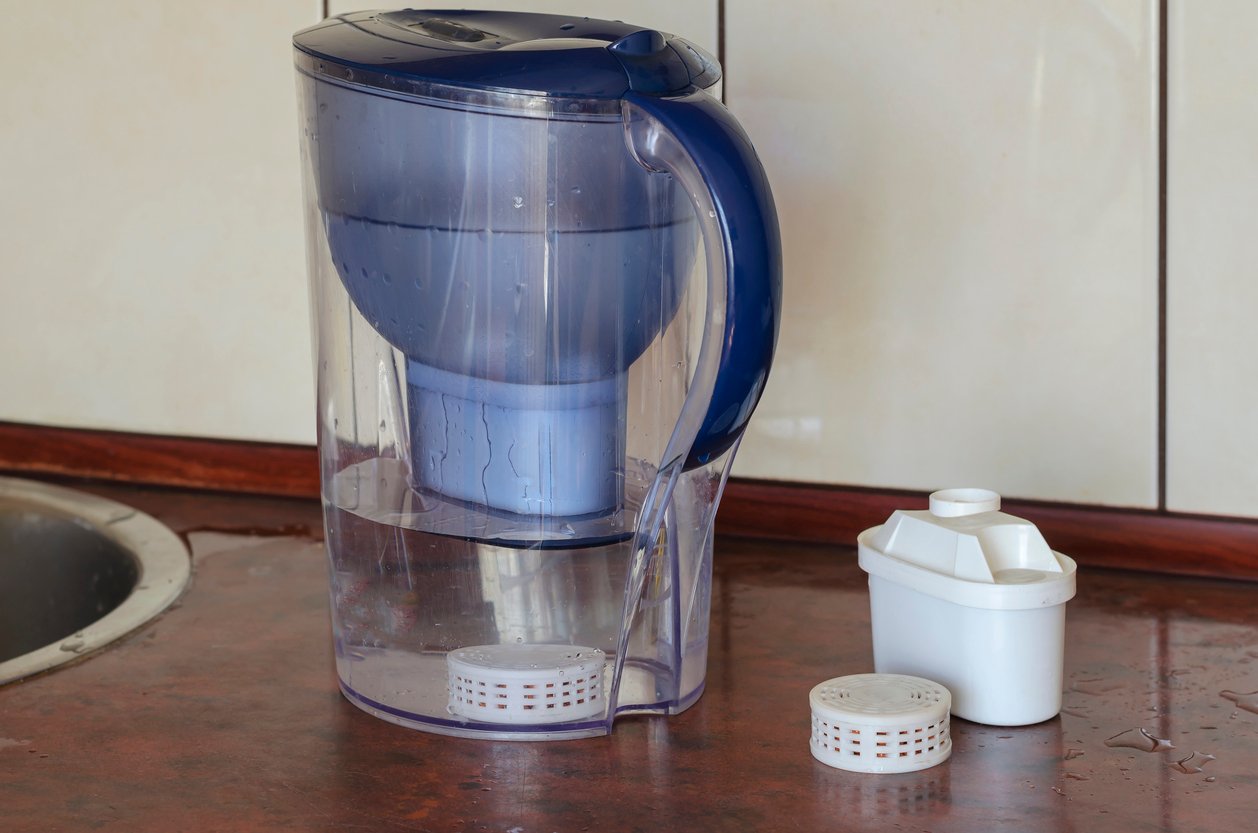
Brita is careful with its wording. The company says its filters are certified to reduce chlorine, lead, and copper to improve the taste of your drinking water. That is true, and it is also a short list. The number of contaminants a Brita pitcher removes is smaller than most people assume, and it may not include the ones you would most want gone.
So what does Brita filter out of water, and what passes straight through? In this article, we’ll break down what each Brita filter removes, what it leaves behind, and how to figure out what your own water needs.
Brita filters reduce a short, specific set of contaminants. The Standard filter handles chlorine and a few metals, and the Elite filter adds several more. The full list depends on which one you use.
Across both pitcher filters, Brita is certified to reduce:
The two filters differ in how much they remove and how long they last.
The Brita Standard filter uses activated carbon granules and an ion-exchange resin. The carbon traps chlorine and mercury, while the resin captures copper, zinc, and cadmium. It is certified to NSF/ANSI Standard 42 for chlorine, taste, and odor, with Standard 53 coverage for certain metals depending on the model. It handles about 40 gallons, roughly two months of use, before it needs replacing.
The Brita Elite filter, once sold as the Longlast, removes more and lasts longer. On top of chlorine, mercury, and cadmium, it is certified to reduce lead, benzene, asbestos, and particulates, the solid bits suspended in water such as sand, silt, rust, and debris. It is also the only Brita pitcher filter certified under NSF/ANSI Standard 401, which covers microplastics along with a range of emerging contaminants such as pharmaceuticals and pesticides. A single Elite filter handles about 120 gallons, around six months, before replacement.
That covers what Brita takes out. The longer list is what it leaves in.
A Brita pitcher filter does not remove most of what can make water unsafe, including bacteria, viruses, parasites, arsenic, nitrate, fluoride, and total dissolved solids. It is built to improve taste and reduce a handful of contaminants rather than to purify water. PFAS is a more complicated case, covered in its own section below.
Two gaps stand out as the ones to take seriously.
Brita pitcher filters are not certified to remove living contaminants. Bacteria like E. coli, viruses, and parasites like Giardia and Cryptosporidium can pass right through. The pores in a standard Brita filter are far larger than a parasite cyst (a Giardia cyst is roughly 8 to 12 microns across), so the filter cannot trap them, and the reliable signal is whether a filter is certified for cyst reduction rather than the exact micron math. On disinfected city water this rarely matters, since the utility has already treated the water. On a private well, a boil-water advisory, or any untreated source, it matters a great deal.
Brita pitcher filters do not reduce total dissolved solids, and they are not designed for heavy metals like arsenic or for nitrate, fluoride, and the long list of industrial and agricultural chemicals that can reach groundwater. If any of those are in your water, a pitcher will not touch them.
It depends on which Brita filter you mean. The Standard and Elite pitcher filters are not certified for PFAS reduction, and independent testing suggests their performance against PFAS varies by compound and falls off as the filter ages.
Brita does make a filter built for PFAS, though it is not a pitcher. The CLARITY Protect filter, used in Brita’s water dispensers, relies on a coconut-shell activated carbon that the company says reduces more than 99 percent of total PFAS, tested to NSF/ANSI Standard 53 by an independent laboratory. Brita reports it also cuts microplastics, bacteria, certain metals, pharmaceuticals, and chlorine. That filter is sold mainly for workplace and commercial dispensers rather than the home pitcher most people picture, so if PFAS is your concern, the filter format matters as much as the brand.
Most basic water filters, including Brita pitchers, do not remove Giardia. To remove Giardia and other parasite cysts, you need a reverse osmosis system, a filter with an absolute pore size of one micron or smaller, or a filter certified to NSF/ANSI Standard 53 or 58 for cyst reduction.
The CDC points to those same options, so the labels to look for on any filter are “NSF 53” or “NSF 58” paired with “cyst removal” or “cyst reduction.” A pitcher that lists none of those is not a reliable defense against parasites.
To remove what a Brita misses, you need a filtration or treatment system matched to your specific water, which is why testing first matters. The main options are reverse osmosis, activated charcoal, water softeners, ion exchange, and UV for microorganisms.
Each one targets different problems:
Reverse osmosis is one of the most thorough options. It removes a wide range of contaminants, including heavy metals, pharmaceuticals, and dissolved solids, covering arsenic, copper, herbicides, iron, lead, and sulfates. It also physically removes parasite cysts like Giardia and Cryptosporidium. The tradeoff is cost, since an RO system wastes a fair amount of water during filtering.
An activated charcoal filter handles a broad set of contaminants, including volatile organic compounds, pesticides, herbicides, PFAS chemicals, and heavy metals. Some of the VOCs worth removing include benzene, ethylene glycol, formaldehyde, toluene, and xylene.
Water softeners remove a small but important set of contaminants. They take out calcium and magnesium before those minerals clog appliances and leave scale on fixtures, and they can also remove iron and manganese. If your water is very hard, softening it first helps a reverse osmosis system work better.
Ion exchange comes in two forms. One type removes negatively charged contaminants such as arsenic, hexavalent chromium, cyanide, nitrate, perchlorate, sulfate, and uranium. The other removes positively charged ones such as calcium, magnesium, barium, radium, and strontium.
For living contaminants, the goal shifts from filtering to killing. UV sterilizers treat water with ultraviolet light as it enters the home and neutralize bacteria, viruses, and parasites without chemicals. For a contaminated well, the fix is to find and seal the entry point, then disinfect the well with an agent made for potable water, not household bleach, which is hard to flush out of plumbing. Boiling water for at least one minute also kills parasites in a pinch, though it does nothing for the well itself.
The main disadvantage of Brita filters is their limited range: they improve taste and reduce a handful of contaminants but do not remove bacteria, viruses, parasites, arsenic, or dissolved solids, and the pitcher versions are not certified for PFAS. They also need regular replacement, since an old filter loses effectiveness and can harbor bacteria, and the flow is slow compared with a plumbed-in system.
For most municipal water, Brita-filtered water and tap water are both safe to drink, and a Brita mainly improves taste by cutting chlorine. Brita becomes the better choice when you want to reduce specific contaminants like lead. It is not a safety upgrade for water that is microbiologically unsafe, such as untreated well water, where neither plain tap nor a pitcher is enough.
Brita filtered water is not recommended for a CPAP machine. CPAP humidifiers call for distilled water, and a Brita filter does not distill, so minerals and dissolved solids stay in the water. Those minerals can build up in the machine over time and create spots where microbes grow. Use distilled water for CPAP instead.
Knowing what Brita filters out of water only gets you halfway. The other half is knowing what is in your water in the first place, because that determines which filter or system you actually need.
Environmental Testing and Research Laboratories, Inc. runs every test in its own in-house lab, staffed by its own scientists, rather than routing samples to outside labs. Some water testing companies even send their samples to ETR. Every order includes a free consultation with a water quality expert who explains your results in plain language, and because ETR does not sell filtration products, the guidance you get is unbiased and built around your water alone. With testing for private wells, municipalities, real estate firms, and medical facilities since 1995, the lab can tell you what needs to come out.
Order a comprehensive water test first, then choose the filtration that fits what you find.
Water collected at your tap or well can travel across
Your well report says chromium is under the limit, and
A VOC kit arrives with small glass vials, a preservative
Related Post.
Mail-In Water Testing: How It Works Anywhere in the US
Water collected at your tap or well can travel across the country to a laboratory
Chromium 6 Water Test: The Test With No Federal Limit
Your well report says chromium is under the limit, and that may seem like the
How VOCs Are Tested in Well Water: Lab Method Explained
A VOC kit arrives with small glass vials, a preservative already inside, a no-bubble rule
Copper and Manganese: Why Some Water Tests Skip Them
You open a water test report, or compare two test kits side by side, and
Golf Course Pesticides and Your Well Water: What to Test
Field studies have found turf pesticides in some groundwater beneath golf courses, usually below health
Giardia and Cryptosporidium in Well Water: Can You Test?
After a stomach illness, a flood, or a neighbor’s warning about parasites, a passing bacteria
Uranium Water Test: The Well Test Most Owners Skip
Uranium has no color, taste, or smell, and the routine tests many well owners order
State Well Water Testing Requirements by Region: A Guide
Private well testing requirements vary by state, and your county or municipality may add rules
Inside the ETR Laboratory: How Samples Are Analyzed
Most people who order a water test never see what happens after they mail the
Home Water Filtration Systems Often Pay for Themselves. Here Is the Math.
From the Lab by ETR Laboratories Most people treat bottled water as a small household
City Water vs Well Water: Different Tests, Different Risks
City water and private well water are managed differently, so the reasons you may want
What Comes in an ETR Water Test Kit: A Full Breakdown
When your ETR Lab’s water test kit arrives, the first question is usually simple: what’s