
If you’re interested in providing your family with the best water quality possible, you’ll need to keep up with the latest developments in this industry. Every year, there are new advances in water filtration that can mean more effortless maintenance, higher quality water and even better water pressure for the rest of your home. ETR Laboratories helps you learn about the latest developments so your water is always as pure and healthy as possible. Get your questions answered now!
1. What are the most advanced home water filtration systems available in 2025?
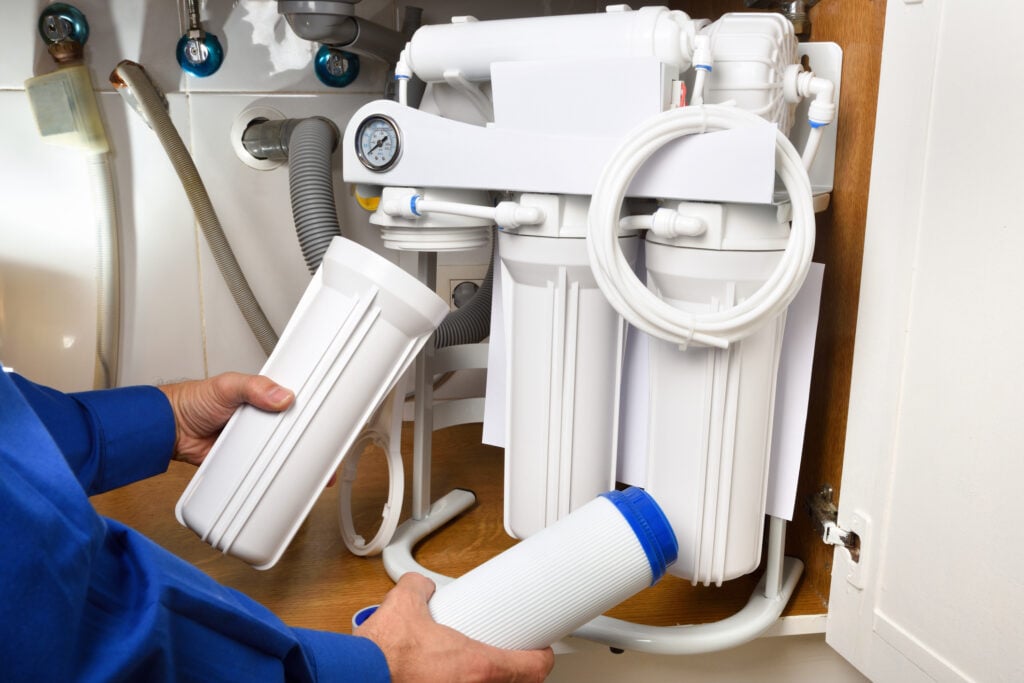
The most advanced home water filtration systems now use multi-stage technology, which means several different types of filters are built into a single system to remove a much wider range of contaminants. Previously, you had to build your own multi-stage system by installing different filters in your home. These advanced home water systems use a combination of different filters to clean water thoroughly. A sediment filter removes dirt, sand, and rust particles, then an advanced carbon filter removes chemicals like chlorine that can make water taste or smell bad. Next, the system could use a KDF process media, made from copper and zinc, that reduces heavy metals such as lead. Finally, ultraviolet (UV) light treatment kills microorganisms. These features work together to remove solid particles, chemicals, bacteria, viruses, and even some “forever chemicals” (PFAS).
2. Do some of the newer water filtration systems include smart technology?
Smart technology in water filtration is a big trend for 2025. Some top models now have sensors and app connectivity. Systems can sync with your smartphone, sending reminders for when to change a filter, detect leaks, and even measure how much water your family is using. Whole-house filtration systems like the SpringWell CF1, Aquasana EQ-1000, and Kind E-1000 now offer performance comparable to hotel or hospital-grade water treatment, but they are built for home use.
Digital alerts mean you’re much less likely to forget about important maintenance. Smart shutoff valves and sensors can even help prevent flooding if something goes wrong, protecting your home and saving money on repairs. The result is greater peace of mind and control of your water consumption and quality.
3. Have there been technological improvements made in carbon filter design that can take contaminants to even lower levels?
Carbon filters are much better than they used to be. Manufacturers now use a specially activated carbon called a catalytic carbon filter that has a much greater surface area for trapping and removing chemicals. It can remove chlorine, chloramine, pesticides, and even some volatile organic compounds (VOCs). Modern designs also blend carbon with other materials such as KDF, which helps the filter last longer and removes metals, like lead and mercury, more effectively. KDF stands for Kinetic Degradation Fluxion. It’s a filter media made from a mix of high-purity copper and zinc. KDF works by causing a chemical reaction called oxidation-reduction when water passes through it. This reaction changes harmful contaminants, like chlorine and heavy metals such as lead and mercury, into harmless substances.
4. How do the latest salt-free water conditioners compare to traditional water softeners?
Salt-free water conditioners address hard water by using a process called template-assisted crystallization, which turns minerals into crystals that don’t stick to the insides of pipes. Traditional softeners actually remove calcium and magnesium by swapping them for sodium, which is why you have to regularly refill them with salt. Salt-free systems are easier to maintain and don’t dump salty water into drains, which is better for the environment. While salt-free conditioners prevent scale buildup in pipes and appliances, they don’t soften water in the classic sense, so showers still might feel a bit different. If your water is extremely hard, traditional softeners can be more effective for laundry and bathing. A water test will reveal how hard your water is and whether you’d get the best results from salt-free, salt-based, or a hybrid system.
5. Are there new whole-house water filters that require less maintenance?
The latest whole-house systems offer easier maintenance along with features like long-lasting filters, quick-change cartridges, and automatic backwashing. There are a few systems that offer up to a million-gallon capacity, which means some filters won’t need replacing for years. Other new systems use self-cleaning processes to flush out accumulated debris so you don’t have to manually clean or change filters nearly as often. Many are DIY-friendly and can be installed without professional help, and low-maintenance models can be great for busy households.
6. Do multi-stage filtration systems in 2025 improve water quality better than older models?
Multi-stage filtration systems combine several water improvement technologies like sediment removal, activated carbon, KDF, and ultraviolet light. These processes in sequence greatly improve the quality of your home’s water. Older models often relied on just one or two types of filter, so they couldn’t effectively address a broad spectrum of chemicals, metals, microbes, and newer contaminants that have come to our attention like PFAS. These modern multi-stage systems have been tested for their effectiveness against dozens of substances and typically meet stricter standards for chlorine, lead, chloramine, and newly emerging chemical threats.
7. Are there eco-friendly or zero-waste home water filtration options now that are still effective at improving water quality?
There’s growing interest in eco-friendly and zero-waste systems. Some companies now offer reusable filter cartridges, recyclable components, or compostable filtering media. Tank-based systems sometimes run passively, meaning they use no electrical power. Other cartridge systems can be washed and reused instead of going straight to the landfill. Salt-free conditioners have become popular for homes interested in reducing salty wastewater output and improving sustainability. A properly sized eco-friendly system, matched using results from your home’s water test, can be effective in improving water quality.
8. What improvements have been made to under-sink reverse osmosis (RO) systems?
Under-sink RO systems have gotten faster, more efficient, and easier to maintain. Many now include higher-capacity membranes, less water waste, and DIY-friendly installation kits. Some advanced models also feature remineralization stages that add healthy minerals back into the water and sensors to notify users when the filter needs changing. Leading units waste less water than older models—some as little as one cup of wasted water for every four cups purified. They also tend to be quieter and more compact. A water test will help decide if RO technology is needed in your home, especially if you’re worried about dissolved solids like nitrates, arsenic, or lead.
9. Do new systems provide better water flow rates or reduced water pressure drops?
Modern filtration systems provide a faster flow of water with good pressure because they have valves that let water flow upward through the filter material. This upward flow helps keep the filter media loose and clean, so water moves easily without getting stuck or clogged. The filters also use better materials inside that catch more impurities and stay effective longer. Plus, they are built bigger to handle more water at once. All these improvements make your water flow smoothly and keep your faucet pressure strong. Many premium models support 10–20 gallons per minute, more than enough for even large homes. You’ll be able to use multiple appliances or faucets at the same time and still get strong water pressure. Older filtration systems often slowed water flow, leaving showers and washing machines underpowered.
10. What is the current ability of filtration systems to remove or reduce emerging contaminants like pharmaceuticals or PFAS?
New filtration systems are much better at removing emerging contaminants than past generations. Many high-performance carbon filters, combined with advanced specialty media, can capture PFAS and pharmaceuticals. Check to see if the filter has NSF or other certification to remove the contaminants you are concerned with. Reverse osmosis provides further protection, removing a wide range of dissolved chemicals and drugs that pass through municipal water treatment. However, no single system eliminates everything, so professional water testing is crucial for knowing which contaminants are present and whether your chosen filters are rated for them.
11. Are there any water filtration systems that can remove or reduce microplastics or nanoplastics?
Filtration technology is catching up with microplastic challenges. Systems using nanofiltration or reverse osmosis membranes are able to trap microplastics and even some nanoplastics, which are much smaller. These filters have pores small enough to block plastic fragments and are beginning to be adopted in homes. This aspect of the water filtration technology will continue to improve.
12. What advances have been made in UV and microbial disinfection in residential systems?
Ultraviolet disinfection is now more effective and safer than ever. New UV systems use more powerful bulbs while consuming less energy and killing more bacteria, viruses, and protozoa that might sneak past other filters. Many combine UV with sediment or carbon filtration for multi-layer protection. Safety measures are often built in to signal if the UV lamp stops working. UV is especially useful for homes on private wells or in areas prone to boil-water advisories.
13. Can 2025’s best filtration systems alert a homeowner on the need for filter replacement or other maintenance?
One of the biggest improvements in 2025 is smartphone alerts for filter changes and other maintenance needs. Digital displays or smartphone notifications alert you when it’s time to swap out a filter, flush a tank, or call for service. Some systems even monitor overall water quality and flow, letting you see trends over time. This new technology helps households keep their water quality high by ensuring maintenance occurs on time.
14. How do the new carbon + KDF + UV water filtration systems work and how efficient are they?
Carbon + KDF + UV systems combine these three treatment processes for their unique strengths:
- Carbon catches chemicals, bad taste, and odors.
- KDF handles heavy metals and fights bacteria growth.
- UV (ultraviolet) destroys microbes that get through previous stages.
Because you may be hearing more about KDF filters, here’s an explanation of this new type of filter: KDF means Kinetic Degradation Fluxion. It’s a special kind of filter material made from copper and zinc. When water flows through KDF, a chemical reaction happens that changes harmful things like chlorine, lead, and mercury into safer forms. KDF also helps stop bacteria from growing in the filter, so the water stays cleaner longer. It’s often used along with other filters, like carbon, to make the water safer and better tasting. This kind of filter is good for home use because it removes metals and chemicals without adding anything harmful to the water. When carbon, KDF and UV are combined, you get powerful protection against a wide range of contaminants.
15. Have the filters that remove disinfection byproducts like THMs or haloacetic acids been improved recently?
When water is disinfected with chlorine, that chemical reacts with plant material and soil in the water supply. This reaction results in the production of disinfection byproducts like trihalomethanes (THMs) and haloacetic acids (HAAs). These chemicals can be harmful to your health if you consume them over a long period of time.
New types of carbon and reverse osmosis filters can now eliminate more of these byproducts than before. That means your water is safer, especially if your town uses chlorine to clean the water you get at home. These better filters are now common in most whole-house or under-sink water filter systems, helping protect your family from these unwanted chemicals.
ETR Laboratories Helps You with Accurate, Fast Water Test Results
To get the right filtration system for your home, you first need to know what’s in your water that needs to be removed. You can trust ETR Laboratories to provide fast and accurate results. Thousands of homeowners, businesses that rely on pure water and real estate agents have counted on ETR Laboratories for precise test results.
The Ultimate Water Test provides results for 249 different contaminants, from aluminum to trichloroethylene. This is your best choice for a comprehensive look at your water quality. ETR Laboratories also offers a test for per- and polyfluoroalkyl substances, often called PFAS. All the trihalomethanes (THMs) are included in this test. When you are concerned about your water quality, start with precise water testing with ETR Laboratories.
