
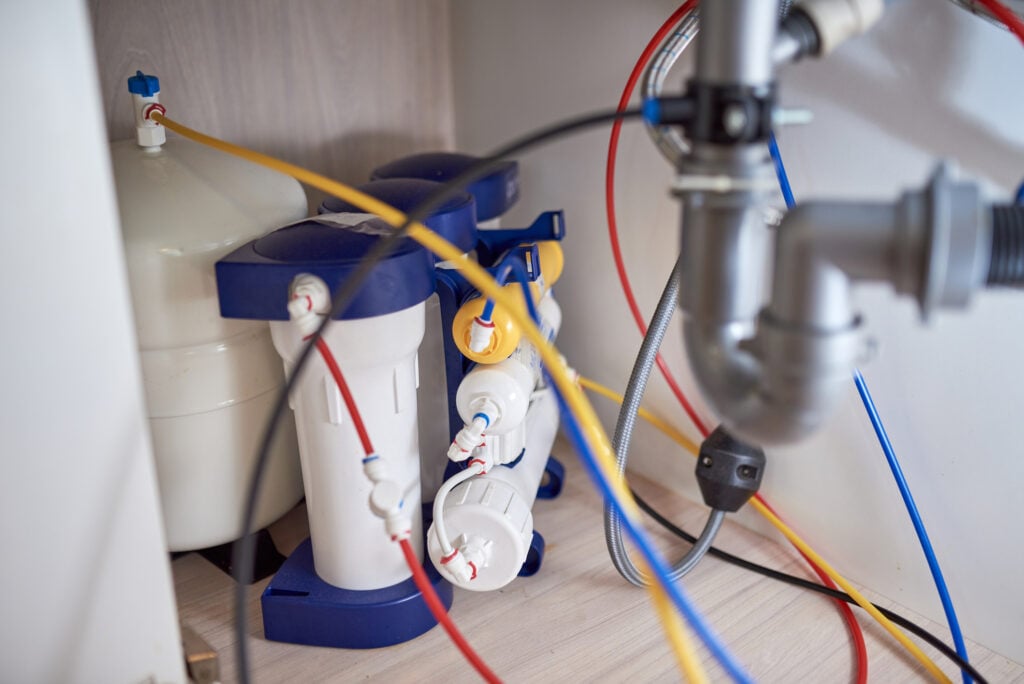
Across the country, the majority of Americans use some kind of filtration system for their drinking water. It could be a pitcher filter, an under-sink system or a reverse osmosis system filtering the water for the whole house. While reverse osmosis systems are highly effective at reducing or removing contaminants, they will be too expensive for some people. If this is your situation, there are alternatives that cost less but are still effective.
A Quick Look at What Reverse Osmosis Systems Do
Reverse osmosis (RO) systems are good at removing:
- Total Dissolved Solids (TDS), including minerals like calcium, magnesium, potassium, iron and others
- Chlorine and chloramines used as water disinfectants
- Heavy metals like lead, arsenic and mercury
- Some industrial chemicals and volatile organic compounds, like pesticides and solvents
- Certain microorganisms
- Pharmaceutical residues
Filtration of these substances prevents mineral deposits from building up in pipes and appliances or showing up on plumbing fixtures. It also protects the health of those drinking or bathing in the water. The only problem is that this system for the whole house can cost several thousand dollars.
Alternatives to a Whole House RO Filter
If a whole-house RO filter is too expensive, there is an alternate solution. Instead of an RO system, you could consider installing this combination: a sediment cartridge, an activated carbon filter and a carbon block cartridge.
This alternative, multi-part system will improve the taste and odor of your water and reduce or remove most other contaminants like the following:
- Disinfectants like chlorine and chloramines
- Byproducts of disinfection like the four trihalomethanes
- Chemicals like benzene, solvents, toluene and xylene
- Agricultural contaminants like pesticides and herbicides
- Sulfur and other odor-causing minerals
- Microorganisms like Giardia and Cryptosporidium
- Sand, silt and rust
Lower Installation and Maintenance Costs for This Alternate System
The components of this multi-part system will cost thousands less than an RO system but be similarly effective. It can typically be installed by a plumber instead of a technician from a water treatment company, saving more money.
The yearly maintenance and filter replacement costs will also be lower for this alternate system, running about half the cost of maintaining an RO system.
Staying with an RO System? One Final Tip
If you do decide to install a reverse osmosis system, you should be aware that an RO system removes so many minerals that your drinking water may taste flat. You may want to add a mineralization cartridge to add back the minerals that the RO system takes out. Your drinking water will taste better and provide essential minerals for health.
No Matter What You Decide, a Water Test Should Come First
Before you make decisions about a filtration system, you should know what is in your water. It is possible that you could install more filtration than you need. With a water test in your hands first, you can tailor your filtration to the exact contaminants in your water. This is the best route to getting the best water quality for the best price. Then, once your new filtration system is installed, get another water test done to ensure that your system effectively produces healthy water, including having the appropriate mineral content.
Find Out What’s in Your Water Now!
ETR Laboratories provides water test results for thousands of homeowners every month. In addition, businesses that depend on pure water and municipalities that have to report their water quality to the Environmental Protection Agency also use ETR Laboratories. If you’re ready to find out exactly what is in your water, order the Ultimate Water Test today!
