The Real Cost of Not Trusting Your Water (And What You Could Do Instead)
The EPA added microplastics to its contaminant candidate list in April 2026. No regulations yet — here’s what that gap means for your drinking water right now.
Free Shipping on Orders of $100 or More
From the Lab by ETR Laboratories
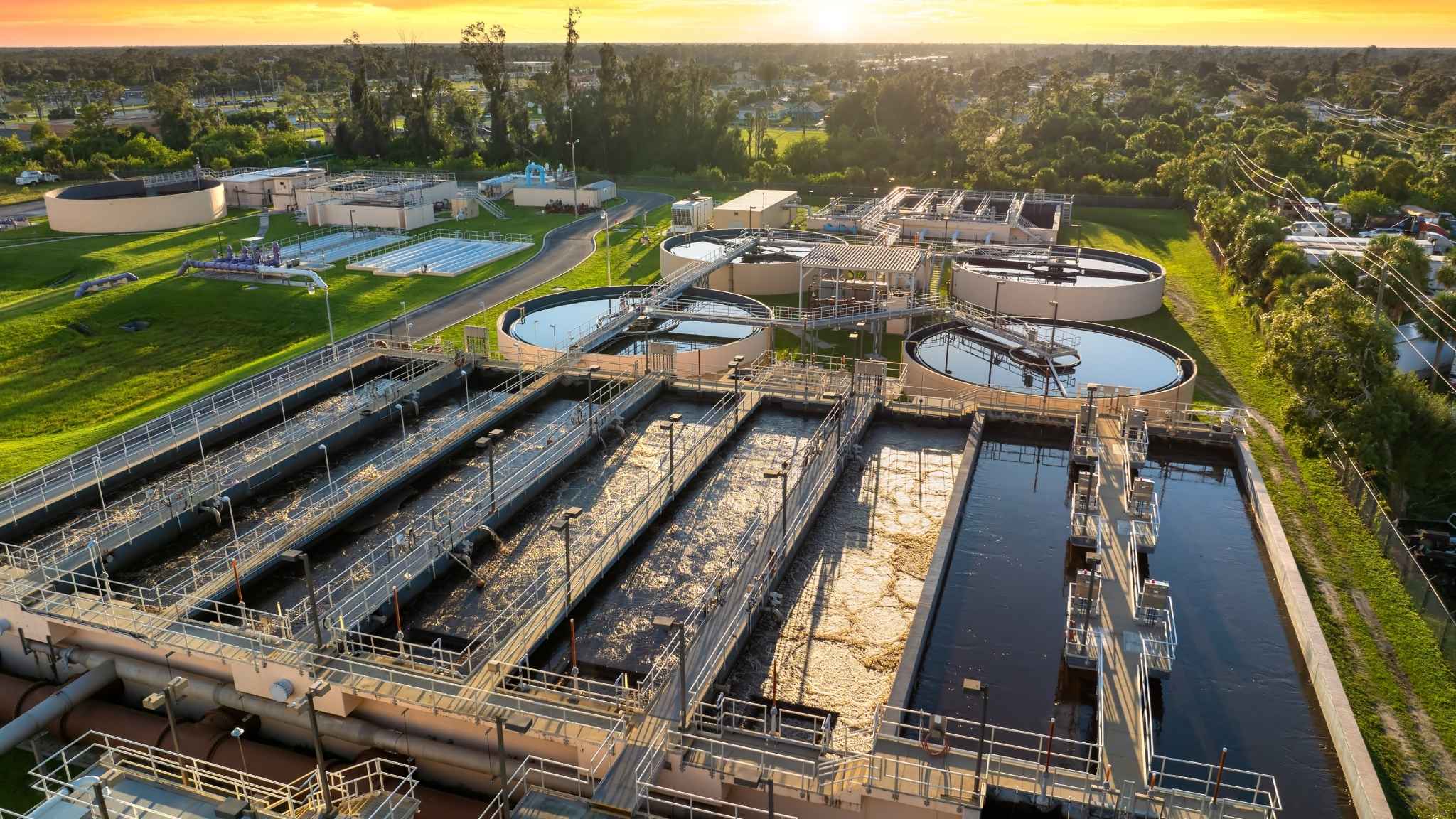
This past week, just ahead of Memorial Day, the Surfrider Foundation released its annual Clean Water Report. The headline number was hard to ignore. Years of neglect and underfunding have left the country with an estimated $630 billion backlog in needed wastewater infrastructure repairs and upgrades. The result: over 900 billion gallons of untreated sewage pour into U.S. surface waters every year, and nearly 10 trillion gallons of untreated stormwater runoff carry road dust, oil, animal waste, fertilizers, and other chemicals into waterways annually.
Most people read a number like that and think beaches. And yes, that’s part of it. The CDC estimates more than 5 million people get sick from swimming in contaminated water each year. But the implications of failing water infrastructure go well beyond summer swimming advisories. They reach directly into the pipes and wells that supply your drinking water every single day.
Drinking water and wastewater infrastructure are two sides of the same aging system, and when one side fails, the other pays for it.
The EPA’s most recent drinking water infrastructure needs assessment estimated it will cost $422.9 billion just to replace or rehabilitate aging distribution and transmission pipelines, and another $107 billion to construct or upgrade treatment facilities to reduce contamination. When you add drinking water, wastewater, and stormwater together, an estimated $3.4 trillion will be needed over the next two decades to bring the country’s water infrastructure up to date.
Many U.S. communities are already relying on pipes that are a century old. These pipes leak 6 billion gallons of drinking water daily. There are an estimated 250,000 to 300,000 water main breaks per year in the United States, roughly 700 per day.
Seven hundred water main breaks a day. Every one of those is a point where a pressurized, theoretically sealed system becomes something less than that. And as we’ve written before, what can leak out can also enter back in.
If you’re on a municipal water supply, your water leaves the treatment plant in reasonably good condition. What happens between the plant and your tap is a different story. It travels through miles of distribution pipe, much of it old, some of it original to neighborhoods built in the early 1900s. Every joint, every crack, every pressure fluctuation is an opportunity for what’s in the surrounding soil to interact with what’s in the pipe.
The Kannapolis, North Carolina boil water advisory from last month is a recent and local example of exactly this dynamic. A pressure event, aging infrastructure, bacterial contamination. Resolved quickly, but the mechanism is the same one playing out at varying severity across hundreds of municipalities every year.
Beyond bacterial risk, aging city infrastructure also means lead. About 140 million people in the U.S. rely on groundwater sources for their drinking water, and the distribution systems delivering that water to homes include an unknown but significant number of lead service lines. Lead doesn’t come from the treatment plant. It leaches from the pipe itself, often the last stretch of pipe between the main and your home, which is the stretch least likely to have been replaced.
None of this shows up in your municipality’s annual water quality report, because that report reflects what leaves the plant. It does not reflect what arrives at your tap.
We cannot emphasize this enough: the vast majority of municipal water quality problems happen during distribution, not at the treatment facility. Nobody is testing the exact water delivered to your home except you. The opportunity for something to change between the plant and your glass is real, and it is largely invisible. People tend to assume that if something was seriously wrong with their water, they would know about it, or the town would tell them. That is not how this works. Unless a large enough group of people got sick at the same time and someone connected it back to the water supply, a contamination problem moving quietly through a distribution system could go undetected for a long time.
That’s the part that makes this genuinely serious. Many of the contaminants that find their way into drinking water through aging pipes, whether it’s lead, arsenic, certain bacteria, or chemical compounds, don’t make you sick overnight. They accumulate. You live in a home for a few years, drinking the same water every day, and the effects build slowly. Eventually something shows up, a health issue, a chronic symptom, an unexpected diagnosis, and by that point it is extremely difficult to trace it back to the water. That is exactly how these things tend to unfold, quietly, over time, with no obvious single moment where something went wrong.
For private well owners, the failure of wastewater infrastructure is not an abstract concern. It is a direct threat to the aquifer your well draws from.
Failing municipal sewer lines leak. Aging septic systems that haven’t been maintained leak. When they do, what escapes goes into the ground. Nitrates, bacteria, pathogens, pharmaceuticals, and in areas with PFAS-containing household products, forever chemicals, all migrate through soil toward groundwater over time. The speed and degree depends on soil type, depth to the water table, and proximity, but the direction is consistent.
We wrote recently about a situation in Cadillac, Michigan, where residents unknowingly contaminated their own wells through failing septic systems that allowed household product waste to infiltrate the aquifer. That story is not unique to Michigan. It is playing out in rural areas across the country wherever aging wastewater systems and private wells exist in close proximity, which is to say, almost everywhere.
This is the backdrop against which water quality testing has been growing. People are connecting the dots between what they’re reading in the news and what might be coming out of their tap. That instinct is correct, and acting on it is the right move.
Where things go sideways is what happens after a test comes back with a finding. There is a version of this that gets handled well and a version that doesn’t. The version that doesn’t is unfortunately common: a test result gets handed to a homeowner, something shows up, and the response is either panic or a generic filtration product recommendation that doesn’t actually address the specific contaminant at the concentration found.
For well owners especially, a finding is the beginning of a conversation, not the end of one. What did you find and at what level? What type is it, because with something like arsenic, the type matters significantly for remediation cost and approach. What does the rest of the panel look like, because contaminants rarely travel alone and a filtration decision made for one problem can actually make another problem worse if you’re not paying attention? What is the structural condition of the well itself? Is the casing intact? When was it last disinfected? Filtration layered on top of a compromised well is not a complete solution.
The right approach works from the ground up: well integrity first, then a comprehensive understanding of the chemistry, then a filtration strategy built around the actual findings rather than a catalog recommendation.
At ETR Laboratories, we’ve been doing this for over 31 years. We test the water and we talk through what the results actually mean. Our reporting system is unlike anything else in the water testing industry. Where most labs hand you a spreadsheet of numbers, our reports break down each finding for your specific situation, covering maintenance considerations, what the result means for your health and your home, and the types of filtration that would be appropriate for each individual contaminant found. Many people also like to give us a call before they pull the trigger on any filtration decision, and we’re always happy to walk through it. And of course, for plenty of people, the results come back clean down the line and they get exactly what they were looking for: the green light to trust their water with confidence.
If you’re a city water customer who’s never run an independent test, or a well owner who hasn’t tested comprehensively in years, this is a reasonable time to do it. The infrastructure picture isn’t improving on any timeline that should give you confidence to wait.
Contact us for a free consultation or browse our water testing options.
The EPA added microplastics to its contaminant candidate list in April 2026. No regulations yet — here’s what that gap means for your drinking water right now.
The EPA added microplastics to its contaminant candidate list in April 2026. No regulations yet — here’s what that gap means for your drinking water right now.
The EPA added microplastics to its contaminant candidate list in April 2026. No regulations yet — here’s what that gap means for your drinking water right now.
Related Post.
The Real Cost of Not Trusting Your Water (And What You Could Do Instead)
The EPA added microplastics to its contaminant candidate list in April 2026. No regulations yet — here’s what that gap means for your drinking water right now.
The EPA added microplastics to its contaminant candidate list in April 2026. No regulations yet — here’s what that gap means for your drinking water right now.
Microplastics on the EPA Watch List: What It Means
The EPA added microplastics to its contaminant candidate list in April 2026. No regulations yet — here’s what that gap means for your drinking water right now.
Scrap Yard Fire in Westport, MA: Test Your Well Now
A scrap metal fire at Mid City Scrap in Westport, MA has private well owners asking questions. Here’s what contaminants to test for — and why timing matters.
Michigan Well Water Testing: What to Test For
2.6M Michigan residents rely on private wells with zero state oversight. See what PFAS, arsenic, and bacteria risks mean for your water — and when to test
The Writing Is on the Wall: PFAS Isn’t Going Away — It’s Getting Bigger
If you’ve read our past coverage of PFAS, you already know the basics. Forever chemicals,
What Just Happened in Kannapolis Should Make Every City Water Customer Think
Last weekend, residents of Kannapolis, North Carolina, woke up to a boil water advisory. The
Your Skincare Routine Has a Water Problem Nobody Is Talking About
The skincare industry is enormous. Dermatologists, estheticians, aesthetics-focused doctors like Dr. Shereene Idriss and Dr.
What Joe Rogan and Dr. Shanna Swan Want You to Know About Phthalates in Your Water
If you caught Joe Rogan’s recent conversation with Dr. Shanna Swan on the Joe Rogan
The $179 Water Test That Could Save You Thousands
A woman at a doctor’s office recently found out what I do for a living.
What Is Happening to Des Moines’ Drinking Water Is a Warning for Every American Homeowner
If you live in Des Moines, Ankeny, West Des Moines, Clive, Grimes, Johnston, Norwalk, Polk
The World Is Running Out of Clean Water. Here Is What That Means for You
In January 2026 the United Nations University released a report that used language no international
Related Post.

The EPA added microplastics to its contaminant candidate list in April 2026. No regulations yet — here's what that gap...

The EPA added microplastics to its contaminant candidate list in April 2026. No regulations yet — here's what that gap...

A scrap metal fire at Mid City Scrap in Westport, MA has private well owners asking questions. Here's what contaminants...