Algal Blooms and Cyanotoxins in Water Supplies
Every summer, as lakes and ponds warm up, you’ll start
Free Shipping on Orders of $100 or More

The skincare industry is enormous. Dermatologists, estheticians, aesthetics-focused doctors like Dr. Shereene Idriss and Dr. Muneeb Shah, and a growing wave of ingredient-educated creators have built massive followings helping people understand what they’re putting on their skin. The conversation around actives, ceramides, retinoids, and barrier function has never been more sophisticated.
But there’s a variable almost nobody in that space talks about: the water you shower in every single day.
You can have the most thoughtfully assembled skincare routine in the world and be undermining it twice a day without knowing it. Every shower, every face wash, every rinse is saturating your skin with whatever is in your water. If your water has issues, those issues are working against you constantly.
Depending on where you live and whether you’re on a well or city supply, your water could contain a mix of things your skin would rather not deal with daily.
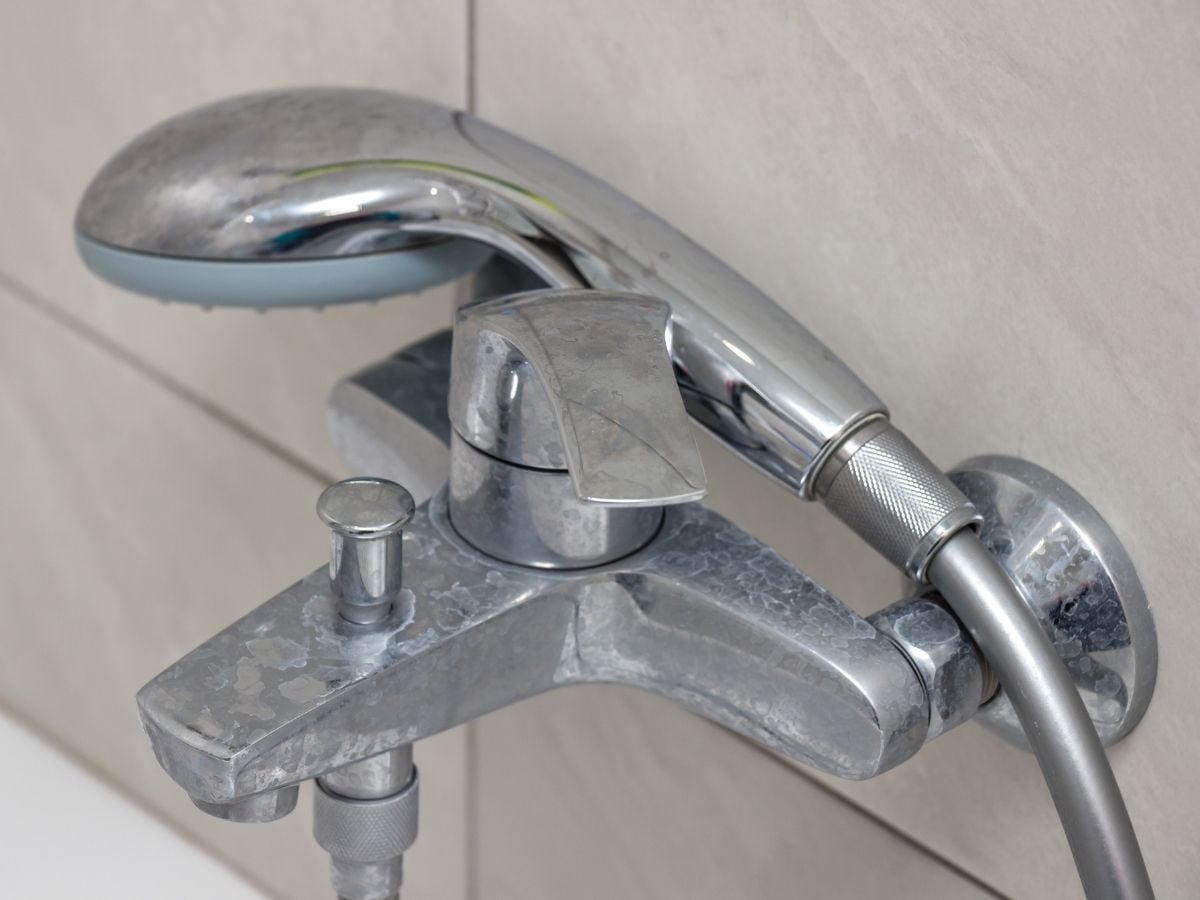
Hard water is one of the most common culprits. Research published in the Journal of Investigative Dermatology found that living in a hard water area is associated with an increased risk of atopic dermatitis, with calcium and chlorine creating a mechanism that impairs the skin barrier, particularly in people already prone to sensitivity. A 2021 systematic review in Clinical & Experimental Allergy analyzed studies comparing skin outcomes in hard versus soft water conditions, with soft water groups showing measurably better skin hydration and lower transepidermal water loss, a key marker of skin barrier health.
Chlorine is added to virtually all municipal water supplies to kill bacteria in distribution systems. It is effective at that job. It is also an oxidizer that strips natural oils from the skin, and the damage doesn’t stop when you step out of the shower. Chloramine, which many utilities now use instead of or alongside chlorine, does not evaporate the way chlorine does. It stays on the skin and continues reacting. Standard carbon filters that work well against chlorine are far less effective against chloramine.
Well water brings its own set of concerns: iron, manganese, sulfur, elevated hardness, and in parts of New England and the Northeast, arsenic and radon. These aren’t just drinking water problems. They are shower water problems too.
Think about how often your skin is in contact with your water versus how long a serum actually sits on your face. You shower for ten minutes. Your face wash runs across your skin daily. You rinse your hair and it streams down. This is daily, repeated, cumulative exposure to whatever mineral content, metals, or disinfectants are present in your supply.
Even with the right products, hard water leaves a residue that interacts with soap and cleanser to form a film on the skin. Chlorine strips the protective oils that a good moisturizer is trying to restore. Research on transepidermal water loss and environmental skin stressors confirms that repeated daily exposure to these factors accumulates in ways that compromise barrier function over time. You are working against yourself if your water is the problem and you don’t know it.
There’s been a surge in showerhead filters being marketed to people dealing with skin and hair issues, and some of them have real merit for specific problems. If chlorine is your main concern and your levels aren’t extreme, a quality carbon-based showerhead filter can make a meaningful difference.
But here’s what most people selling these products won’t tell you: a screw-on showerhead filter has real limitations depending on what’s actually in your water. It won’t address significant hardness. It won’t handle heavy metals like iron or arsenic. It won’t touch certain dissolved solids that affect how your skin feels after a shower. The effectiveness of any filter is relative to the contamination levels you’re starting with, and most people have no idea what those levels are.
This is why testing comes before filtering. Without knowing what’s in your water, you’re guessing. You might install a filter that does nothing for your actual problem, or you might need a whole-house softener instead of a showerhead attachment, or a combination of both. The only way to know is to test.
This isn’t just about avoiding problems. There is a genuine positive case for clean, properly treated water. When you’re not fighting mineral deposits, chlorine stripping, or oxidative stress every time you shower, your skin’s barrier can do what it’s supposed to do. Your moisturizers and actives work better on skin that isn’t being depleted daily. Your hair holds its natural oils. Your scalp isn’t compensating for constant dryness.
People who address their water quality as part of their skincare approach often notice changes they weren’t expecting, including things they’d been blaming on products or sensitivities for years.
If you’ve been doing everything right with your skincare and still dealing with persistent dryness, irritation, or barrier issues, your water is worth investigating. A comprehensive water test will tell you what you’re actually dealing with: hardness levels, chlorine and chloramine presence, metals, pH, and other factors relevant to both skin and overall water quality.
From there, you can make an informed decision about what kind of filtration actually makes sense, whether that’s a whole-house softener, a point-of-use filter, a showerhead attachment, or some combination. That’s a very different conversation than buying a filter off an influencer’s recommendation without knowing what’s in your water to begin with.
At ETR Laboratories, we test water for all of the above. Contact us for a free consultation or browse our water testing options.
Every summer, as lakes and ponds warm up, you’ll start
If you’ve seen headlines this summer about a fast-growing outbreak
Run a glass through the dishwasher and pull it out
Related Post.
Algal Blooms and Cyanotoxins in Water Supplies
Every summer, as lakes and ponds warm up, you’ll start seeing the headlines: a beach
The 2026 Cyclospora Outbreak: What It Actually Means for Your Water
If you’ve seen headlines this summer about a fast-growing outbreak of diarrheal illness sweeping across
White Residue on Fixtures and Dishes: What It Means
Run a glass through the dishwasher and pull it out cloudy. Wipe down the shower
Water Testing Labs Near Me: How to Choose the Right Lab
A search for water testing near you usually turns up dozens of companies claiming to
Whole-House Reverse Osmosis System vs. Under-Sink RO
From the Lab by ETR Laboratories Reverse osmosis has been a common option for treating
Tannins in Well Water: Causes, Signs, and Treatment
Most people would blame the presence of iron when they see their water take on a yellow or tea-colored tint. Maybe your white laundry is slowly turning beige, or you have noticed an earthy smell coming from the tap.
What Are Emerging Contaminants? Types, Sources, and Risks – 2026
It’s almost natural to pinpoint lead or bacteria as typical water contaminants since they have been part of the public conversation for decades, but scientists have now begun paying attention to a different group of substances called emerging contaminants.
Legionella in Water: Home Plumbing and Water Heater Risks
It’s easy to assume nothing is wrong inside your pipes if your water looks clear and tastes normal. Most people overlook the effects of Legionella in water for exactly that reason. It’s a kind of bacteria that can build up inside home plumbing
The World Health Organization Just Updated Its Drinking Water Guidelines. Here’s What It Means.
On June 18, 2026, the World Health Organization released an updated edition of its Guidelines for Drinking Water Quality, the most authoritative global reference document on what safe drinking water actually means and how to achieve it
What a Polluted San Diego Bay Tells Us About the Water Closest to You
Mission Bay in San Diego draws an estimated 15 million visitors a year. It’s one of the most popular recreational water destinations in the country. And according to a report released in June 2026, it has a serious water quality problem that isn’t going away when it stops raining.
Last Friday night, during a torrential rainstorm, a 42-inch sewer force main near Haverhill’s main pumping station failed. The pipe, which carries wastewater from the city’s main pump station to its treatment plant, dates back to the 1970s.
On June 5, 2026, residents in nearly a dozen neighborhoods in Northwest Washington DC started noticing something wrong with their water pressure. DC Water received calls from customers experiencing low to no pressure at multiple locations at the same time the Fort Reno Pumping Station was experiencing fluctuating power issues, with a full loss of power hitting at around 12:30 p.m.
Related Post.

Every summer, as lakes and ponds warm up, you'll start seeing the headlines: a beach closed for a "harmful algal...

If you've seen headlines this summer about a fast-growing outbreak of diarrheal illness sweeping across the country, you're not imagining...

Run a glass through the dishwasher and pull it out cloudy. Wipe down the shower door and watch a chalky...