Water Testing Labs Near Me: How to Choose the Right Lab
A search for water testing near you usually turns up
Free Shipping on Orders of $100 or More
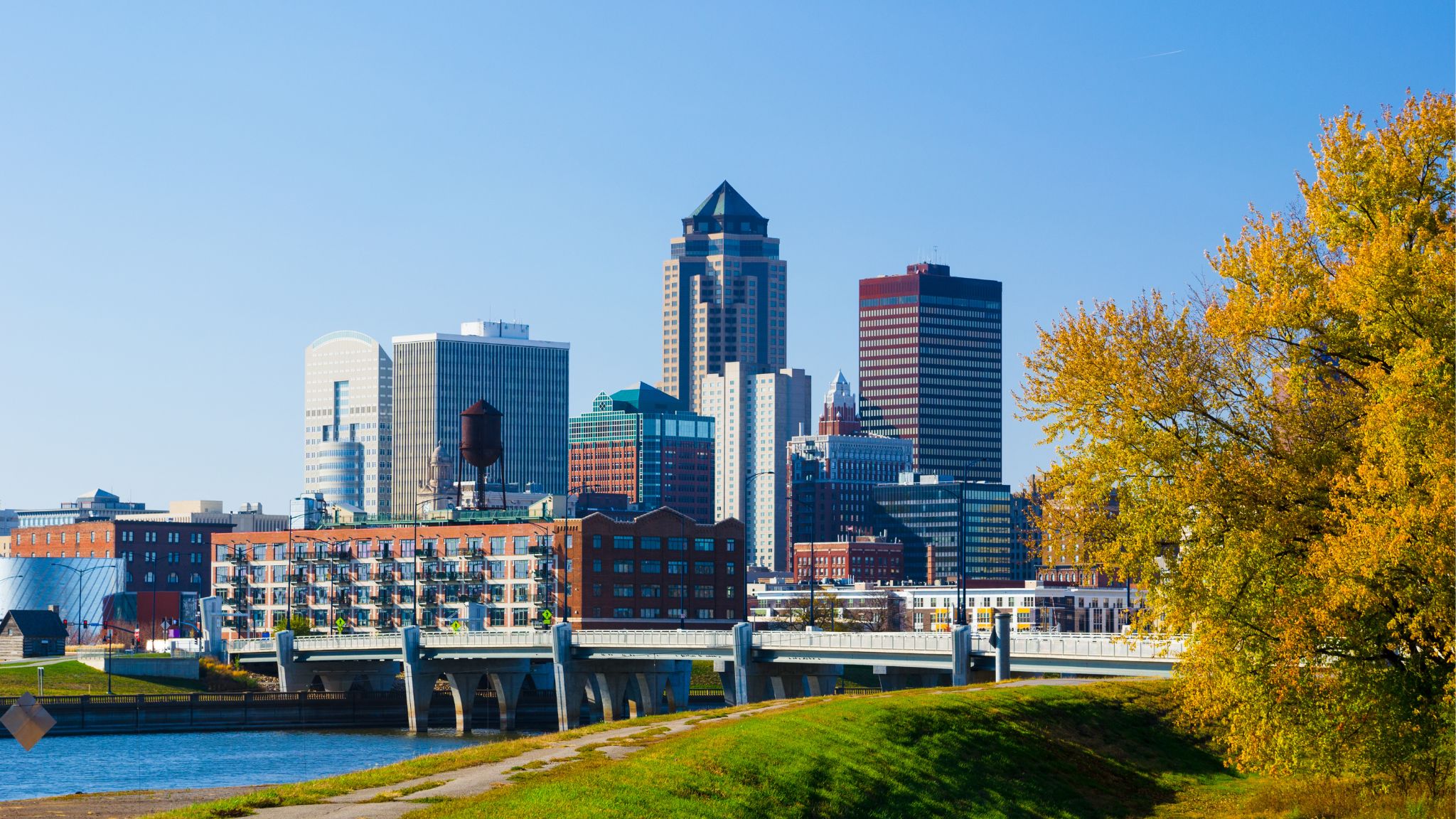
If you live in Des Moines, Ankeny, West Des Moines, Clive, Grimes, Johnston, Norwalk, Polk City, Urbandale, or Waukee, Iowa, your drinking water has been at the center of a water quality crisis that has been unfolding since the first week of January 2026. And if you live anywhere else in the country, what is happening in central Iowa is a story you need to pay attention to because the conditions driving it are not unique to Iowa.
The Raccoon River and the Des Moines River are the two primary source water supplies for Central Iowa Water Works, a regional authority that delivers drinking water to approximately 600,000 people across the Des Moines metro area and surrounding communities. Every day, hundreds of millions of gallons of water drawn from these two rivers are treated and delivered to taps across the region. When those rivers carry elevated contaminants the entire regional water supply is directly affected.
Since early January 2026 both rivers have been carrying nitrate levels that periodically exceed the EPA’s maximum contaminant level for drinking water of 10 milligrams per liter. The nitrate removal facility at the Fleur Drive Treatment Plant turned on January 6th, the first time it had operated in January since 2015, and operating the system at full capacity costs upwards of $16,000 per day. Iowa Public Radio As of this writing the facility has operated nearly 90 percent of all days in 2026. We Are Iowa That is not a temporary spike. That is a water system under sustained stress for months.
The Des Moines metro experienced drought from 2020 through 2024, followed by a wetter than normal 2025. During prolonged drought, water stops moving through the soil, allowing nitrates to accumulate rather than flush out. Once rainfall returns, the stored nitrates get flushed into rivers rapidly and in large volumes. Axios Agricultural fertilizer and pesticide runoff from the heavily farmed watersheds that drain into the Raccoon and Des Moines rivers compound the problem significantly.
This is not just a farming problem or a weather problem. It is a compounding problem where decades of agricultural runoff, changing precipitation patterns, and aging water infrastructure intersect in a way that puts sustained pressure on a treatment system that was not designed to run at emergency capacity for most of the year.
Here is where this story connects directly to something we talk about constantly at ETR Laboratories and something that most water testing companies and even most municipal water advisories do not address clearly enough.
The EPA’s maximum contaminant level for nitrates in public drinking water is 10 milligrams per liter. That number was set decades ago primarily to protect against blue baby syndrome, a dangerous condition in infants caused by nitrate interference with oxygen transport in the blood. It is a public water standard established for municipal treatment systems.
Private wells are a different situation entirely.
At ETR Laboratories we have processed hundreds of thousands of private well water tests over 31 years and our field experience has taught us something that the EPA limit does not capture. In private wells we consider any nitrate reading above 2 parts per million worth taking seriously. That is a level five times below the EPA’s public water threshold. Why? Because in a private well nitrates at that concentration are not just a direct health concern. They are a structural signal. They tell us that surface water is likely infiltrating the well, that agricultural runoff, septic system influence, or some other external contamination pathway has found its way into the aquifer. Where surface water goes, bacteria follows. The two tend to rise together.
To be direct about what we look for: in a properly constructed, structurally sound drilled well we really like to see no detectable nitrates at all. A well that is functioning as it should, drawing from deep clean aquifers with proper casing depth and a well sealed cap, should not have measurable nitrate levels. When we see nitrates showing up in a private well it tells us something is getting in that should not be. That is worth investigating regardless of whether the number is 2, 4, or 8 parts per million. The EPA’s 10 milligrams per liter limit was built for public water systems. It was never designed to be the benchmark for evaluating a private well.
Des Moines’ Raccoon River hitting 17 milligrams per liter in January, nearly twice the federal limit for public water, is the dramatic municipal scale version of exactly what we see in private wells when something is wrong at the source.
If you are a private well owner in Iowa, particularly in Polk County, Dallas County, Story County, Boone County, or anywhere within the watersheds that drain into the Raccoon River corridor including areas near Ames, Perry, Carroll, Jefferson, and the broader north-central Iowa agricultural region, the current situation in your rivers should be a direct prompt to test your well water.
Agricultural runoff does not stay in rivers. It percolates through soil and reaches groundwater. The same conditions driving record high nitrates in the Raccoon River this year are affecting the aquifers beneath the farmland surrounding it. If your well has not been tested recently, now is the time. If you have been waiting for a sign that your well might be affected by what is happening in your watershed, consider this your sign.
Spring is already the most important time of year for well testing. We wrote about this recently in our spring well maintenance guide. Snowmelt, increased rainfall, and saturated soil all create conditions where surface water and agricultural runoff move most actively through the ground toward the aquifers that feed private wells. What is happening at the Raccoon River this year is a particularly dramatic illustration of exactly that dynamic playing out at a massive scale.
If you are on municipal water in Des Moines, Ankeny, West Des Moines, Clive, Grimes, Johnston, Norwalk, Polk City, Urbandale, Waukee, or any of the communities served by Central Iowa Water Works, your utility is working hard to keep your water within the EPA’s safe limits and by all current reports they are succeeding. The treatment system is doing its job.
But this situation highlights something we emphasize on this blog regularly. Your municipal water report measures quality at the treatment plant. By the time water travels through the distribution system and your household plumbing it can pick up additional contaminants. Independent testing of your tap water, particularly for nitrates, lead, and disinfection byproducts, gives you a complete picture that no utility report can provide on its own. Knowing your actual numbers, not just that your utility passed its compliance tests, is always the most informed position to be in.
The Raccoon River nitrate crisis is not an isolated Iowa story. It is a preview of what happens when agricultural pressure on watersheds, changing precipitation patterns, and the limits of aging water infrastructure all converge at the same time. Similar dynamics are playing out in watersheds across the Midwest, the South, and the agricultural corridors of many states.
The lesson is consistent regardless of where you live. Whether your water comes from a private well or a municipal system, the quality of that water is not guaranteed by nature or by regulation alone. It requires attention. It requires testing. And when the numbers show something concerning, it requires action.
At ETR Laboratories we have spent 31 years helping families understand what is in their water and what to do about it. If you have questions about nitrates, well water safety, or what tests make the most sense for your situation, give us a call at 800-344-9977 or browse our water quality test packages. Our water quality experts are here to help you figure out where to start.
A search for water testing near you usually turns up
From the Lab by ETR Laboratories Reverse osmosis has been
Most people would blame the presence of iron when they see their water take on a yellow or tea-colored tint. Maybe your white laundry is slowly turning beige, or you have noticed an earthy smell coming from the tap.
Related Post.
Water Testing Labs Near Me: How to Choose the Right Lab
A search for water testing near you usually turns up dozens of companies claiming to
Whole-House Reverse Osmosis System vs. Under-Sink RO
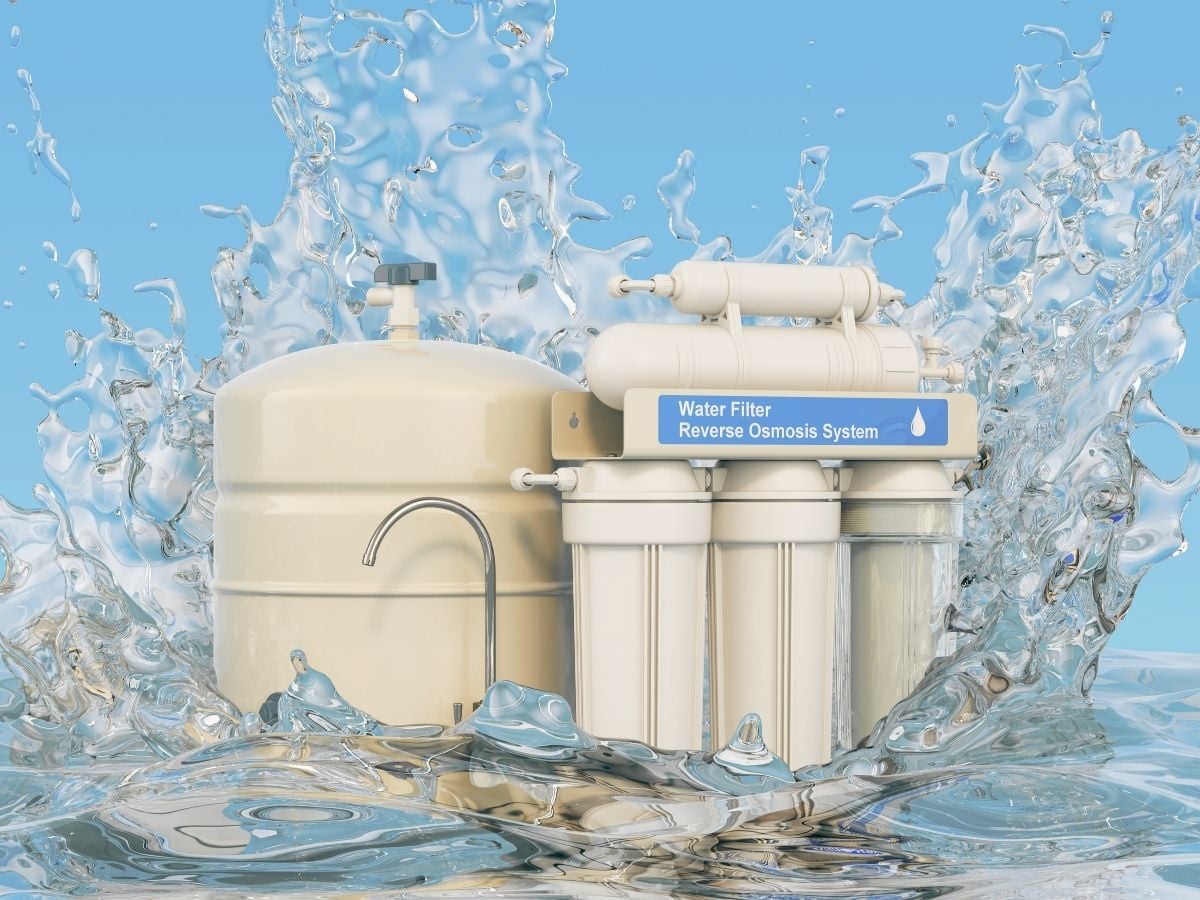
From the Lab by ETR Laboratories Reverse osmosis has been a common option for treating
Tannins in Well Water: Causes, Signs, and Treatment
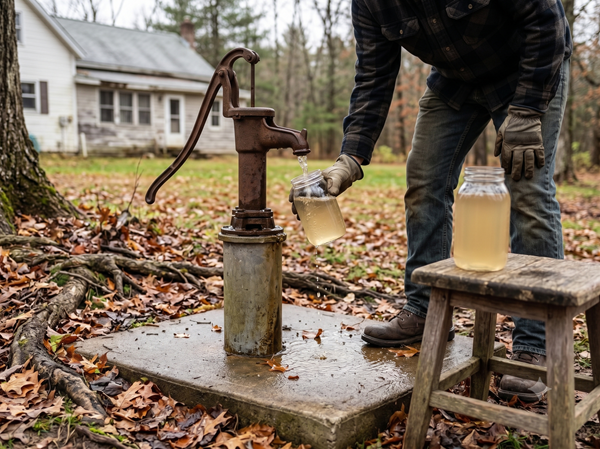
Most people would blame the presence of iron when they see their water take on a yellow or tea-colored tint. Maybe your white laundry is slowly turning beige, or you have noticed an earthy smell coming from the tap.
What Are Emerging Contaminants? Types, Sources, and Risks – 2026
It’s almost natural to pinpoint lead or bacteria as typical water contaminants since they have been part of the public conversation for decades, but scientists have now begun paying attention to a different group of substances called emerging contaminants.
Legionella in Water: Home Plumbing and Water Heater Risks
It’s easy to assume nothing is wrong inside your pipes if your water looks clear and tastes normal. Most people overlook the effects of Legionella in water for exactly that reason. It’s a kind of bacteria that can build up inside home plumbing
The World Health Organization Just Updated Its Drinking Water Guidelines. Here’s What It Means.
On June 18, 2026, the World Health Organization released an updated edition of its Guidelines for Drinking Water Quality, the most authoritative global reference document on what safe drinking water actually means and how to achieve it
What a Polluted San Diego Bay Tells Us About the Water Closest to You
Mission Bay in San Diego draws an estimated 15 million visitors a year. It’s one of the most popular recreational water destinations in the country. And according to a report released in June 2026, it has a serious water quality problem that isn’t going away when it stops raining.
Last Friday night, during a torrential rainstorm, a 42-inch sewer force main near Haverhill’s main pumping station failed. The pipe, which carries wastewater from the city’s main pump station to its treatment plant, dates back to the 1970s.
On June 5, 2026, residents in nearly a dozen neighborhoods in Northwest Washington DC started noticing something wrong with their water pressure. DC Water received calls from customers experiencing low to no pressure at multiple locations at the same time the Fort Reno Pumping Station was experiencing fluctuating power issues, with a full loss of power hitting at around 12:30 p.m.
The States With the Worst Tap Water in 2026: What Homeowners Need to Know
No state in America has perfectly clean tap water. That is not a dramatic claim. It is simply what the data shows. Based on EPA violation data, contaminant testing, and infrastructure assessments, the states with the most documented tap water problems in 2026 are Texas, California, New York, New Jersey, Florida, Pennsylvania, Louisiana, Arizona, Wisconsin, and Massachusetts. The most common problems across these states are PFAS, lead service lines, disinfection byproducts, arsenic, and nitrates.
The Real Cost of Not Trusting Your Water (And What You Could Do Instead)
About 59 million Americans have access to tap water or a private well and choose not to drink it. Since just before the Flint water crisis began in 2014, the number of adults who avoid their tap water has increased by 40 percent, and among children it’s risen by 63 percent.
This past week, just ahead of Memorial Day, the Surfrider Foundation released its annual Clean Water Report. The headline number was hard to ignore. Years of neglect and underfunding have left the country with an estimated $630 billion backlog in needed wastewater infrastructure repairs and upgrades.
Related Post.

A search for water testing near you usually turns up dozens of companies claiming to offer laboratory testing, but not...
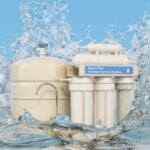
From the Lab by ETR Laboratories Reverse osmosis has been a common option for treating drinking water for decades, and...
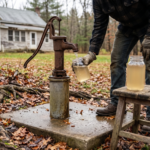
Most people would blame the presence of iron when they see their water take on a yellow or tea-colored tint....