Business on a Well? Public Water System Testing Rules
If your business relies on a private well for drinking
If your business relies on a private well for drinking water, you may have more responsibilities than simply keeping the water safe. Restaurants, offices, campgrounds, and other businesses can fall under public water system regulations, even when the well is privately owned.
The key factors are how many people use the water, how often it’s available, and the number of service connections. Under EPA guidelines, a well serving an average of at least 25 people for 60 days a year, or supplying at least 15 service connections, may qualify as a public water system.
So, what does this mean for your business? In this guide, ETR Laboratories explains how these regulations work, which testing requirements may apply, and what steps you can take to check your well water and stay compliant with your state’s rules.
A business well becomes a public water system when it provides water for human consumption through pipes or other constructed conveyances to at least 15 service connections, or serves an average of at least 25 people for at least 60 days a year, according to the EPA. The EPA adds that a public water system may be publicly or privately owned, so a private business can qualify.
The people count is easy to underestimate because it includes everyone the water is available to, not just your staff. Wisconsin’s Department of Natural Resources says “serving” water means having it available for drinking, even if no one drinks it. Its examples show that both employees and visitors count: businesses with 25 or more employees are listed as one type of system, and restaurants, motels, and gas stations as another.
The type of system your business falls under determines which rules apply, so the next step is to sort out the three types.
The EPA has defined three types of public water systems: community, non-transient non-community, and transient non-community. The difference is whether the water reaches the same people regularly or a changing crowd.
| System Type | How the EPA Describes It | Examples Named by the EPA or Maine CDC |
| Community (CWS) | Supplies water to the same population year-round | Water utilities, mobile home parks, apartment buildings, nursing homes |
| Non-transient non-community (NTNCWS) | Regularly supplies water to at least 25 of the same people at least six months per year | Schools, factories, office buildings, hospitals |
| Transient non-community (TNCWS) | Provides water in a place such as a gas station or campground where people do not remain for long periods | Gas stations, campgrounds, restaurants, motels and hotels, golf courses |
The Maine CDC’s overview supplies the community, restaurant, motel, hotel, and golf course examples.
A non-transient non-community water system serves a steady group, such as employees or students who are there most of the year. A school or a factory with its own well belongs in this category, and Wisconsin, for example, requires a certified operator for these systems but not for transient ones.
A transient non-community water system serves people who pass through, such as diners, travelers, and campers. Wisconsin describes these systems as serving at least 25 people, but not necessarily the same people, for 60 days a year or more.
Not sure how your state classifies your business? Ask your state drinking water program first, then get a baseline water test.
To see where your own business lands, you can run through a short set of counts.
You can get a rough idea of your situation by counting connections, people, and days, though the state makes the final determination. Here are the questions to answer:
Write your answers down, because the agency may ask for them. Your results are a starting point and not a legal conclusion, since states word the thresholds differently.
The agencies to ask are your state drinking water program, which is often part of the health or environmental department, and your local health department. A short call or email with your counts can get you a clear answer on whether your well is regulated and under which type.
Those agencies word their rules differently from state to state, which is worth knowing before you compare notes with a business owner elsewhere.
States draw the line differently because the EPA sets the federal frame while states run most of the programs and can word the definition their own way. The EPA says public water systems are regulated by EPA and delegated states and tribes, so your state agency is the voice that counts for your well.
The sources we read for this article show how the wording can shift. Here are the differences:
The public water system definition of 25 people for 60 days looks similar everywhere but isn’t identical, and commercial well water testing requirements follow the same pattern, so your state agency’s page is the best source. Our overview of state well water testing requirements covers private home wells and notes that the Safe Drinking Water Act covers public water systems, which is the part this article picks up.
Once a state classifies a business well as a public water system, a set of duties follows.
Regulation usually means a set of ongoing duties that depend on your system type and your state. Wisconsin’s small business guidance is a helpful reading guide, since it lists the topics a business owner tends to run into. Here are the topics it covers, which may or may not apply the same way in your state:
Wisconsin notes that testing frequency and requirements vary by system type and other factors. We do not list schedules or limits here, because your state program and the federal rules for your system type set them.
While you wait for your state to answer, the water your staff and customers drink is still worth checking.
An unclassified business well is worth testing for coliform bacteria and nitrate at a minimum, since people are drinking the water, whatever the state decides.
Our total coliform and E. coli test covers routine bacteria checks for $65, with results within 1 to 2 business days of your sample reaching our lab. Finding coliform bacteria suggests that other harmful organisms may have entered the water. Our nitrate water test costs $35 and looks at a contaminant that can come from fertilizer, human or animal waste, or industrial waste.
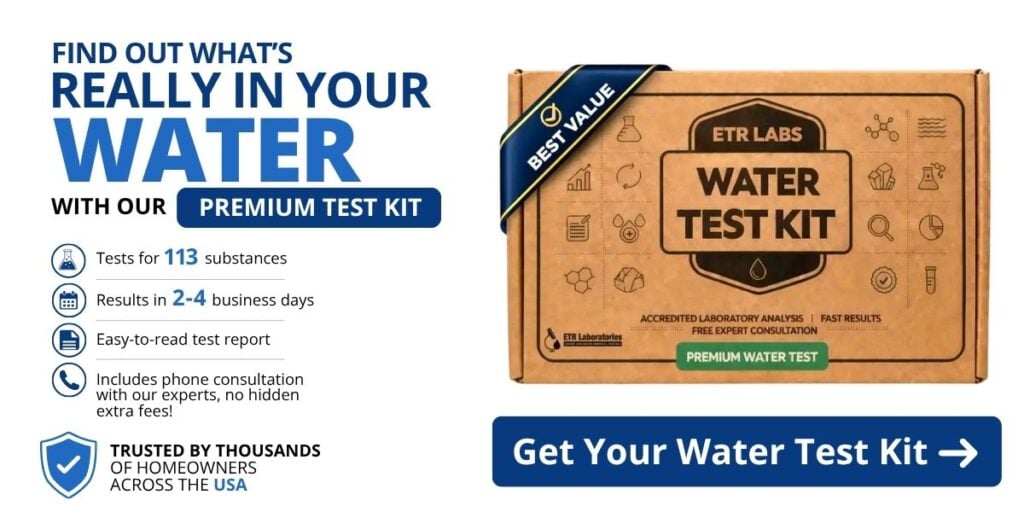
For a wider screen, we offer two panels. Here is what each one covers:
Both panels come with free expert consultation and free shipping both ways, and results arrive in 2 to 4 business days. If your business sits near a farm, a septic system, or an old landfill, the Premium panel covers more ground, and our article on industrial pollution and well testing explains what nearby sites can add to groundwater. Our panel guide for choosing a well test walks through the tiers in more detail.
Our tests are lab tests for your own information, and they do not replace any sampling a state assigns to a public water system. A state may also require a particular kind of laboratory, and if it asks for documented sampling, our guide to chain of custody explains the paperwork that follows a sample from collection to report. If a lender or a property transfer is part of the picture, our post on well water test for refinance covers well testing for a refinance.
The answers below cover common questions about where your business stands.
Often yes, but your state decides. Maine and Wisconsin both list restaurants as transient systems, which are public water systems when they serve at least 25 people for 60 days a year. For restaurant well water testing, ask your state drinking water program what applies to your business.
Generally not, unless it meets the thresholds. A home business that serves only a few people, or fewer than 15 service connections, may fall below the definition. Your state agency makes the determination, so confirm with it if customers or staff use the water regularly.
Call your state drinking water program, which is often part of the health or environmental department, or your local health department. Have your counts ready, and they can tell you whether your well is a public water system and which type.
Only if your state accepts the laboratory and the tests. Our tests are lab tests, and our accreditation is ISO/IEC 17025 by ANAB for the testing listed in our scope. Ask your state which labs and tests it accepts before relying on a result.
ETR Laboratories can help you start with a baseline once you know which questions to ask your state. Every test we run includes a free expert consultation to go over your results, and our team is available at 800-344-9977.
If your business needs more than a drinking water screen, see ETR industrial and commercial testing, which serves commercial building operators and facility managers. Contact us and order the test that fits your well.