Algal Blooms and Cyanotoxins in Water Supplies
Every summer, as lakes and ponds warm up, you’ll start
Free Shipping on Orders of $100 or More
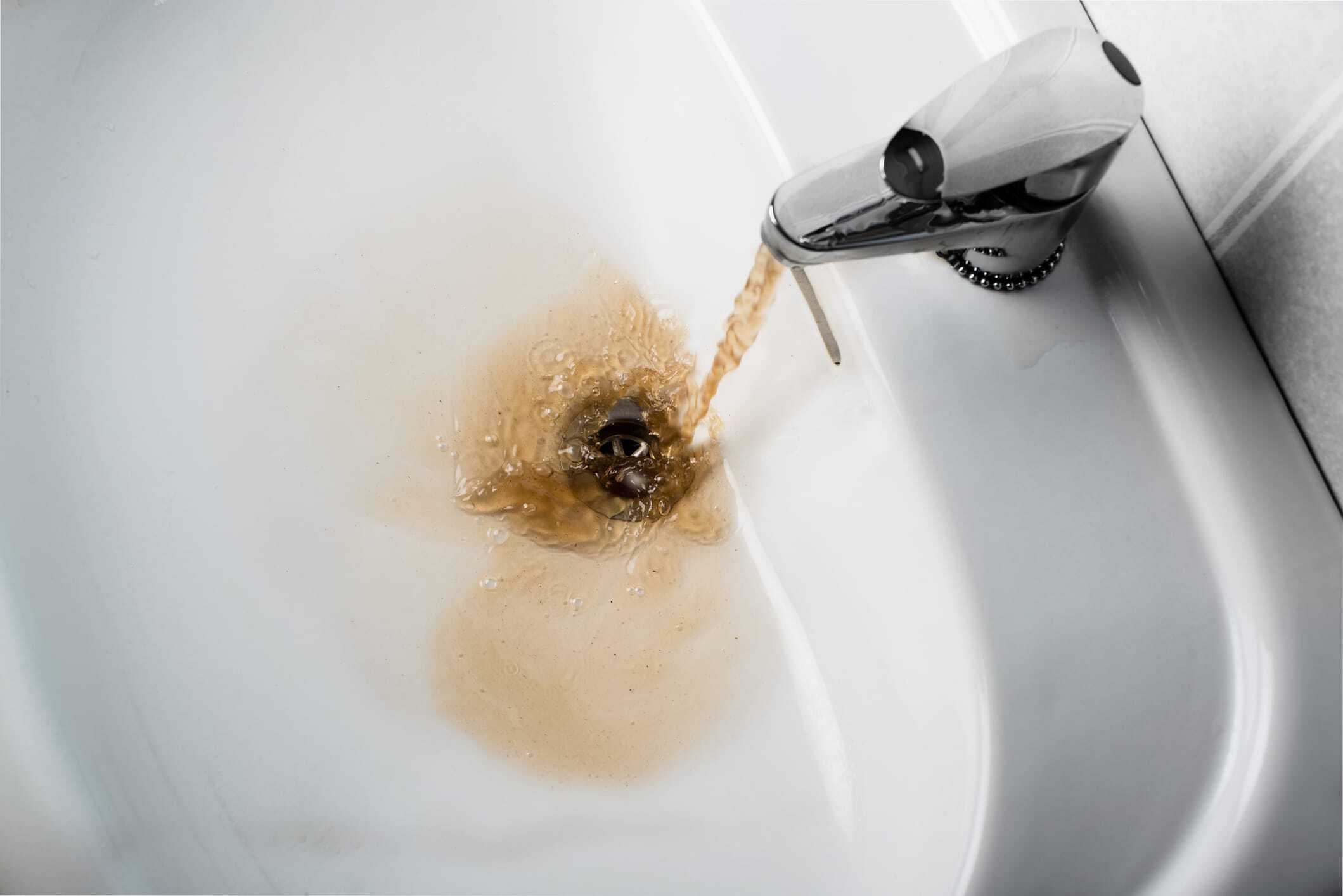
Brown well water is almost always a sign that something changed in your well or your plumbing. The usual culprits are stirred-up sediment, iron or manganese in the groundwater, corroding pipes, or surface water finding its way in after a storm. Most of it is more annoying than dangerous, but brown water can also hide contaminants you cannot see, so it is worth taking seriously.
In this article, we’ll explain what each water color means, how to clear up brown well water in the short term and the long term, and why your water might change color all of a sudden.
Each color of well water points to a different cause: blue or green to copper, red, brown, or orange to iron and manganese, yellow to organic tannins, black to manganese or iron bacteria, and gray or cloudy to sediment or air.
Match your water to the color below to narrow down the source:
Blue or green water comes from copper particles. New copper piping adds copper to the water for a while, and low-pH water can leach copper even from old pipes. It is not especially harmful unless levels get too high.
Red, brown, or orange water usually means iron or manganese from naturally occurring mineral deposits. When dissolved iron meets air, it oxidizes and turns a rusty orange or reddish brown, which is why orange water so often traces back to iron. These minerals are not harmful to health at typical levels, but they stain household items, and you do not want the concentration to climb too high.
Yellow water often picks up its color from peaty or swampy soil. Decaying organic matter, called tannins, tints the water and brings a swampy smell and a slightly bitter taste. It is not harmful on its own.
Black water is sometimes tied to iron bacteria, but manganese is the more frequent cause, occasionally combined with sediment or decaying organic matter. Manganese can leave black staining in toilets, tubs, and laundry. More on iron bacteria appears below.
Gray or cloudy water usually comes from fine sediment or trapped air. A quick test tells them apart: pour a glass and let it sit. If the cloudiness clears from the bottom up, it is air, which is generally harmless. If particles settle to the bottom, it is sediment, often stirred up after heavy rain, heavy use, or a disturbance in the well. Gray water can also come from manganese or from corroding galvanized pipes.
Brown is the color that brings most well owners here, so it gets its own section.
To clear up brown well water, flush an outside faucet for 15 to 30 minutes to see if it is temporary sediment, then test the water to find the cause, and finally treat that cause: an iron filter or softener for iron and manganese, shock chlorination for iron bacteria, a sediment filter for silt, or new pipes for corrosion.
Here is how that works step by step.
As for timing, temporary sediment usually clears within that first flush or after a few hours of light use while the well recovers. A mineral or bacterial cause will not clear on its own and stays until the water is treated.
Iron bacteria deserve a closer look, since they cause both discoloration and bigger problems. Iron bacteria combine iron or manganese with oxygen to form rust-like deposits that are slimy and cling to the walls of well pipes and plumbing fixtures. The bacteria themselves may not directly cause disease, but disease-causing organisms can thrive where iron bacteria are plentiful, and E. coli and Salmonella may turn up in those areas.
Along with color, iron bacteria can add swampy, sewage, petroleum, cucumber, rotten-vegetation, or musty smells, and the water can turn slimy or develop an oily sheen. Water with iron bacteria alone is safe to drink, but it should be tested to rule out other bacteria or nitrates. Disinfecting a well with iron bacteria is worth the effort, because the slime can clog a pump and disable a well.
Brown well water from iron, manganese, or tannins is usually more of a nuisance than an immediate health threat, but it can hide harmful contaminants, and a sudden change after rain can mean surface water or bacteria got in. Treat brown water as unsafe until a test confirms otherwise, and keep in mind that high manganese is a health concern over time, especially for infants.
For low iron levels, a water softener or a basic sediment filter is among the cheapest options, and shock chlorination with a thorough flush can clear a one-time iron-bacteria episode. Higher or constant iron usually needs an oxidizing or air-injection iron filter, which costs more but handles heavier loads.
Chlorine helps when iron bacteria are the cause, since shock chlorination kills the bacteria behind the slime and staining. It will not clear brown water caused by dissolved iron, manganese, or sediment on its own, so chlorination treats one specific cause rather than every kind of brown.
Brown water from stirred-up sediment often clears within 15 to 30 minutes of flushing, or after a few hours of reduced use while the well recovers. Discoloration from iron, manganese, tannins, or iron bacteria will not clear on its own and lasts until you treat the cause.
Run an outside faucet for 15 to 30 minutes to clear loose sediment, and reduce water use for a few hours so the well can recover. If sediment keeps returning, the well may need professional flushing or cleaning, and a sediment filter on the line will catch what remains.
The only reliable way to know your well water is clean is to test it, since many contaminants are invisible and tasteless. A comprehensive lab test checks for bacteria, metals, minerals, and other contaminants, and annual testing catches changes before they become problems.
No matter the color, the fix starts the same way: find out what is in the water before you spend a dollar treating it. The best way to keep good water flowing is regular testing. If your well has never been tested, get the most comprehensive test you can, then run a more limited test once a year, and test again any time the water changes or illnesses or allergies show up at home.
ETR Labs runs every test in its own in-house lab, and because it does not sell water filters or filtration systems, the results come without a sales pitch attached. When you get your results, call us at (800) 344-9977, and we will walk through them with you and help you figure out what is behind the discolored or smelly water so you can make the right correction.
Every summer, as lakes and ponds warm up, you’ll start
If you’ve seen headlines this summer about a fast-growing outbreak
Run a glass through the dishwasher and pull it out
Related Post.
Algal Blooms and Cyanotoxins in Water Supplies
Every summer, as lakes and ponds warm up, you’ll start seeing the headlines: a beach
The 2026 Cyclospora Outbreak: What It Actually Means for Your Water
If you’ve seen headlines this summer about a fast-growing outbreak of diarrheal illness sweeping across
White Residue on Fixtures and Dishes: What It Means
Run a glass through the dishwasher and pull it out cloudy. Wipe down the shower
Water Testing Labs Near Me: How to Choose the Right Lab
A search for water testing near you usually turns up dozens of companies claiming to
Whole-House Reverse Osmosis System vs. Under-Sink RO
From the Lab by ETR Laboratories Reverse osmosis has been a common option for treating
Tannins in Well Water: Causes, Signs, and Treatment
Most people would blame the presence of iron when they see their water take on a yellow or tea-colored tint. Maybe your white laundry is slowly turning beige, or you have noticed an earthy smell coming from the tap.
What Are Emerging Contaminants? Types, Sources, and Risks – 2026
It’s almost natural to pinpoint lead or bacteria as typical water contaminants since they have been part of the public conversation for decades, but scientists have now begun paying attention to a different group of substances called emerging contaminants.
Legionella in Water: Home Plumbing and Water Heater Risks
It’s easy to assume nothing is wrong inside your pipes if your water looks clear and tastes normal. Most people overlook the effects of Legionella in water for exactly that reason. It’s a kind of bacteria that can build up inside home plumbing
The World Health Organization Just Updated Its Drinking Water Guidelines. Here’s What It Means.
On June 18, 2026, the World Health Organization released an updated edition of its Guidelines for Drinking Water Quality, the most authoritative global reference document on what safe drinking water actually means and how to achieve it
What a Polluted San Diego Bay Tells Us About the Water Closest to You
Mission Bay in San Diego draws an estimated 15 million visitors a year. It’s one of the most popular recreational water destinations in the country. And according to a report released in June 2026, it has a serious water quality problem that isn’t going away when it stops raining.
Last Friday night, during a torrential rainstorm, a 42-inch sewer force main near Haverhill’s main pumping station failed. The pipe, which carries wastewater from the city’s main pump station to its treatment plant, dates back to the 1970s.
On June 5, 2026, residents in nearly a dozen neighborhoods in Northwest Washington DC started noticing something wrong with their water pressure. DC Water received calls from customers experiencing low to no pressure at multiple locations at the same time the Fort Reno Pumping Station was experiencing fluctuating power issues, with a full loss of power hitting at around 12:30 p.m.
Related Post.

Every summer, as lakes and ponds warm up, you'll start seeing the headlines: a beach closed for a "harmful algal...

If you've seen headlines this summer about a fast-growing outbreak of diarrheal illness sweeping across the country, you're not imagining...

Run a glass through the dishwasher and pull it out cloudy. Wipe down the shower door and watch a chalky...