Algal Blooms and Cyanotoxins in Water Supplies
Every summer, as lakes and ponds warm up, you’ll start
Free Shipping on Orders of $100 or More
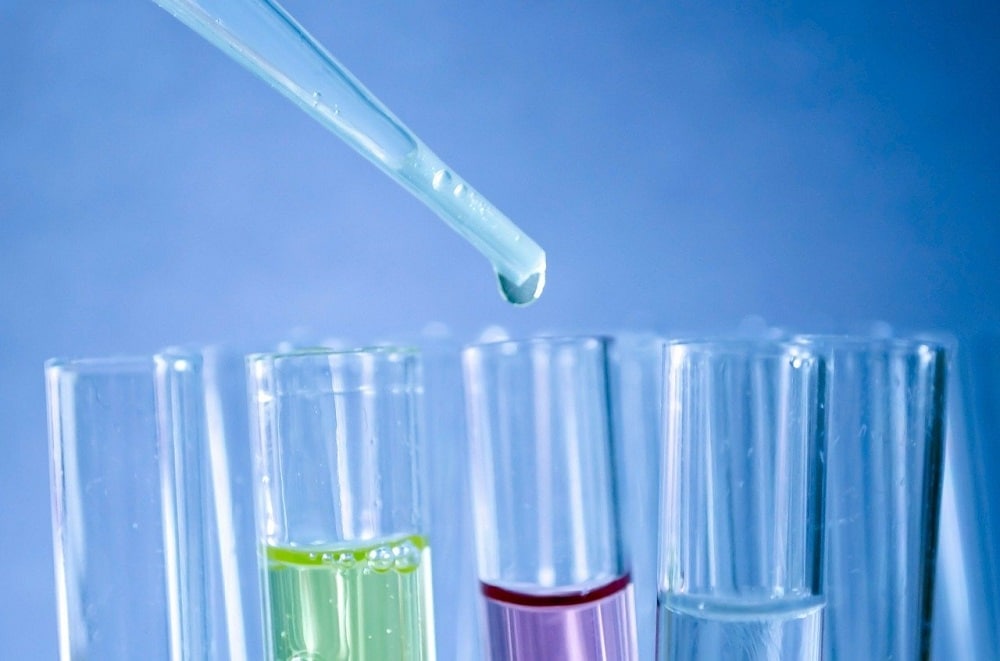
People test their water for all sorts of reasons. Tap water that tastes off, hard water leaving scale on the faucets, or a private well that no city utility ever checks all point to the same next step: a test. Not every testing option is equal, though, and the wrong one can hand you a number that means very little.
In this guide, we’ll explain how to test water quality using four common methods, what each one does well, and which contaminants and indicators are worth measuring.
You can test water quality four ways: test strips, color disk or drop kits, handheld digital instruments, or a professional lab analysis. They differ in cost, ease of use, and how much you can trust the result.
Here is how each one works, starting with the simplest:
Test strips can be ordered for you to test your own water. The strips detect the presence of certain chemicals and work by changing color, and then you compare the strip to a chart that can help show the concentration of the specific chemical. These types of tests are often used to determine the pH or chlorine amount in the water. Although the tests are easy to obtain and inexpensive, they’re not as accurate as other types of tests because they often have poor resolution, and it can be difficult to determine what the results actually mean for your health and safety.
Color disk kits or drop test kits are another type of test that can help determine the concentration of specific chemicals in your water. To use this test, you would obtain a sample of water in a plastic tube and then add either powder or a few drops of liquid reagent to the tube. The water will change color depending on the elements found in the water, and the color is compared to a color gradient disk that gives a closer reading of the concentration of the chemical than a test strip would. The test is a bit more complicated because of the technicalities involved, but they can provide a good amount of information about chemicals as well as microbiological elements, although microbiological tests require a day or two of incubation time for accurate results.
There are also handheld digital instruments that can be used to test your water. These provide accurate results but are more costly than the previous two types of tests. Proper training and calibration of the instruments are essential for getting accurate results, so the instruments are best handled by professionals. Luminescence testing devices can provide quick screening of bacteria in the water while electrochemical testers are useful for determining the pH, dissolved solids and salt, dissolved oxygen, and electrical conductivity of the water.
For the most thorough water analysis, it’s recommended that you have your water sent to a professional water testing lab. There are a number of tests available from these companies, from a standard scan to see how your water compares to EPA drinking standards to comprehensive and health scans that will help determine whether or not you need additional filtration for your drinking water. Professional testing labs may use more advanced colorimetric comparison tests, photometric test kits, or spectrophotometers to measure what contaminants are in your water and at what levels.
Once you have a result in hand, the next question is what counts as good water and what does not.
You can tell if your water is good quality by checking a handful of physical signs you notice yourself and a set of measurable indicators a test reports. Clear, odorless, good-tasting water at a balanced pH with low dissolved solids and no bacteria is the goal.
Some of these you can judge with your own senses. Others need a test to see.
Five physical traits give you a first read on your water before any test: color, smell, taste, temperature, and clarity, which is also called turbidity. Cloudy water, a rotten-egg or metallic smell, a strange taste, or visible particles all signal something worth testing. These signs cannot tell you what is wrong, only that something might be, so treat them as a prompt rather than a diagnosis.
The core indicators a water test reports are pH, total dissolved solids, hardness, turbidity, and the presence of bacteria. Together they describe how acidic the water is, how much mineral content it carries, how hard it is on your pipes and skin, how clear it runs, and whether living contaminants are present. Two of these come up so often that they deserve their own explanation.
TDS, or total dissolved solids, is the total amount of dissolved minerals, salts, and metals in your water, measured in milligrams per liter. pH measures how acidic or alkaline the water is on a scale from 0 to 14, where 7 sits at neutral.
Both have recommended ranges, and both have limits worth understanding.
The EPA sets a secondary guideline of 500 mg/L for TDS, aimed mostly at taste and appearance rather than direct health risk. Water below that level is generally fine, and many sources put the best-tasting range between 50 and 150 mg/L. A high TDS reading tells you how much is dissolved in your water, not what it is, so it works as a clue rather than a verdict.
For pH, the EPA recommends a range of 6.5 to 8.5. Below 6.5, water turns corrosive and can leach metals like lead and copper from your pipes. Above 8.5, it can taste bitter or leave scale behind. A pH inside that band is one sign of balanced water, though it says nothing about bacteria or specific contaminants.
The contaminants worth testing for fall into a few groups: bacteria, minerals, acidity, and specific health hazards like arsenic, lead, and radon.
Here is what each group covers.
One of the basic contaminants you should test for is bacteria, including total coliform bacteria and E. coli. Mineral tests can help determine what elements are affecting the taste, hardness, and smell of your water. It’s also a good idea to measure the acidity and pH of your water.
Beyond those, certain contaminants carry health risk even at low levels: arsenic above 10 parts per billion raises long-term cancer risk, nitrate above 10 parts per million is dangerous for infants, and radon and lead are worth ruling out entirely.
Water quality tests group into five broad types: bacterial tests for organisms like coliform and E. coli, mineral and hardness tests, pH and acidity tests, metal tests for elements like arsenic and lead, and physical tests for traits like turbidity and dissolved solids. A full lab panel usually covers all five.
Normal TDS for drinking water falls under the EPA’s recommended 500 mg/L guideline, and many people find water tastes best between 50 and 150 mg/L. Readings above 500 mg/L often bring a salty, bitter, or metallic taste. TDS measures quantity, not safety, so a normal reading still leaves specific contaminants to rule out with a fuller test.
Coli is the bacterium most often linked to diarrhea from contaminated water, and its presence usually signals that other disease-causing organisms may be there too. Other waterborne bacteria such as Salmonella, Shigella, and Campylobacter can cause similar illness. Because these organisms are invisible and tasteless, a bacterial test is the only way to confirm they are absent.
Knowing how to test water quality is the first step. Getting results you can act on is the rest, and a lab is where that happens.
Environmental Testing and Research Laboratories, Inc. runs every test in its own in-house lab, staffed by its own scientists, instead of routing samples through outside labs. Every order includes a free consultation with a water quality expert who explains your results in plain language. Because ETR Labs does not sell filtration products, every recommendation is unbiased and built around your water alone. With nearly three decades of testing behind it since 1995, the lab can tell you what is in your water and what to do next.
Order a water test or call (800) 344-9977 to find out what is in your water and what each test covers.
Every summer, as lakes and ponds warm up, you’ll start
If you’ve seen headlines this summer about a fast-growing outbreak
Run a glass through the dishwasher and pull it out
Related Post.
Algal Blooms and Cyanotoxins in Water Supplies
Every summer, as lakes and ponds warm up, you’ll start seeing the headlines: a beach
The 2026 Cyclospora Outbreak: What It Actually Means for Your Water
If you’ve seen headlines this summer about a fast-growing outbreak of diarrheal illness sweeping across
White Residue on Fixtures and Dishes: What It Means
Run a glass through the dishwasher and pull it out cloudy. Wipe down the shower
Water Testing Labs Near Me: How to Choose the Right Lab
A search for water testing near you usually turns up dozens of companies claiming to
Whole-House Reverse Osmosis System vs. Under-Sink RO
From the Lab by ETR Laboratories Reverse osmosis has been a common option for treating
Tannins in Well Water: Causes, Signs, and Treatment
Most people would blame the presence of iron when they see their water take on a yellow or tea-colored tint. Maybe your white laundry is slowly turning beige, or you have noticed an earthy smell coming from the tap.
What Are Emerging Contaminants? Types, Sources, and Risks – 2026
It’s almost natural to pinpoint lead or bacteria as typical water contaminants since they have been part of the public conversation for decades, but scientists have now begun paying attention to a different group of substances called emerging contaminants.
Legionella in Water: Home Plumbing and Water Heater Risks
It’s easy to assume nothing is wrong inside your pipes if your water looks clear and tastes normal. Most people overlook the effects of Legionella in water for exactly that reason. It’s a kind of bacteria that can build up inside home plumbing
The World Health Organization Just Updated Its Drinking Water Guidelines. Here’s What It Means.
On June 18, 2026, the World Health Organization released an updated edition of its Guidelines for Drinking Water Quality, the most authoritative global reference document on what safe drinking water actually means and how to achieve it
What a Polluted San Diego Bay Tells Us About the Water Closest to You
Mission Bay in San Diego draws an estimated 15 million visitors a year. It’s one of the most popular recreational water destinations in the country. And according to a report released in June 2026, it has a serious water quality problem that isn’t going away when it stops raining.
Last Friday night, during a torrential rainstorm, a 42-inch sewer force main near Haverhill’s main pumping station failed. The pipe, which carries wastewater from the city’s main pump station to its treatment plant, dates back to the 1970s.
On June 5, 2026, residents in nearly a dozen neighborhoods in Northwest Washington DC started noticing something wrong with their water pressure. DC Water received calls from customers experiencing low to no pressure at multiple locations at the same time the Fort Reno Pumping Station was experiencing fluctuating power issues, with a full loss of power hitting at around 12:30 p.m.
Related Post.
Every summer, as lakes and ponds warm up, you'll start seeing the headlines: a beach closed for a "harmful algal...
If you've seen headlines this summer about a fast-growing outbreak of diarrheal illness sweeping across the country, you're not imagining...
Run a glass through the dishwasher and pull it out cloudy. Wipe down the shower door and watch a chalky...