How to Test Rainwater, Cistern, and Spring Water Safely
No utility tests rainwater, cistern water, or spring water for
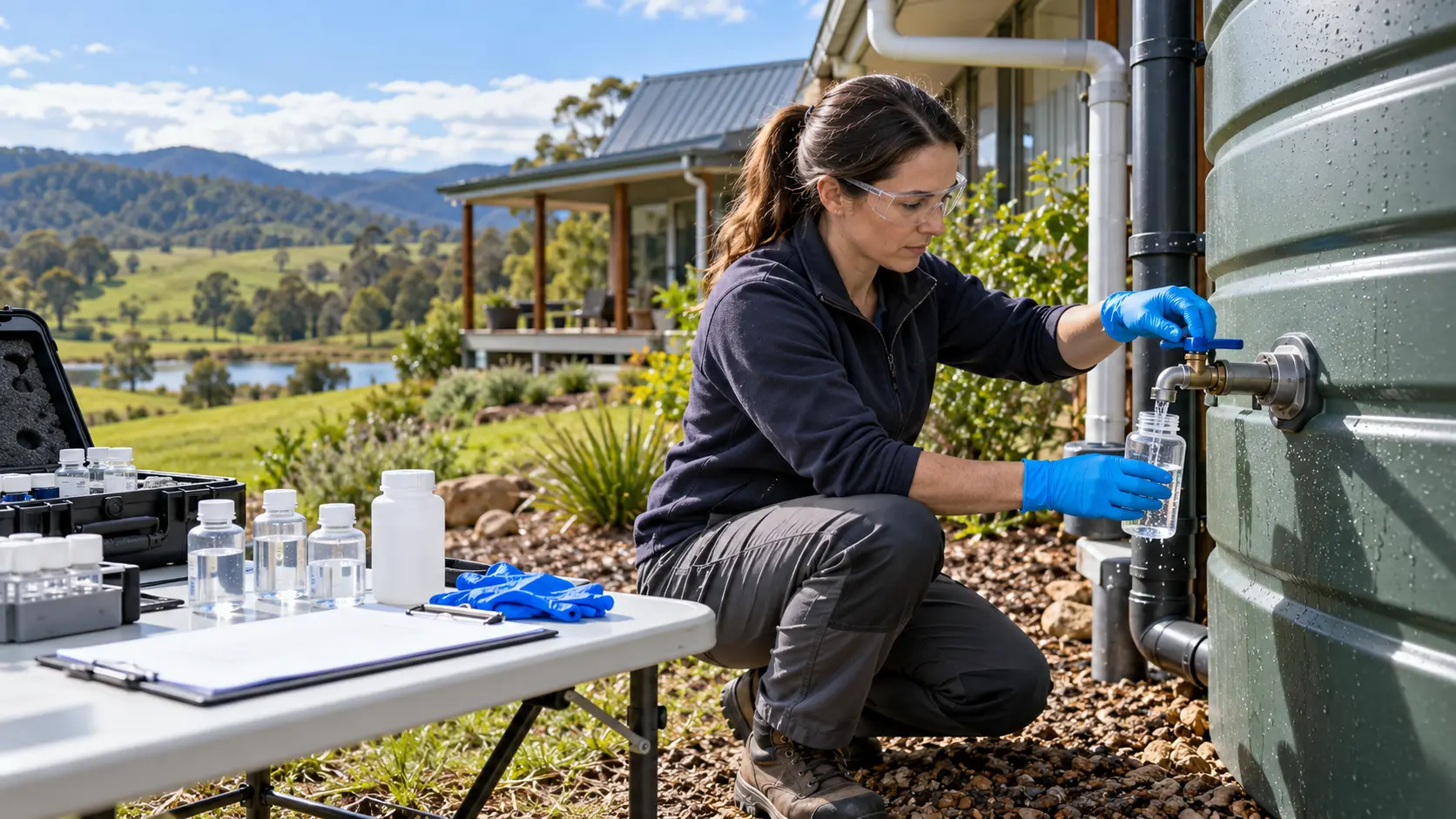
No utility tests rainwater, cistern water, or spring water for you, so the owner has to take responsibility for testing. Taste, clarity, and temperature cannot tell you whether the water is fit to drink, and clear, cold water can still carry bacteria.
ETR Laboratories, a water testing lab in Leominster, Massachusetts, has analyzed drinking water since 1995. In this article, we explain what to test first, which broader tests may make sense, how often to retest, how to collect a clean sample, and what to do with your results.
Public water systems test on a schedule, but private water supplies do not have a utility doing that work for you.
The CDC says rainwater is not necessarily safe to drink without first addressing germs and chemicals that may be present. Our post on where drinking water comes from also covers private rainwater collection.
Each source can pick up different problems:
Clear, cold, or “mountain-fed” water is not the same thing as tested water.
Your source helps determine which risks matter first. A cistern is only the container, so you also need to know what feeds it.
| Source | Typical risks | First test to run | When to retest |
| Rainwater | Roof debris, bird droppings, gutter and tank materials | Total coliform and E. coli | Regularly, and after changes to the system or water |
| Cistern | Whatever feeds it, plus storage contamination, open connections, and flood debris | Total coliform and E. coli | At least twice a year for bacteria if it is the main supply, plus after repairs or flooding |
| Spring | Septic systems, livestock, fertilizer, runoff, and nearby land use | Total coliform and E. coli, then nitrate where relevant | At least annually, and after nearby land or weather changes |
A spring that feeds a well or cistern should generally follow the testing plan for the larger water system it supplies.
Total coliform and E. coli should be the first test for rainwater, cistern water, and spring water because runoff, animals, insects, and unsealed storage or collection points can introduce bacteria.
Total coliform can indicate that a water system has a contamination pathway, while E. coli is a more specific indicator of fecal contamination.
Our coliform and E. coli test costs $65, with results listed at 1 to 2 business days after the sample reaches the lab.
A positive result is a reason to stop and investigate before continuing normal use. Our guide to what a positive coliform result means explains the next questions to ask, and your local health department can advise you about interim precautions.
Every ETR test includes a free consultation with a water quality expert.
Once bacteria are covered, broader chemistry testing can help identify problems introduced by the roof, tank, pipes, soil, or nearby land use.
Common parameters include:
For shallow sources near farms or septic systems, nitrate deserves particular attention. ETR’s nitrate water test costs $35, and our guide to testing for nitrates explains how to read the result.
For springs or other surface-influenced sources, our guide to Giardia and Cryptosporidium testing explains when specialized parasite testing may be worth discussing with a laboratory.
ETR does not currently list a kit made specifically for rainwater, cistern water, or spring water. Before ordering a broad panel, call the lab and confirm that the sample type is appropriate for the panel and that the analytes you care about still apply.
The nearest broad options are ETR’s well-water panels:
Both are sold as private well tests, so do not assume they are automatically the right choice for collected rainwater or spring water. Call ETR at 1-800-344-9977 or use our form.
Our Basic, Premium or Ultimate panel guide compares the tiers.
ETR sells testing, not treatment equipment. If your results point toward treatment, use the report to discuss options with a licensed water treatment professional.
Test before drinking from a new private supply, then retest on a regular schedule and whenever something changes.
For rainwater, the CDC advises people who use it for drinking, cooking, or bathing to test it regularly.
For a cistern that serves as the main water supply, Water Systems Council guidance recommends bacteria testing at least twice a year.
For springs and other private supplies, annual bacteria testing is a useful baseline, but local guidance may be stricter.
Test sooner after:
For cistern water testing, or if you need to test cistern water for bacteria more often, your local health department can tell you what schedule applies where you live.
The CDC’s cistern safety guidance also recommends checking with your health department before using water after a flood or disaster.
How to test rainwater for drinking starts with collecting a sample that actually represents the water you use.
Your kit instructions come first. Our guide to collecting a water sample covers the process in more detail.
Bacteria samples have short holding times, so timing matters. Follow the instructions supplied with the kit rather than relying on a generic number.
If you cannot reach the sampling point or are unsure where to collect from, call the lab before taking the sample.
Our post on common sampling mistakes that get a sample rejected explains which mistakes may require a new sample.
Read each result alongside its benchmark or reporting guidance.
A positive bacteria result is a reason to contact the lab and your local health department before continuing normal use. A clean result is reassuring for that sample, but it does not prove the water will stay clean indefinitely.
Rainwater, cistern water, and springs can change after heavy rain, flooding, repairs, seasonal changes, or nearby land use.
The Minnesota Department of Health notes that spring water quality may vary from year to year and even minute to minute.
State positions on springs also differ. Minnesota does not recommend springs as a drinking-water supply, while other jurisdictions may handle them differently. Treat that as Minnesota’s guidance, not a universal rule, and check with your own state or local health agency.
The CDC also notes that collecting rainwater is not allowed everywhere, and state and local rules can vary.
If a result is elevated, ETR’s consultation can help you understand the report. A licensed water treatment professional can then use those findings when discussing treatment.
If you have never mailed a sample to a lab before, our guide to how mail-in lab testing works explains the process.
Not necessarily. The CDC says even clean-looking rainwater can contain germs and chemicals. Safety depends on the roof, collection system, storage, and surrounding conditions. Treat it as untested until laboratory testing gives you more information, starting with bacteria.
No. Natural does not mean tested. The Minnesota Department of Health advises against using springs as a drinking-water supply, though state guidance varies. If you are considering drinking spring water, have it tested and check with your own state or local health department.
If a cistern is your main water supply, bacteria testing should be done at least twice a year according to Water Systems Council guidance, and sooner after flooding, repairs, long periods of non-use, or changes in taste, color, or smell. Check local rules as well.
Not necessarily. Boiling can kill many microorganisms, but it does not remove metals, nitrate, or many chemicals. The CDC says boiling will not remove chemicals, and the EPA says boiling does not remove lead.
Testing is still needed to determine what is actually in the water.
For rainwater, cistern water, or spring water, the simplest starting point is usually bacteria testing. ETR’s coliform and E. coli test costs $65 and includes access to a water quality consultation.
For broader testing, call ETR Laboratories at 800-344-9977 or send our team a message before ordering a well panel. We can help you confirm which option makes sense for the source you are testing.
ETR sells water testing, not filters or treatment equipment, so the goal is to identify what is in the water first and use those results to decide what comes next.