Free Shipping on Orders of $100 or More
Fast Turnaround Times
Ships free to your door
Takes under 5 minutes
Free return shipping
Expert Consultation
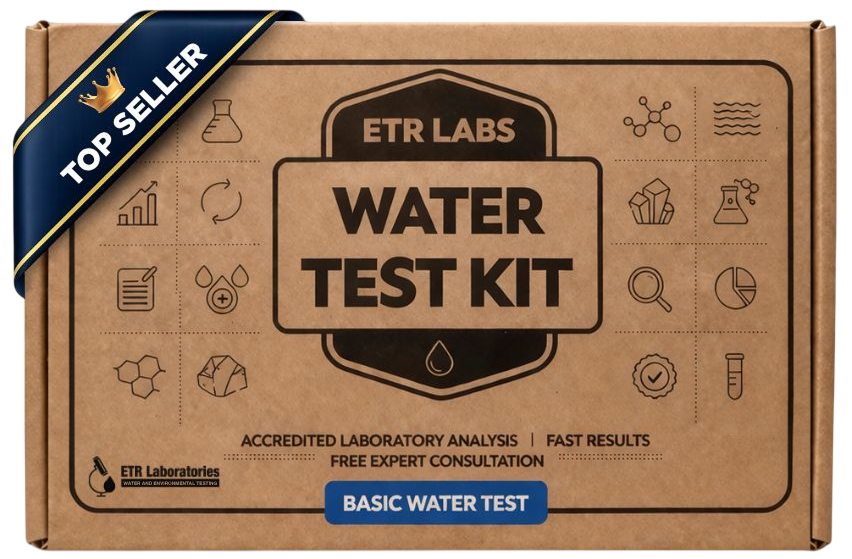
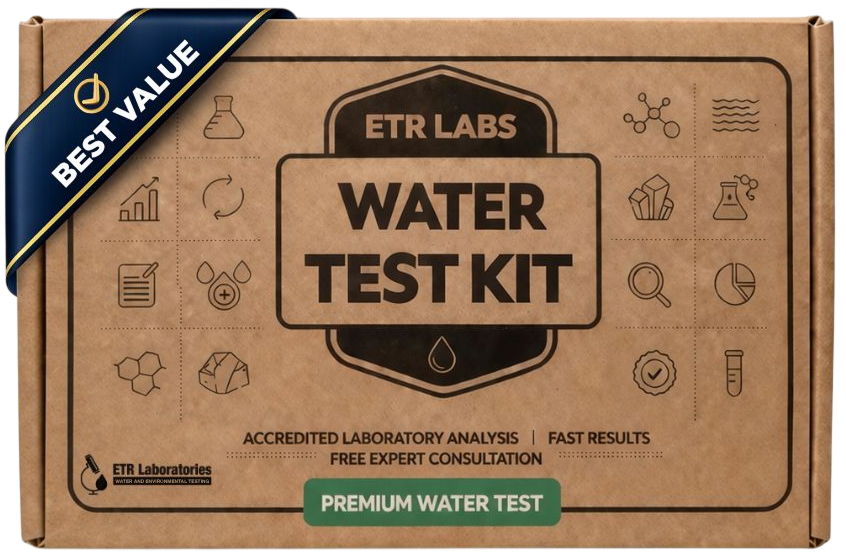
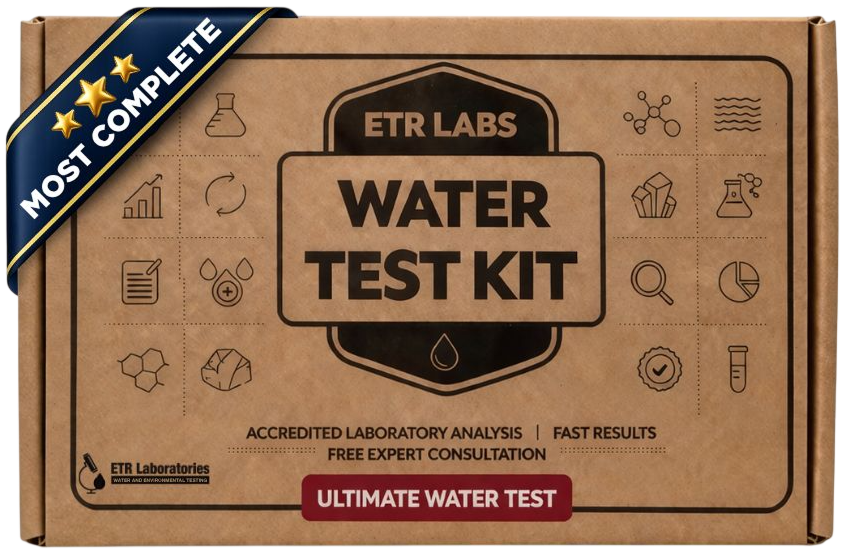
$415.00
$415.00
ETR Laboratories is accredited by ANAB for specific testing as listed in our scope of accreditation.
JEA's wells pull from the Floridan aquifer roughly 1,000 feet below the surface. Water that old and that mineral-rich picks up hydrogen sulfide, so JEA runs it through aerators to remove the rotten-egg odor, and uses ozone at a couple of plants for sulfide and taste control. JEA says the sulfur smell is an aesthetic issue and not a health one. It also advises that odor appearing only on hot water usually points to the water heater, not the supply, and that smell at a single sink often traces to the drain trap. What the nose picks up is one dissolved compound out of hundreds, so a clean-smelling glass still says nothing about chloride, sodium, iron or hardness minerals that come out of the same rock.
A USGS report from 2002 found that the aquifer's pressure level in Duval County had slowly fallen, mainly because of pumping, and that chloride had risen in more than 70 wells tapping the Upper Floridan and upper Lower Floridan. On Fort George Island, one monitoring well saw water levels drop about 24 feet over 70 years while chloride climbed from 63 to 360 mg/L. Only a few wells then exceeded the 250 mg/L recommended limit. A 2023 St. Johns River Water Management District review found today's increases appear localized, tied to saltwater upconing near individual wells and wellfields, and managed through well construction and pumping changes. It also noted that small systems and self-supplied water users have fewer options when salinity rises, which describes private well owners.
Florida's health department lists Duval among the counties with local rules requiring water testing when a well is new or repaired, so a driller's finished well may already have a test requirement attached. The Florida Department of Health in Duval County also runs a private well program that handles site investigations and sampling, particularly near known or potential groundwater contamination sources. For a well already in service, the state recommends testing for bacteria and nitrate at least once a year, since poorly maintained septic systems, livestock areas, fertilizer and badly built wells can all send both into groundwater. Nitrate matters most for infants, which is why a baby on the way is a good trigger for a fresh test.
Max substances in Ultimate panel
Money-back guarantee
Expert consult every order
“The test was simple–collect a water sample from a faucet in the home. We sent the test to the lab and received a water quality analysis within a few days. The test included analysis of the water sample for the presence of: coliform bacteria, E. coli, iron, lead, pH, turbidity, and nitrates/nitrites.”
“Incredible lab, they really care about their customers. As someone who doesn’t know a whole lot about water quality, they took their time to help me understand everything about my water quality situation.”
No shared results. Our laboratory holds our clients privacy to the highest regard, your results and information will never be shared. Be aware that state certified laboratories may be required to report your results to various government agencies.