Free Shipping on Orders of $100 or More
$175.00
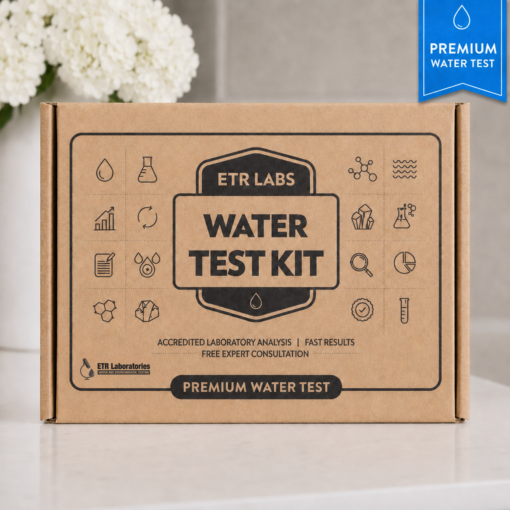
This test measures PCBs in water, a family of industrial chemicals banned in the U.S. since 1979 that still leak from landfills, scrap yards, and old electrical equipment.5 parts per billion. It suits well owners near former industrial sites, people living by waterways with PCB fish advisories, and anyone following up on a positive soil result.
PCBs cling to soil and sediment more than they dissolve in water, so the ground around a well can hold more than the water does. If soil on your property may be the source, our PCBs in Soil Test can show whether the ground is holding contamination.
Polychlorinated biphenyls, or PCBs, are industrial chemicals once used as insulating fluids and as additives in inks, caulk, and paint. U.S. manufacturing stopped in 1979, but PCBs break down very slowly. Here are the sources that keep releasing them:
PCBs build up in fat, so they concentrate as they move up the food chain, which is why fish advisories are common near polluted waterways. Groundwater contamination is less common but can occur near spills and waste sites. The EPA PCB pages cover the history and cleanup rules.
Consider this test if your well sits near a landfill, scrap yard, former manufacturing plant, or electrical substation, or if your property once held old transformers or capacitors.
It is also worth ordering if you live beside a river, pond, or lake with a PCB fish advisory, or if a soil test on your land came back positive and you want to know whether contamination has reached the water.
PCBs have no taste or smell in water, and low-level exposure causes nothing you would notice day to day. A number from our lab gives you a baseline to compare against later.
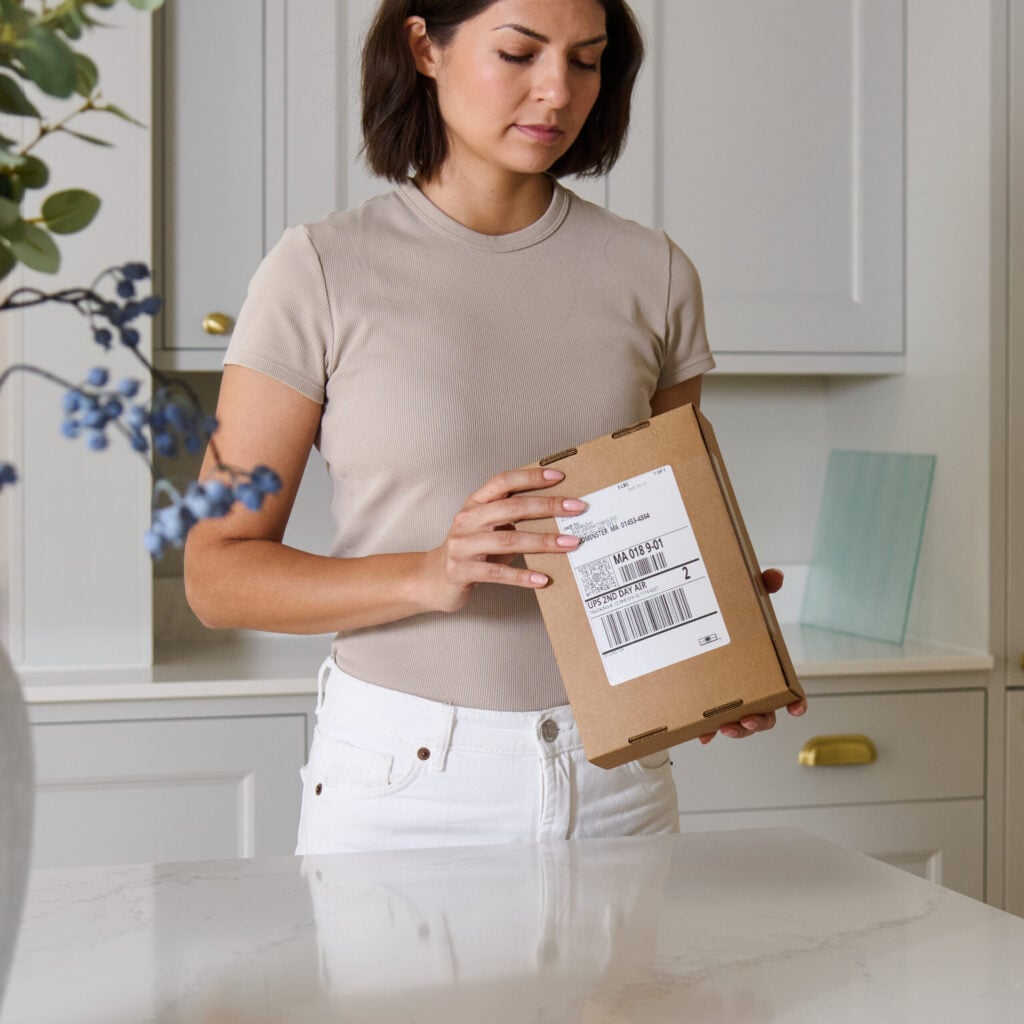
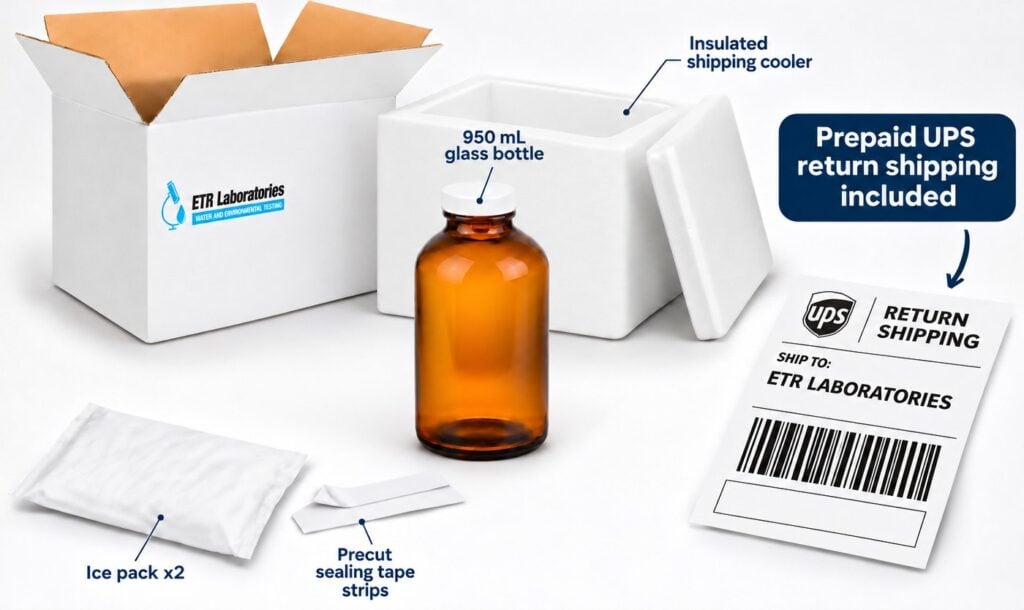
Orders of $100 or more ship free, and orders under $100 ship for an $8 flat rate. Return postage to our Leominster lab is prepaid. Collect and ship as soon as possible after sampling so your sample reaches us in good condition.
We analyze your sample in our accredited lab, using established testing methods and quality controls.
We have tested water since 1995.
Every test includes a free consultation with one of our water experts. We go over your results with you, explain what the numbers mean for your home, and help you decide on the appropriate next step, including any filtration approach.

Ships free to your door
Takes under 5 minutes
Free return shipping
Expert Consultation

Ships free to your door

Takes under 5 minutes

Free return shipping

Expert Consultation
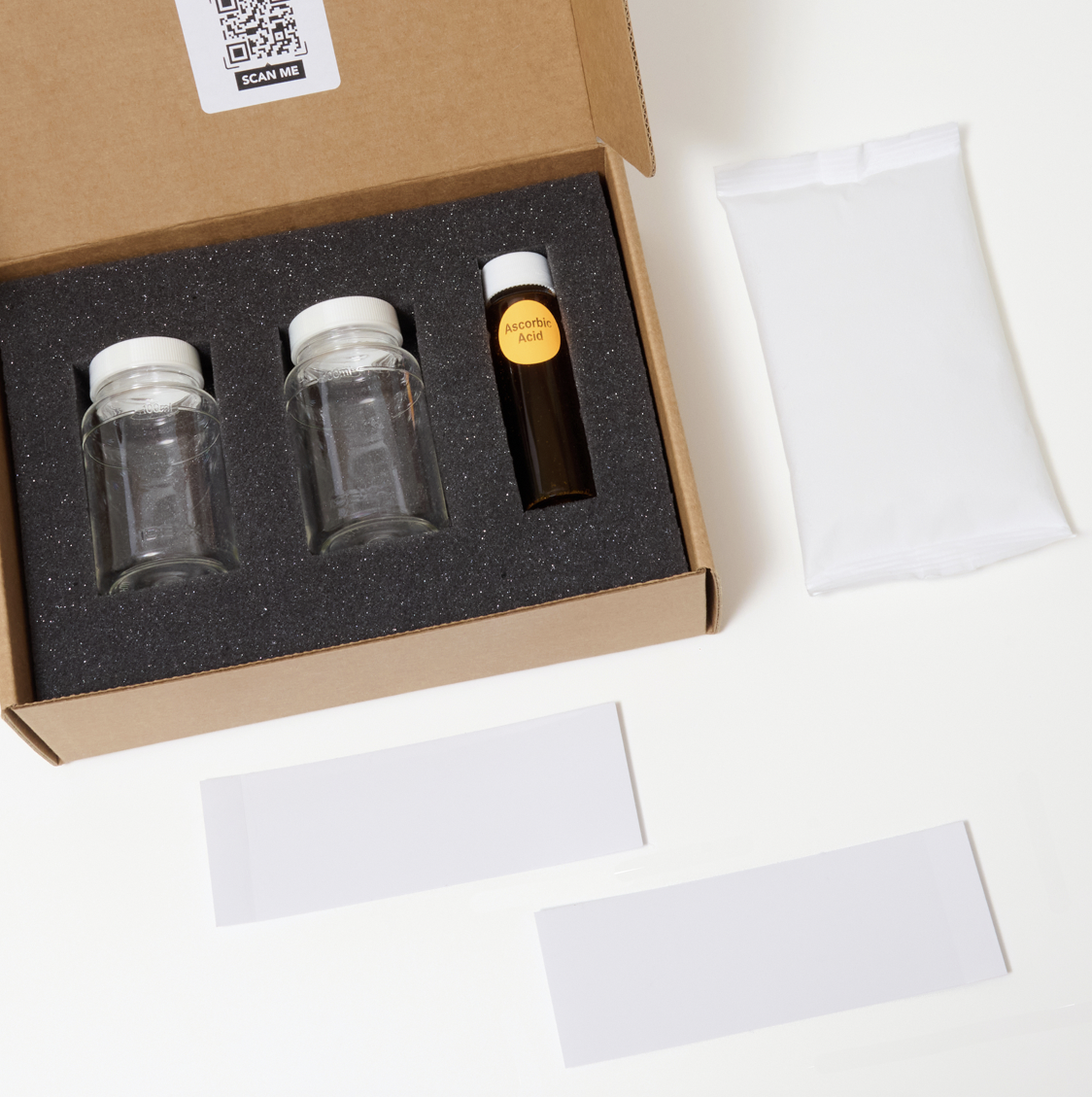
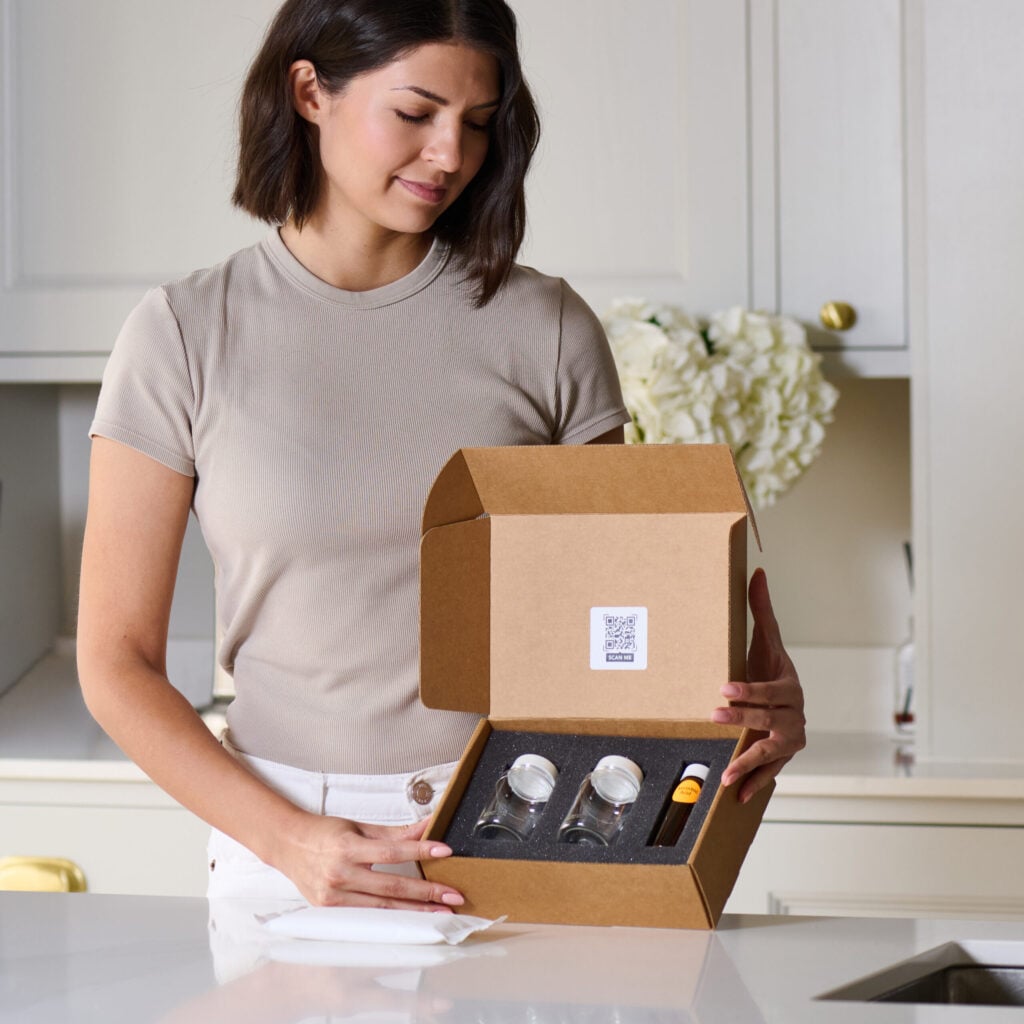
Every test comes with step-by-step instructions on how to prepare your water source, collect your water sample, and prepare your sample for return shipment to our lab.
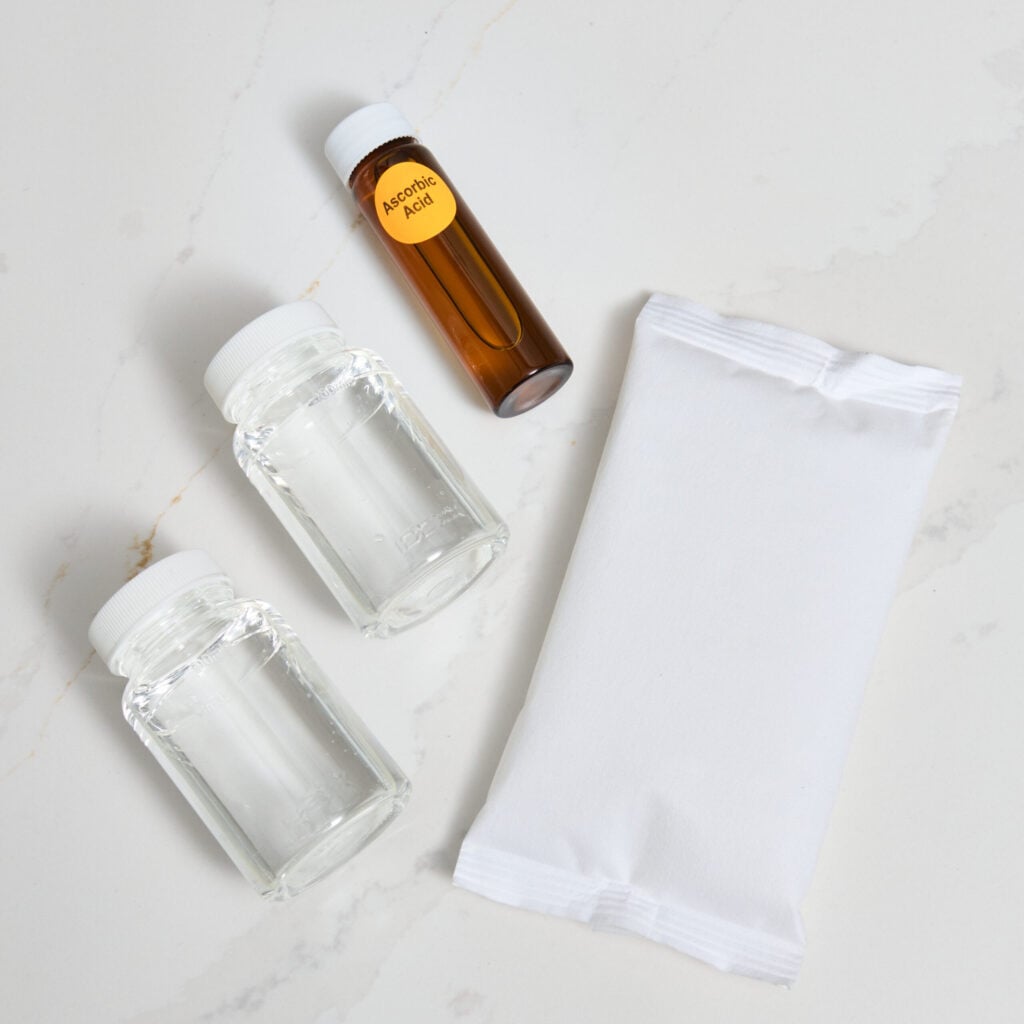
The appropriate sample containers are provided with sterility and sample volume requirements taken into consideration.
A short form to fill out with basic information about your water source. This helps our lab technicians process your results accurately.
A pre-paid return shipping label is included — just drop the sealed package in any mailbox or hand it to your mail carrier. No extra cost.

“The test was simple—collect a water sample from a faucet in the home. We sent the test to the lab and received a water quality analysis within a few days. The test included analysis of the water sample for the presence of: coliform bacteria, E. coli, iron, lead, pH, turbidity, and nitrates/nitrites.”
Taylor L.
“Incredible lab, they really care about their customers. As someone who doesn’t know a whole lot about water quality, they took their time to help me understand everything about my water quality situation.”
Brad R.
“I’ve used ETR for several tests, both water and air. The test kits are easy to understand and the reports are very comprehensive. But what really makes them stand out is their quality of service. There is a lot of terminology in these reports that I don’t understand, but their staff is very knowledgeable and always available to assist. They really take their time to review the results with you on the phone, and answer any questions you may have.”
John T.
4.8
Average Rating
across all platforms
500K+
Water Tests Sold
nationwide since 1995
342+
Reviews on Angi
verified homeowner reviews
We run every test inside our own lab in Leominster, Massachusetts. Your results come straight from us, not a subcontractor. That keeps our pricing fair and our quality consistent across every kit we send out.
Most labs stop at handing you a report. We do not. Every result comes with a free call to one of our water quality experts, so you understand what your numbers mean and what to do next.
ETR Laboratories has run water tests for over 30 years. We hold membership in the national Water Quality Association and the Massachusetts Ground Water Association.
Our reviews reflect the work we do. We hold a 4.8 out of 5 rating on Google, a 4.8 out of 5 rating on Angi from 342 reviews, and five-star ratings on Trustpilot.

Our Premium Water Test screens your water for 113 substances in one round, including bacteria, radon, heavy metals, and industrial chemicals, providing homeowners and landlords with a thorough assessment for peace of mind. We have run…
They can be with long-term exposure. The EPA classifies PCBs as probable human carcinogens, and studies link them to effects on the immune system, liver, skin, and hormones, along with learning and growth effects in children exposed before birth. PCBs build up in body fat over years, so the concern comes from steady exposure rather than a single glass of water.
The EPA limit for public drinking water is 0.5 parts per billion of total PCBs, and the EPA health goal is zero. Private wells are not covered by that rule, but many owners treat 0.5 ppb as their line and any detection as a reason to look for the source. A second sample before any big decision helps confirm the number, since one result is a snapshot of a single day.
Not in new products. U.S. manufacturing ended in 1979, and new uses are banned. Some older electrical equipment made before then, such as transformers and capacitors, is still in service or sitting in storage. Caulk and paint in buildings from the 1950s through the 1970s can also contain PCBs. Those older sources are what keep PCBs moving into the environment today, often decades after the equipment was made.
Start with whichever one you rely on most. If your family drinks well water near an old industrial site, test the water first, since that is the daily exposure. If you garden, have children playing outside, or found old transformers or oily stains on the land, a soil test makes sense. A positive soil result is a good reason to check your well water next.
Not necessarily. Fish pick up PCBs from contaminated sediment and their food over many years, so a fish advisory on a nearby river does not mean your well water carries PCBs. Groundwater moves differently than surface water. If your well is close to the water body or a known source, a test is the simplest way to check. It also gives you a baseline to compare against if the advisory or nearby cleanup work changes.
No. Boiling does not remove PCBs, and it can leave them slightly more concentrated as water turns to steam. PCBs are stable chemicals that hold up to heat, which is part of why they lasted so long in electrical equipment. If your result shows a detection, a retest and a talk with our team are better next steps.
Yes. PCBs have an enforceable EPA limit, so public water systems must monitor for them, and any detection appears in the utility's annual water quality report. Detections in treated city water tend to be uncommon. Private wells have no testing requirement, so a well near a landfill, scrap yard, substation or old industrial site is left to the owner to check. Our lab test gives you a number you can compare against the federal limit.
Pregnant women, nursing mothers and young children are the main concern. PCBs can pass from mother to baby during pregnancy and through breast milk, and studies link early exposure to effects on development and learning. Adults face long-term risk too, since PCBs build up in the body over years of exposure. If your household includes someone pregnant or a young child and your well sits near a possible source, testing sooner is a reasonable step.
No shared results. Our laboratory holds our clients privacy to the highest regard, your results and information will never be shared. Be aware that state certified laboratories may be required to report your results to various government agencies.