
Free Shipping on Orders of $100 or More

Biological Oxygen Demand

$150.00

Our biological oxygen demand test measures how much oxygen bacteria use up while breaking down organic material in a water sample. A high BOD means there is a lot of waste, such as sewage, manure, or decaying plants, competing with fish for oxygen. It is built for lake and pond owners, watershed groups, farms, and businesses checking a discharge, not for household tap water.

A single BOD number is most useful as part of a series. Sampling at the same spot, time of day, and season each year makes results easy to compare and helps you spot a new pollution source upstream. For a wider look at pond health, our Pond Scan pairs well with a BOD result.

What is BOD in water?

BOD, short for biological or biochemical oxygen demand, is the amount of oxygen bacteria use while breaking down organic material in water. The more waste there is to feed on, the more oxygen they pull out.

Here are common sources of high BOD:

  • Septic and sewage leaks
  • Livestock manure and farm runoff
  • Food processing waste
  • Heavy loads of leaves, grass clippings, or dead algae

As that material decays, dissolved oxygen falls, which can stress fish and other aquatic life. The USGS Water Science School explains how BOD and dissolved oxygen relate.

Is this test right for me?

This test is a good match if you manage a pond, lake, or stream and have noticed fish kills, a sewage or rotten smell, thick algae, or murky water that never seems to clear. A BOD result tells you whether organic waste is pulling oxygen out of the water.

Farms, food producers, and small businesses with a discharge permit often use BOD to track what leaves their property. Conservation groups and students use it to compare sites along a stream or to check the effect of a new upstream source.

If your question is about the water you drink at home, a bacteria test or a full panel will serve you better than BOD.

Shipping info

Orders of $100 or more ship free, and orders under $100 ship for an $8 flat rate. Every kit comes with a prepaid return label.

BOD samples change quickly, so collect and ship as soon as possible after sampling, ideally the same day, and keep the box cold. If you are near Leominster, Massachusetts, you can drop a fresh sample at our lab.

Tested in Our Accredited Lab

We analyze your sample in our accredited lab, using established testing methods and quality controls.

We have tested water since 1995.

Free Expert Consultation

Every test includes a free consultation with one of our water experts. We go over your results with you, explain what the numbers mean for your home, and help you decide on the appropriate next step, including any filtration approach.

Order Kit

Ships free to your door
Collect Sample

Takes under 5 minutes

Ship to Lab

Free return shipping

Get Results

Expert Consultation

Order Kit

Ships free to your door

Collect Sample

Takes under 5 minutes

Ship to Lab

Free return shipping

Get Result

Expert Consultation

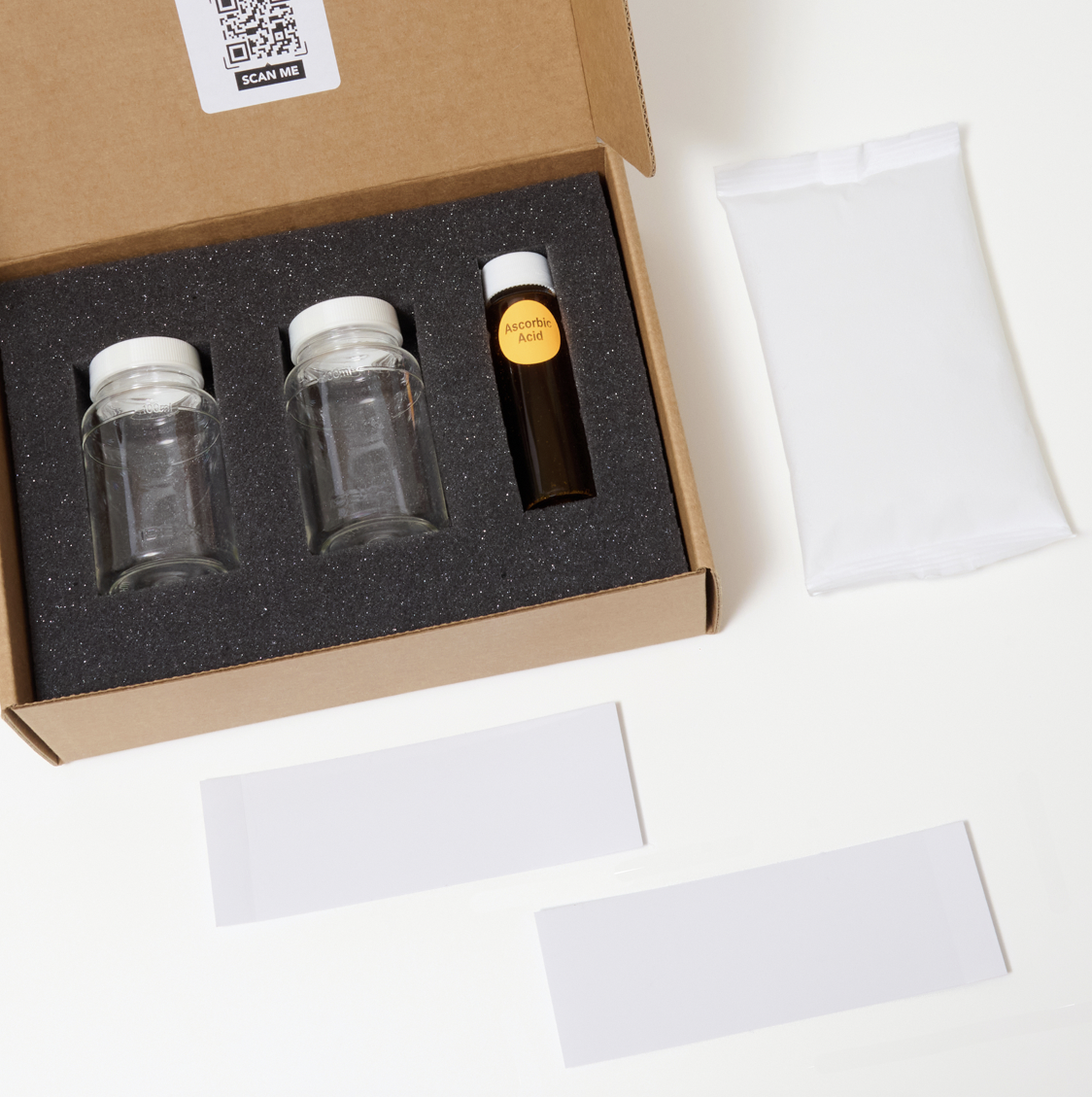
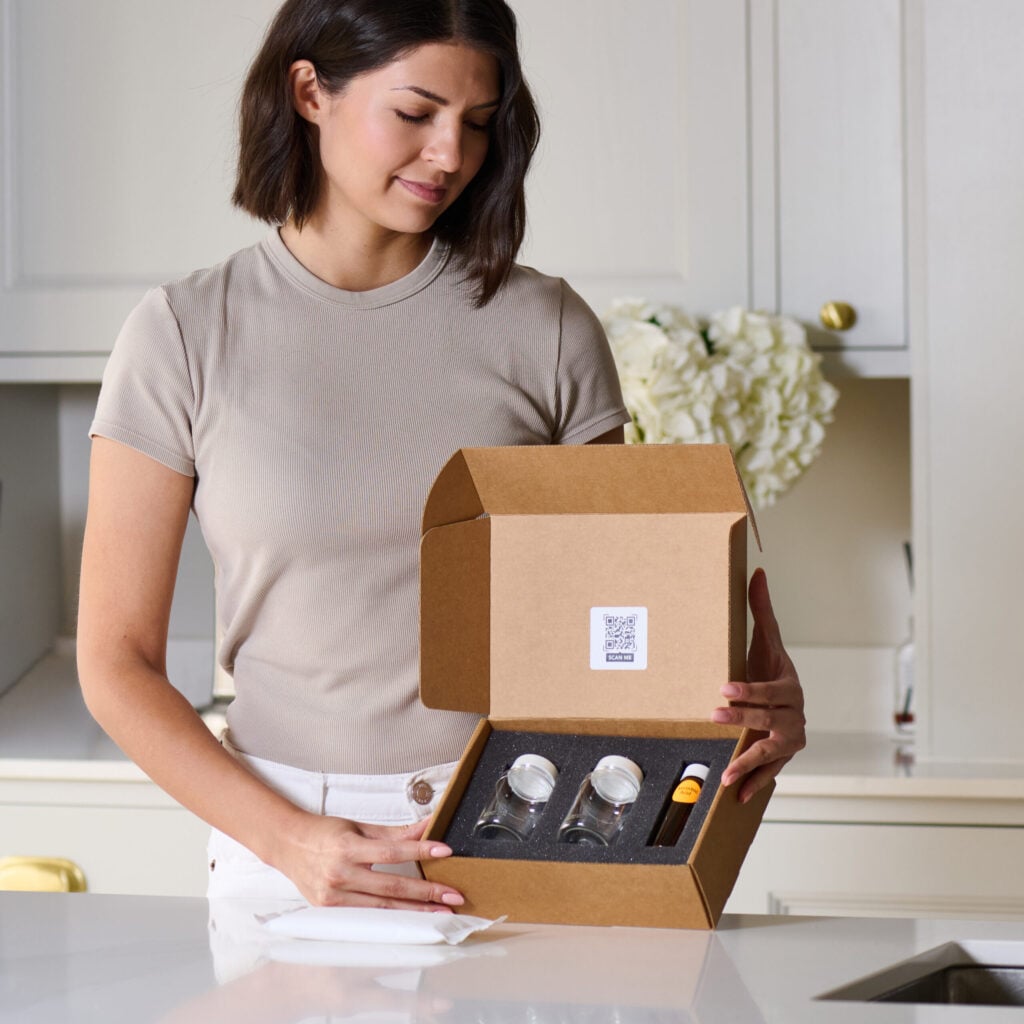
What’s Inside Your Testing Kit?

Sampling Instructions

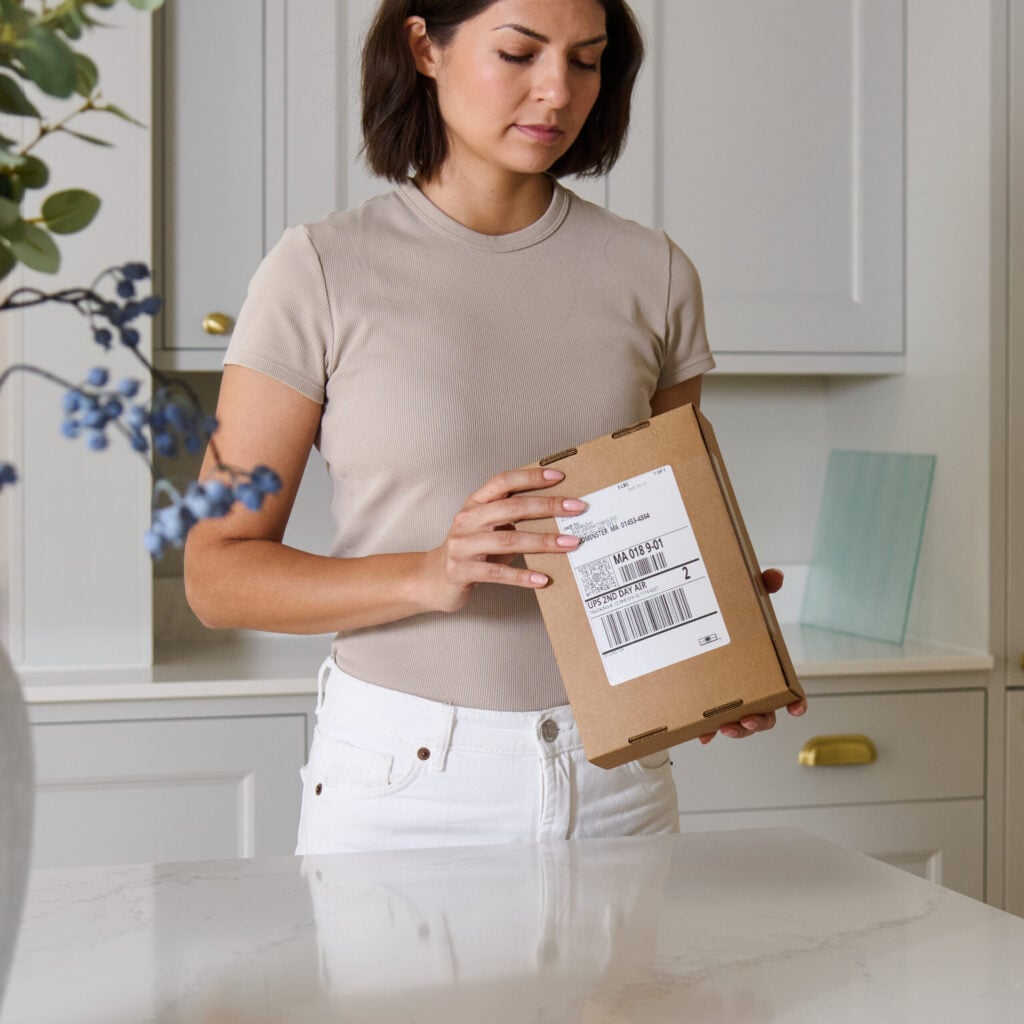
Every test comes with step-by-step instructions on how to prepare your water source, collect your water sample, and prepare your sample for return shipment to our lab.

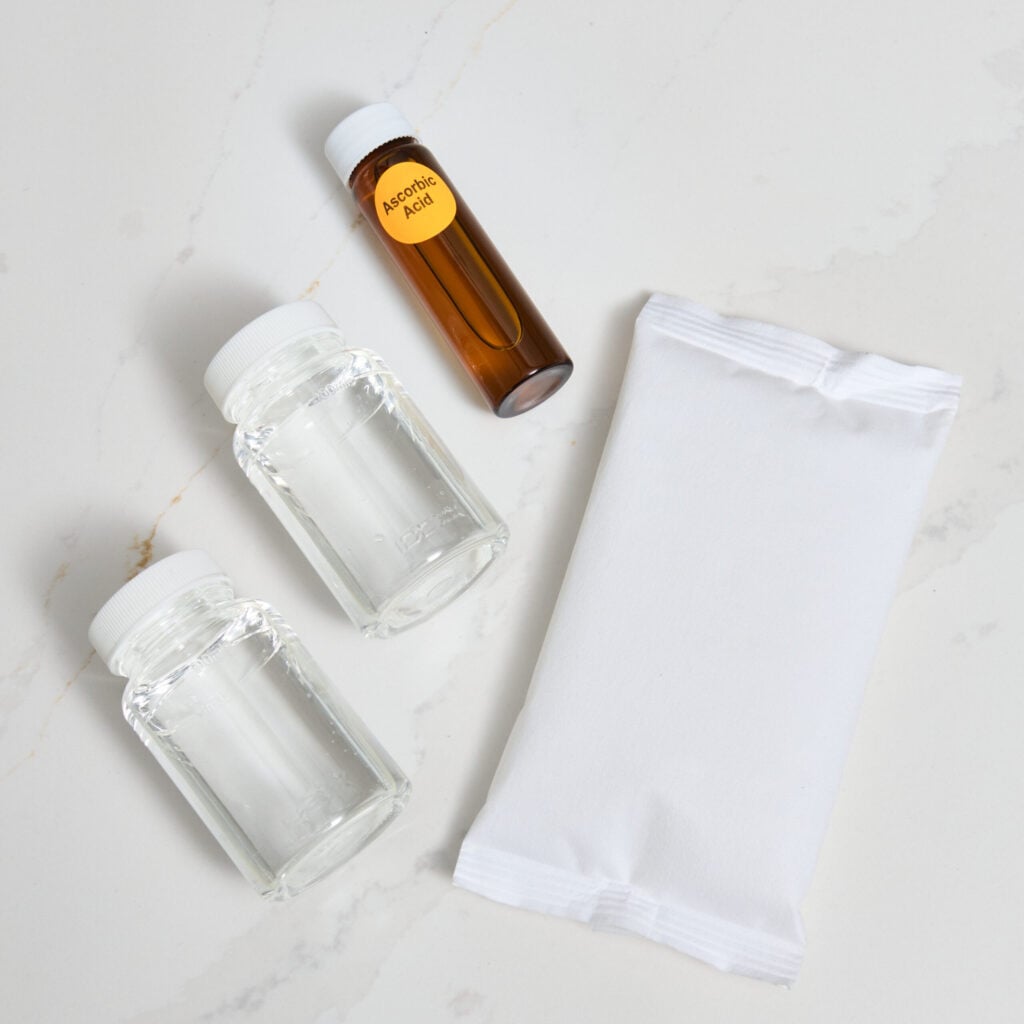
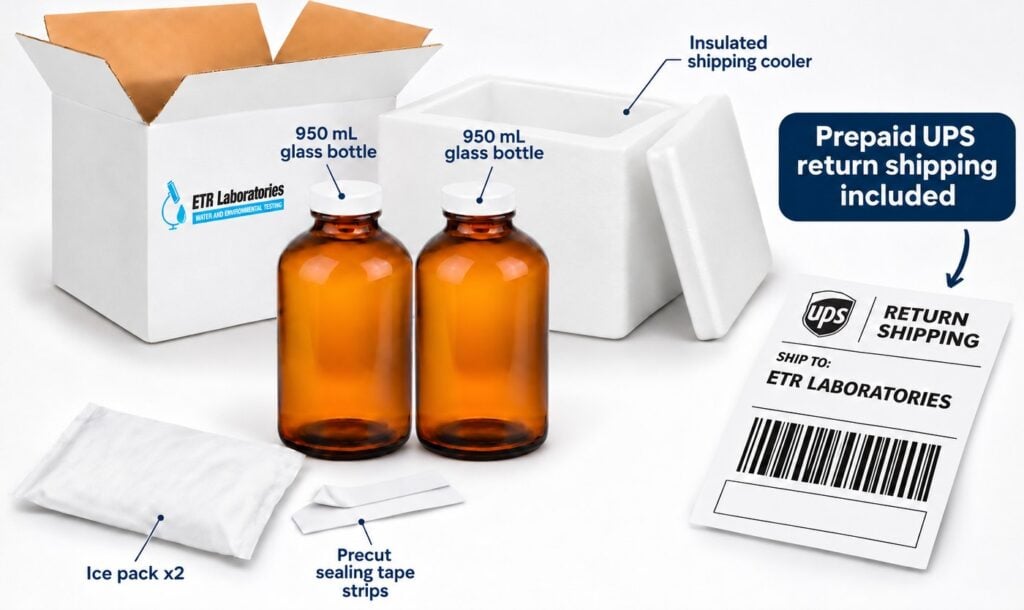
Double 950mL Glass Bottle Kit

The appropriate sample containers are provided with sterility and sample volume requirements taken into consideration.

Sample Information Form

A short form to fill out with basic information about your water source. This helps our lab technicians process your results accurately.

Prepaid Shipping Label

A pre-paid return shipping label is included — just drop the sealed package in any mailbox or hand it to your mail carrier. No extra cost.

Double 950mL Glass Bottle Kit

Our Reviews

★★★★★
ANGI

“The test was simple—collect a water sample from a faucet in the home. We sent the test to the lab and received a water quality analysis within a few days. The test included analysis of the water sample for the presence of: coliform bacteria, E. coli, iron, lead, pH, turbidity, and nitrates/nitrites.”

Taylor L.

★★★★★
TRUSTPILOT

“Incredible lab, they really care about their customers. As someone who doesn’t know a whole lot about water quality, they took their time to help me understand everything about my water quality situation.”

Brad R.

★★★★★
GOOGLE

“I’ve used ETR for several tests, both water and air. The test kits are easy to understand and the reports are very comprehensive. But what really makes them stand out is their quality of service. There is a lot of terminology in these reports that I don’t understand, but their staff is very knowledgeable and always available to assist. They really take their time to review the results with you on the phone, and answer any questions you may have.”

John T.

4.8

Average Rating

across all platforms

500K+

Water Tests Sold

nationwide since 1995

342+

Reviews on Angi

verified homeowner reviews

Why Choose ETR Labs to Test Your Water

Results You Can Trust

Accuracy is at the core of everything we do, and through strict quality standards and a commitment to scientific excellence, we deliver results you can trust.
 

No Middleman

We run every test inside our own lab in Leominster, Massachusetts. Your results come straight from us, not a subcontractor. That keeps our pricing fair and our quality consistent across every kit we send out.

Free Follow-Up Consultations

Most labs stop at handing you a report. We do not. Every result comes with a free call to one of our water quality experts, so you understand what your numbers mean and what to do next.

Respected Name in the Water Industry

ETR Laboratories has run water tests for over 30 years. We hold membership in the national Water Quality Association and the Massachusetts Ground Water Association.

We're Trusted by Our Customers

Our reviews reflect the work we do. We hold a 4.8 out of 5 rating on Google, a 4.8 out of 5 rating on Angi from 342 reviews, and five-star ratings on Trustpilot.

Our Recommended Test

We recommendPremium Water Test

Premium Water Test

Our Premium Water Test screens your water for 113 substances in one round, including bacteria, radon, heavy metals, and industrial chemicals, providing homeowners and landlords with a thorough assessment for peace of mind. We have run…

  • Bacteria
  • Radon
  • Heavy Metals
  • Industrial Chemicals
  • Minerals & Water Attributes
$249.00

FAQs

Is high BOD in water harmful?

High BOD harms the life in a pond or stream more than it harms people directly. As bacteria break down the extra waste, they use up dissolved oxygen, and fish can become stressed or die. High BOD also often travels with sewage or manure, which can carry germs. A high reading near a swimming area is a good reason to test for bacteria too.

What BOD level is too high?

There is no single cutoff, because the right level depends on the water. Clean, healthy streams usually show low BOD, while untreated sewage runs far higher, and that spread is the biological oxygen demand test normal range in practice. Treated wastewater has to meet the number in its discharge permit. For a pond or lake, a result that climbs from one season to the next is the clearest sign that more organic waste is reaching the water.

What is the difference between chemical oxygen demand and biological oxygen demand?

COD uses a strong chemical to break down organic matter, while BOD relies on bacteria. Because the chemical also breaks down material bacteria cannot digest, COD is usually higher than BOD for the same sample. COD gives an answer within hours, and BOD needs several days of incubation. Many treatment plants run both, since the ratio between them shows how easily the waste breaks down.

Does a BOD test detect bacteria that make people sick?

No. BOD measures how much oxygen bacteria use, not which bacteria are present or whether they cause illness. A sample can show low BOD and still carry harmful germs, or high BOD with few of them. If people swim, fish, or water animals from the same source, a coliform and E. coli test answers the health question.

How does temperature affect BOD and dissolved oxygen?

Warm water holds less dissolved oxygen than cold water, and bacteria break down waste faster when it is warm. Together, those two effects make summer the riskiest season for fish in a pond with high BOD. A late summer sample often shows the worst case, while a spring sample from the same spot gives a useful comparison.

How does phosphorus relate to BOD?

Phosphorus feeds algae, and algae raise BOD when they die and decay. A pond with high phosphorus may grow heavy blooms in summer, then lose oxygen as those blooms break down. Testing phosphorus alongside BOD helps explain why oxygen keeps dropping, and whether the root cause is nutrient runoff from fertilizer or manure rather than a direct waste discharge.

How often should I test BOD in a pond?

Many pond owners test once or twice a year and again whenever something changes. A fish kill, a sudden algae bloom, a new farm or septic system upstream, or a heavy storm are all good reasons for a fresh sample. Discharge permit holders follow the schedule written into their permit. Taking each sample from the same spot, at a similar depth and time of day, makes your biological oxygen demand test results easier to compare over time.

Should I test dissolved oxygen along with BOD?

It helps. BOD shows how much oxygen the waste in your water can use up, while a dissolved oxygen reading shows how much oxygen is in the water right now. Together they tell you whether fish are already short on oxygen or whether trouble is still building. Dissolved oxygen also changes through the day and usually runs lowest around dawn, after a night without sunlight for algae and plants to make more.

Statement of Confidentiality

No shared results. Our laboratory holds our clients privacy to the highest regard, your results and information will never be shared. Be aware that state certified laboratories may be required to report your results to various government agencies.