Free Shipping on Orders of $100 or More
Fast Turnaround Times
Ships free to your door
Takes under 5 minutes
Free return shipping
Expert Consultation
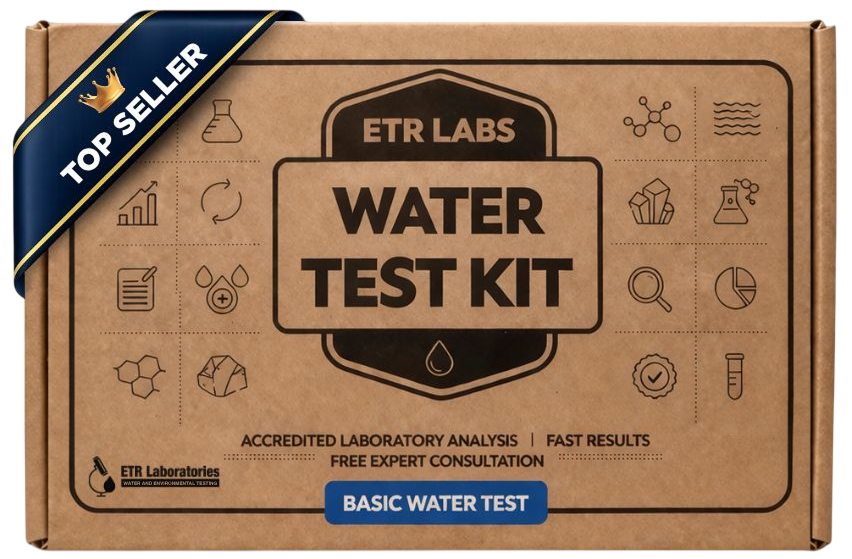
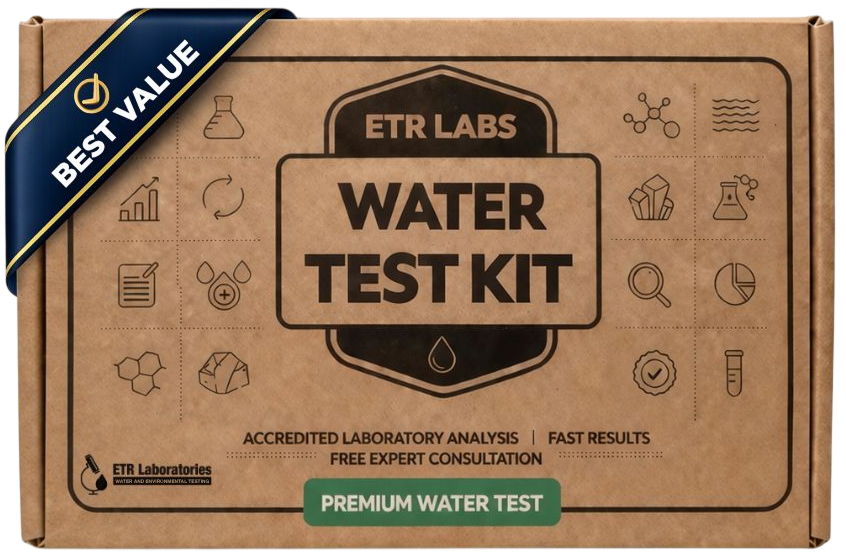
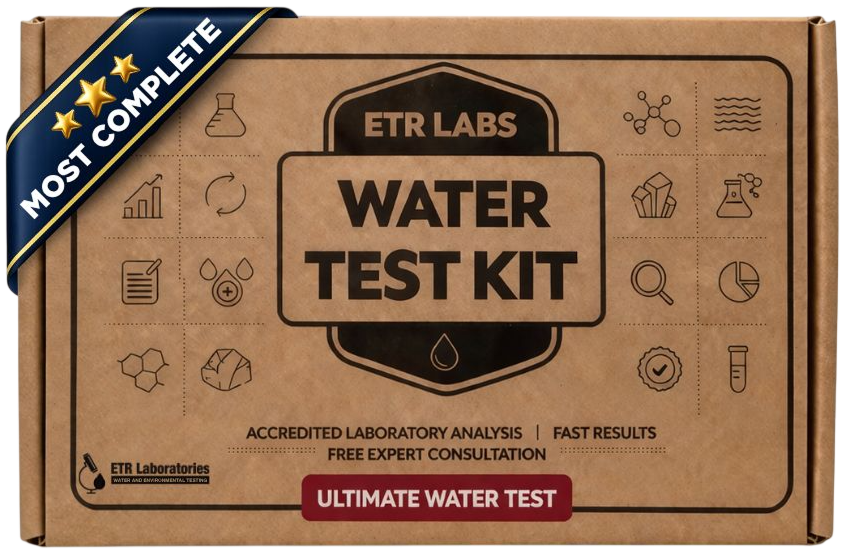

$415.00
$415.00
ETR Laboratories is accredited by ANAB for specific testing as listed in our scope of accreditation.
Louisville Water's Crescent Hill plant draws directly from the Ohio River and treats about 70 percent of the area's drinking water, while the B.E. Payne plant draws river water indirectly through an underground aquifer. The river flows nearly 1,000 miles from Pittsburgh and supplies more than 5 million people. In December 2024, a sample of untreated water headed for Crescent Hill showed a 15-fold spike in GenX, a PFAS compound. Utility staff traced it to the Chemours Washington Works facility about 400 miles upriver, which Chemours disputes. Monthly data since January 2024 put average PFOA near 2 parts per trillion at Crescent Hill and 2.6 at B.E. Payne, below the 4 ppt federal limit, and the utility is spending about $23 million on its carbon system.
Households on private wells around the city face a different set of risks, mostly underground and out of sight. A groundwater supervisor with the Kentucky Division of Water has pointed to the area south of Louisville as an example of karst, where limestone dissolves and forms big channels that let surface contamination reach groundwater. Bacteria can enter the same way. Modeling from the USGS puts the chance that a Bullitt County well exceeds the arsenic limit at 14 percent and an Oldham County well at 11 percent, with about 5,700 people on private wells in Bullitt alone. These are county-wide estimates, not measurements, which is exactly why they cannot tell you about your own well.
In 2015, a Microcystis bloom appeared on the Ohio River, and Louisville Water scientists called it very unusual for that species to grow so much. The utility said its process, which uses activated carbon, coagulants and filtration, was removing the cyanobacteria and cyanotoxins. A 2024 bloom was a different problem. From late June to early September, a byproduct called MIB peaked at 128 parts per trillion in the intake water. People can detect it at roughly 10 ppt, and treatment starts at 6 ppt. A treatment-supplier article says MIB is not toxic but a major cause of earthy taste and odor. A new carbon system with three times the storage is expected in 2027, which tells you how seriously the utility takes it.
Max substances in Ultimate panel
Money-back guarantee
Expert consult every order
“The test was simple–collect a water sample from a faucet in the home. We sent the test to the lab and received a water quality analysis within a few days. The test included analysis of the water sample for the presence of: coliform bacteria, E. coli, iron, lead, pH, turbidity, and nitrates/nitrites.”
“Incredible lab, they really care about their customers. As someone who doesn’t know a whole lot about water quality, they took their time to help me understand everything about my water quality situation.”
No shared results. Our laboratory holds our clients privacy to the highest regard, your results and information will never be shared. Be aware that state certified laboratories may be required to report your results to various government agencies.