
Testing a Shared Well: Who Pays and What to Test For
Sharing a private well with your neighbors means sharing responsibility
Free Shipping on Orders of $100 or More
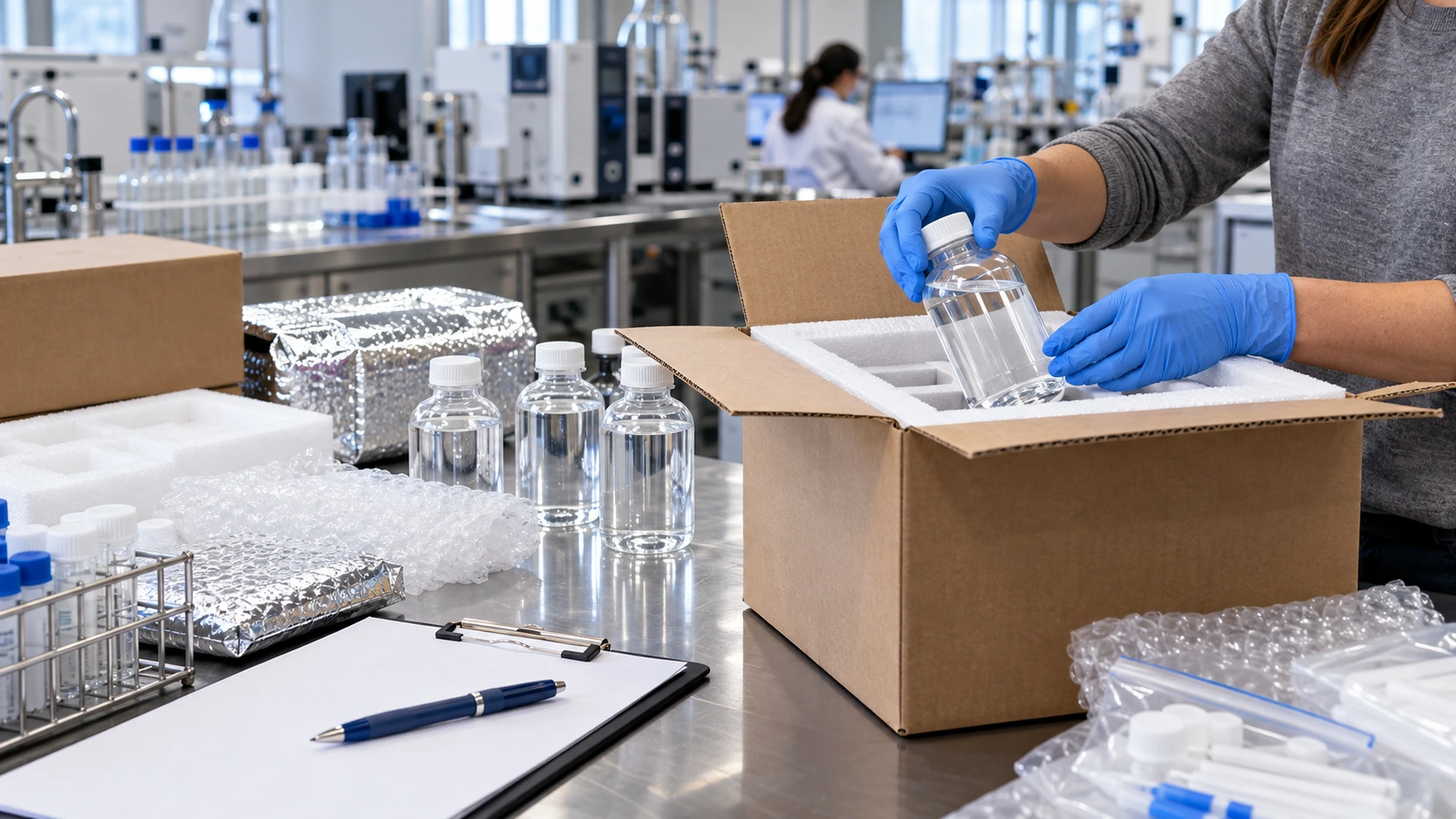
Water collected at your tap or well can travel across the country to a laboratory and still produce dependable results, as long as you collect and handle it the way the specific test requires. Mail-in water testing includes a lab collection kit, a prepaid trip through the mail, and laboratory analysis once the sample arrives.
At ETR Laboratories, we send you the containers and instructions for the test you order; you collect the sample at home, and you return it with the prepaid label. We analyze it in our own laboratory in Leominster, Massachusetts, email you a technical report, and offer a free consultation afterward.
In this article, we walk through each step of how mail-in water testing works, from choosing a test to reading your report, and what to expect on timing, distance, and problems along the way.
Start with your reason for testing, then order the test that fits it. The panel you pick decides which contaminants the lab looks for, so let your water source and concerns guide the choice.
Here are the questions that usually narrow it down:
We offer Basic, Premium, and Ultimate versions of both our well water tests and city water tests, plus a separate PFAS test. If you are weighing the tiers, choosing a panel by water source, reason for testing, and budget is a sensible order to work through.
A certified lab water testing kit comes from the laboratory that will analyze your sample, so the containers match your tests. The comparison of lab testing and mail-order kits goes deeper into how the two models differ in sample custody, communication, and reporting.
Once you place your order, we send the sterile containers for your tests in a prepaid return box, with free shipping both ways. When the box arrives, take a few minutes to go through it before you collect anything.
Before you open a bottle or run the tap, read the instructions and confirm that everything on the list is in the box.
Here are the pieces every kit includes:
Match each bottle label to your instructions, and look for any note about timing, cooling, or shipping. The full breakdown of what comes in the kit covers each piece. If something is missing or damaged, contact us before you collect, since the wrong bottle can compromise a result.
With the kit checked, you are ready to collect.
Follow the instructions supplied with your test, because the right method depends on what you’re analyzing. Sampling location, flushing, and bottle handling can all change from one test to the next.
For example, our collection guidance has you remove the faucet aerator for a bacteria sample but leave it in place for a first-draw lead sample. It also has you run the cold tap for two to three minutes for bacteria and general chemistry, while a lead sample needs the water to sit in the pipes for at least six hours first.
Your instructions come first, and here are the habits our water sample collection guide repeats across tests:
A slip does not automatically ruin a sample. You can correct many collection errors with a fresh bottle, and calling the lab before you ship is the quickest way to find out whether yours needs it.
Once you fill, label, and log the bottles on the form, the sample is ready to head back to us.
Pack the bottles as your instructions describe, seal the box, attach the prepaid label, and drop it in any mailbox. You do not pay for postage.
Timing and temperature depend on the test. Some tests need the sample kept cold in transit, and your kit instructions say whether yours does. When cooling is required, we recommend placing the bottles in the insulated liner with the ice pack and closing the box right away.
Water sample shipping works best when the package leaves the day you collect. Our collection guide suggests collecting on a Monday or Tuesday morning where you can, since a Friday afternoon sample can sit in a depot over the weekend. Bacteria samples are the tightest case, and the EPA quick guide to drinking water sample collection lists a 30-hour holding time for drinking water bacteria samples, counted from collection.
Carriers publish their own rules for restricted and perishable mail, such as USPS Publication 52, which is another reason to ship in the box we supply.
If you are still deciding on a test, you can call or message our team for a free consultation before you order.
A technician logs your sample and checks its condition, and then it moves into the analysis for the tests you ordered. In our five-stage process, the technician records when the package arrived, confirms the bottles match your form, and checks details such as temperature and how long ago you collected the sample.
Intake also starts the chain of custody, the signed record of every person who handled the sample. The sample is then prepared and run on the instruments suited to your tests, and a quality control review comes before your report is released.
Intake is also where we judge whether a sample can be tested as ordered.
We decide based on the sample’s condition when it arrives and the requirements of the test you requested. If a sample arrives damaged, leaking, or late, the lab has to decide whether it is still suitable for the tests you ordered.
Here are the details we look at during intake:
The exact limits differ by test and method, which is why your kit instructions carry more weight than any general rule. If you think your sample was delayed or mishandled, tell us and we can advise you.
Once the sample passes intake, the report is next.
When testing is complete, we email you an in-depth technical report, and a free expert follow-up consultation comes with every test. A paper copy is mailed only if you ask for one.
Each result sits beside its units, a limit or standard, the method, and the reporting limit, and a guide to the result, units, limit, method, and reporting limit columns walks through reading them line by line. If a number raises a question, you can call us at 800-344-9977 to go over your results with an expert.
Your report arrives once the lab finishes, so timing is the next question.
Lab turnaround runs from 1 to 10 business days depending on the test, and it starts on the day your sample arrives at our lab. Shipping comes on top of that, so the full timeline is longer than the lab number alone.
| Test | Turnaround After Your Sample Arrives |
| Single parameter tests, such as coliform and E. coli | 1 to 2 business days |
| Basic and Premium Water Tests | 2 to 4 business days |
| Ultimate Water Test | 7 to 10 business days |
Here are the pieces that make up your total wait:
Check the turnaround for your specific test before you order, particularly if you are working to a deadline.
For consumer kits, yes. We ship kits to you and take your sample back with free two-way shipping, so distance from our lab is less of an obstacle than it may seem. If you live near Leominster, Massachusetts, you can also hand-deliver your sample to our lab at 60 Elm Hill Avenue.
A kit that ships anywhere doesn’t mean it meets every need everywhere. Rules for home sales, permits, and regulatory testing can differ by state and local authority, and some specify the lab credentials, the parameters, who collects the sample, and what documentation travels with it.
If a lender, buyer, or agency will review your result, confirm the required analytes and collection rules before you order. Doing so can save you from paying for a test that has to be repeated.
Distance is rarely the obstacle, though problems can still turn up.
Contact us before you recollect or reship, because the right fix depends on the test and on the condition and timing of the sample. Here are the situations that come up most often:
A quick call tells you whether a new bottle is needed and what to do next, so keep your tracking number handy.
Distance alone does not determine analytical quality. What counts is whether the sample is collected, handled, shipped, and received according to the requirements for the test you ordered. Following your kit instructions and shipping promptly keeps the sample in good condition.
Contact us as soon as you know. A new sample may or may not be needed, depending on the test and on the sample’s condition and timing when it arrives. Following the collection and return timing in your instructions, and avoiding a Friday shipment when you can, lowers the chance of a delay catching you.
Location alone does not rule out mail-in testing, but the shipping conditions and handling steps for your test still apply. Your kit instructions say whether your test needs cold shipping, and if mail to your area runs slowly, plan collection so the package is not in transit longer than they allow.
Sometimes, but not every consumer mail-in test qualifies. Before you order, confirm with the requesting party which laboratory credentials, parameters, sampling procedure, and documentation they require, and whether you may collect the sample yourself. Our accreditation applies to the tests listed in our scope, so check that scope against your parameters.
We mail you a collection kit that includes clear step-by-step instructions. You collect your sample and send it back with the prepaid shipping label. Our lab runs the analysis and emails your results to you.
To get started, choose the well water test that fits your concerns, or call ETR Laboratories at 800-344-9977 if you would like help picking one.
Sharing a private well with your neighbors means sharing responsibility
If your business relies on a private well for drinking
You have found a better rate, your home runs on
Related Post.
Testing a Shared Well: Who Pays and What to Test For
Sharing a private well with your neighbors means sharing responsibility for the water your households
Business on a Well? Public Water System Testing Rules
If your business relies on a private well for drinking water, you may have more
Well Water Testing for a Mortgage Refinance: What to Expect
You have found a better rate, your home runs on a private well, and nobody
EPA’s 3Ts Program: Lead Testing for Schools and Daycares
If you run a school or child care facility and go looking for guidance on
Mail-In Water Testing: How It Works Anywhere in the US
Water collected at your tap or well can travel across the country to a laboratory
Chromium 6 Water Test: The Test With No Federal Limit
Your well report says chromium is under the limit, and that may seem like the
How VOCs Are Tested in Well Water: Lab Method Explained
A VOC kit arrives with small glass vials, a preservative already inside, a no-bubble rule
Copper and Manganese: Why Some Water Tests Skip Them
You open a water test report, or compare two test kits side by side, and
Golf Course Pesticides and Your Well Water: What to Test
Field studies have found turf pesticides in some groundwater beneath golf courses, usually below health
Giardia and Cryptosporidium in Well Water: Can You Test?
After a stomach illness, a flood, or a neighbor’s warning about parasites, a passing bacteria
Uranium Water Test: The Well Test Most Owners Skip
Uranium has no color, taste, or smell, and the routine tests many well owners order
State Well Water Testing Requirements by Region: A Guide
Private well testing requirements vary by state, and your county or municipality may add rules