
How VOCs Are Tested in Well Water: Lab Method Explained
A VOC kit arrives with small glass vials, a preservative
Free Shipping on Orders of $100 or More
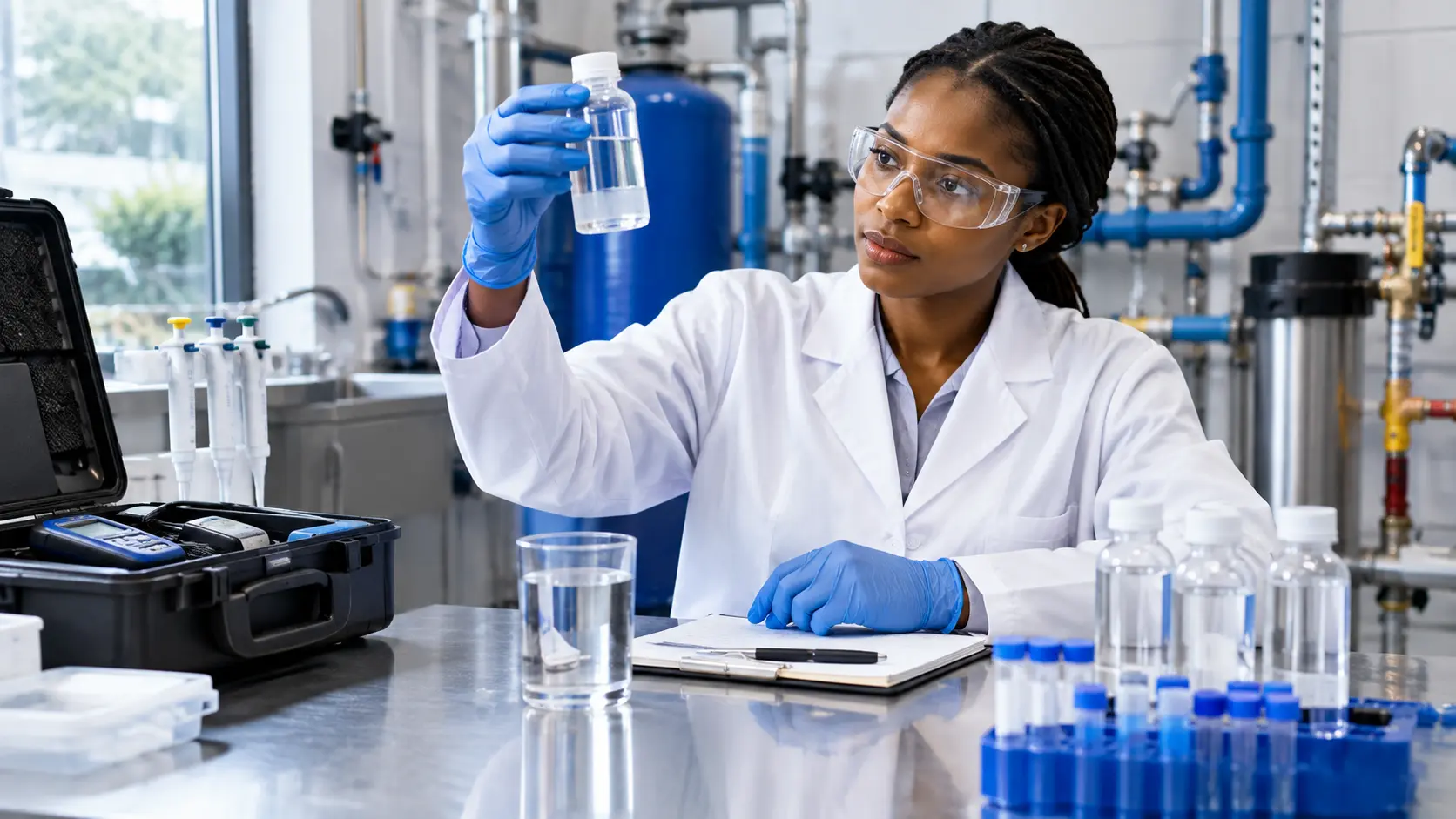
A VOC kit arrives with small glass vials, a preservative already inside, a no-bubble rule and a clock that runs out in about two weeks. Those rules make sense once you see what the lab does with the sample.
In short, testing VOCs in water comes down to protecting compounds that evaporate easily, pulling them out of the water with purge and trap, and identifying each one with a gas chromatograph and mass spectrometer (GC/MS). Drinking-water methods allow up to 14 days from collection when a sample is preserved and chilled.
ETR Labs covers VOC names, sources and health effects on separate pages about fuel, chemical spills and industrial pollution, so this piece stays on the lab side. In this article, we walk through the sampling chain, purge and trap, GC/MS, EPA methods and sample rejection.
VOCs need special handling because volatile compounds leave water for any air they can reach, so a small air space in a vial can pull the result below the true value. EPA’s SW-846 Method 8260D says aqueous samples should be stored with “minimal or no headspace to minimize the loss of highly volatile analytes”.
VOCs can also diffuse into a vial through its septum or cap liner, so EPA guidance for organic analytes recommends including a trip blank of clean water with the samples to catch it.
The steps for filling, capping and inverting a vial keep air out, and they deserve the most care in a VOC kit. First, though, ask whether your well needs the test.
Testing a private well for VOCs makes sense when something specific points to them, and not every well needs a routine yearly VOC test. Here are the situations that call for a closer look:
Taste and odor are poor screening tools, since some VOCs can be present below the level a person can smell or taste. If one of those situations fits, the next thing to know is what the lab asks of the sample.
The sampling chain is the first stage of how VOCs are tested in water, a set of steps that carries water from your tap to the instrument without losing or gaining any volatile compounds. Here is how the EPA drinking-water methods handle each link.
| Item | What the methods say | Why |
| Container | 40 mL glass vial, Teflon-faced septum | Keeps VOCs in and outside air out |
| Fill | To overflowing, no bubbles | Air space lets VOCs escape |
| Dechlorination | Ascorbic acid for chlorinated tap water | Stops chlorine reacting after collection |
| Preservation | HCl to pH below 2 (524.2); ascorbic plus maleic acid (524.3) | Keeps the sample stable |
| Temperature | Chilled, not frozen | Slows evaporation |
| Hold time | 14 days; 24 hours if unacidified because it foamed | Clock starts at capping |
| Blanks | Field or trip blank | Shows if anything got in |
| Replicates | Two or three vials | Gives the lab a spare |
Our VOC vials are glass with a septum cap and contain hydrochloric acid, and our instructions have you fill each one to overflowing, chill it with the ice pack provided and ship it the same day.
Purge and trap is a way of pulling volatile compounds out of a water sample so they can be measured. As EPA Method 524.2 describes it, an inert gas is bubbled through the sample, the released compounds are caught on a sorbent trap, and the trap is then heated so the compounds flow into a gas chromatograph.
That sequence is the core of purge-and-trap water testing, and it runs in three stages. We describe the general EPA approach here.
A measured portion of water goes into a sparging vessel with an internal standard and surrogates, which are known compounds added so the lab can check its own work. Helium then bubbles through the water and carries the volatile compounds out.
The gas stream passes over a sorbent trap, a small tube of material that holds the VOCs while water vapor is reduced. Method 524.3 also allows a short dry purge to clear leftover water.
The trap is heated and flushed backward with helium, which sends the trapped compounds into the column of the gas chromatograph, where the instrument takes over.
A gas chromatograph separates the compounds, and a mass spectrometer identifies each one. The column is heated so compounds leave at different times, and the lab names each by matching its mass spectrum and retention time to calibration standards run under the same conditions. Internal standards and surrogates act as the quantitation check.
At ETR Labs, we use gas chromatography to separate VOCs so each can be identified and measured, as the step-by-step path a sample takes through our lab shows. Method 524.3 lists 76 compounds, and our VOC Drinking Water Test covers about 60.
EPA Method 524.3 and Method 524.2 are written for drinking water, while SW-846 Method 8260D belongs to EPA’s solid waste series, and all three rely on purge-and-trap GC/MS.
| Method | Written for | Key difference |
| EPA 524.2 | Surface, ground and drinking water | Includes trihalomethanes; HCl preservation |
| EPA 524.3 | Finished drinking water; 76 analytes | Maleic plus ascorbic acid; fixed purge ranges |
| SW-846 8260D | Solid waste and related samples | Handling can vary by program |
The right VOC water testing method depends on who needs the result and why. These are the general EPA methods, not the exact procedure behind any single report, so raise the method behind your own results in the free consultation that comes with every VOC test.
A lab rejects a VOC sample when the way it was collected, held or shipped could have changed what the vial contains. These typical reasons come from EPA method criteria and guidance, and each lab sets its own:
Our instructions say never to open a bubbled vial and top it off, and to collect again in a fresh vial. The lab also logs temperature at receipt, since a warm cooler can compromise a sample even with a flawless form.
Follow your kit’s vial instructions exactly and the lab can run the full list.
A VOC result is a concentration for each compound, often in micrograms per liter, which you can compare with the federal maximum contaminant level (MCL). Here are the limits in EPA’s National Primary Drinking Water Regulations for four common VOCs:
Those limits apply to public water systems, and EPA says private well owners are responsible for their own water, so you decide when to test.
A reporting limit is the lowest value the lab will report with confidence, and non-detect means a compound fell below it, so read the two together, as this line-by-line guide to a water test report explains.
These answers cover the details that come up before the vials go in the mail.
The acid is a preservative. A pH below 2 can slow the loss of some compounds, and a dechlorinating agent goes in first for chlorinated water. A sample that foams on acid is collected without it and analyzed within 24 hours.
The methods call for blanks handled with the samples, since vials can pick up VOCs through the septa. A trip blank water sample is clean water that travels with your vials to show whether anything got in. Check your kit for one.
The methods call for duplicates, and EPA guidance suggests at least two replicate vials, so the lab has a spare if one is rejected or needs reanalysis. Return every vial your kit includes.
The lab process described here is how individual VOCs are tested in water and identified, so a certified lab is the dependable route for a result you plan to act on. Check its scope for your parameters, as this explanation of lab certification shows.
Air space lets volatile compounds leave the water, which can lower the measured concentration. The safest response is usually to recollect in a fresh vial, and the common well water sampling mistakes show how to fix collection errors before you ship.
EPA Methods 524.2 and 524.3 allow up to 14 days from collection for properly preserved samples, or 24 hours if a sample foams on acid and goes unacidified. Your kit’s instructions come first, and the 14-day limit says nothing about turnaround time.
VOCs and semi-volatile organic compounds (SVOCs) are different analytical groups, and one test does not replace the other. VOC testing commonly uses purge-and-trap GC/MS, while SVOCs follow a different method family. Choose the test by the compounds you want to investigate.
Order the Test With the Sampling Rules Built In
The VOC Drinking Water Test from ETR Laboratories costs $150, lists about 60 VOCs and includes a free consultation with one of our water quality experts, so your numbers come with someone who can explain them.
For pesticides and similar compounds, the Semi-Volatile Organic Compounds Water Test is a separate test, and a look at how our Basic, Premium and Ultimate panels compare can help you choose a starting point.
A VOC kit arrives with small glass vials, a preservative
You open a water test report, or compare two test
Field studies have found turf pesticides in some groundwater beneath
Related Post.
How VOCs Are Tested in Well Water: Lab Method Explained
A VOC kit arrives with small glass vials, a preservative already inside, a no-bubble rule
Copper and Manganese: Why Some Water Tests Skip Them
You open a water test report, or compare two test kits side by side, and
Golf Course Pesticides and Your Well Water: What to Test
Field studies have found turf pesticides in some groundwater beneath golf courses, usually below health
Giardia and Cryptosporidium in Well Water: Can You Test?
After a stomach illness, a flood, or a neighbor’s warning about parasites, a passing bacteria
Uranium Water Test: The Well Test Most Owners Skip
Uranium has no color, taste, or smell, and the routine tests many well owners order
State Well Water Testing Requirements by Region: A Guide
Private well testing requirements vary by state, and your county or municipality may add rules
Inside the ETR Laboratory: How Samples Are Analyzed
Most people who order a water test never see what happens after they mail the
Home Water Filtration Systems Often Pay for Themselves. Here Is the Math.
From the Lab by ETR Laboratories Most people treat bottled water as a small household
City Water vs Well Water: Different Tests, Different Risks
City water and private well water are managed differently, so the reasons you may want
What Comes in an ETR Water Test Kit: A Full Breakdown
When your ETR Lab’s water test kit arrives, the first question is usually simple: what’s
How ETR Laboratories Tests Your Water, Step by Step
Water testing ads usually talk about the kit in your mailbox. The part that decides
Water Test Panel Guide: Basic, Premium, or Ultimate?
Ordering a water test sounds simple until you see the options. One lab sells Basic,