Free Shipping on Orders of $100 or More
$150.00
This VOC water test checks your drinking water for 60 volatile organic compounds, including benzene, TCE, PCE, MTBE, and the trihalomethanes that form when chlorine reacts with natural organic material. VOCs come from fuel, solvents, and industry, and many have no taste or smell. Well owners near gas stations, dry cleaners, or landfills, and city water users curious about disinfection byproducts, order it most.
A VOC panel covers fuel, solvents, and disinfection byproducts in one sample, so you do not have to guess which chemical to look for. It works as a first check near a known source or as a baseline before you buy a home.
Volatile organic compounds, or VOCs, are carbon-based chemicals that evaporate easily at room temperature. In water, they usually come from fuel, solvents, and industry.
Here are the usual sources of VOCs in drinking water:
VOCs dissolve in groundwater and can travel a long way, so a source you cannot see from your yard can still reach your well. Because VOCs evaporate easily, showering can release them into the air you breathe, which adds to exposure.
This VOC water test fits you if something nearby could have put fuel or solvents into the ground. Gas stations, dry cleaners, auto shops, landfills, and buried fuel tanks are the usual concerns for well owners.
City water users have a different reason to test, since all four regulated trihalomethanes are on this panel.
It is also a good next step if:
Orders of $100 or more ship to you free, and smaller orders ship for an $8 flat rate. A prepaid return label is included. Preserved VOC samples hold for about 14 days, but shipping the same day you collect gives you the most room for delays. Near Leominster, Massachusetts? You can bring your sample to our lab at 60 Elm Hill Avenue.
We analyze your sample in our accredited lab, using established testing methods and quality controls.
We have tested water since 1995.
Every test includes a free consultation with one of our water experts. We go over your results with you, explain what the numbers mean for your home, and help you decide on the appropriate next step, including any filtration approach.
This panel reports 60 volatile organic compounds, each in micrograms per liter (parts per billion). For reference, EPA limits for public water systems include 5 ppb for benzene, trichloroethylene (TCE) and tetrachloroethylene (PCE), 2 ppb for vinyl chloride, and 80 ppb for total trihalomethanes.
Compounds tested: Benzene, Bromobenzene, Bromochloromethane, Bromodichloromethane, Bromoform, Bromomethane, n-Butylbenzene, sec-Butylbenzene, tert-Butylbenzene, Carbon Tetrachloride, Chloroethane, Chloroform, Chloromethane, 1,2-Chlorotoluene, 1,4-Chlorotoluene, Dibromochloromethane, Dibromomethane, 1,2-Dibromo-3-Chloropropane, 1,2-Dibromoethane, 1,2-Dichlorobenzene, 1,3-Dichlorobenzene, 1,4-Dichlorobenzene, Dichlorodifluoromethane, 1,1-Dichloroethane, 1,2-Dichloroethane, 1,1-Dichloroethylene, cis-1,2-Dichloroethene, trans-1,2-Dichloroethene, 1,2-Dichloropropane, 1,3-Dichloropropane, 2,2-Dichloropropane, 1,1-Dichloropropene, 1,3-Dichloropropene, trans-1,3-Dichloropropene, Ethylbenzene, Hexachlorobutadiene, Isopropylbenzene, p-Isopropyltoluene, Methyl-t-Butyl Ether (MTBE), Methylene Chloride, Monochlorobenzene, Naphthalene, n-Propylbenzene, Styrene, 1,1,1,2-Tetrachloroethane, 1,1,2,2-Tetrachloroethane, Tetrachloroethylene, Toluene, Trichloroethylene, Trichlorofluoromethane, 1,1,1-Trichloroethane, 1,1,2-Trichloroethane, 1,2,3-Trichlorobenzene, 1,2,4-Trichlorobenzene, 1,2,3-Trichloropropane, 1,2,4-Trimethylbenzene, 1,3,5-Trimethylbenzene, Vinyl Chloride, o-Xylene, m+p Xylenes.
The same 60 compounds appear in our Premium and Ultimate Water Tests.

Ships free to your door

Takes under 5 minutes

Free return shipping

Expert Consultation

Ships free to your door

Takes under 5 minutes

Free return shipping

Expert Consultation
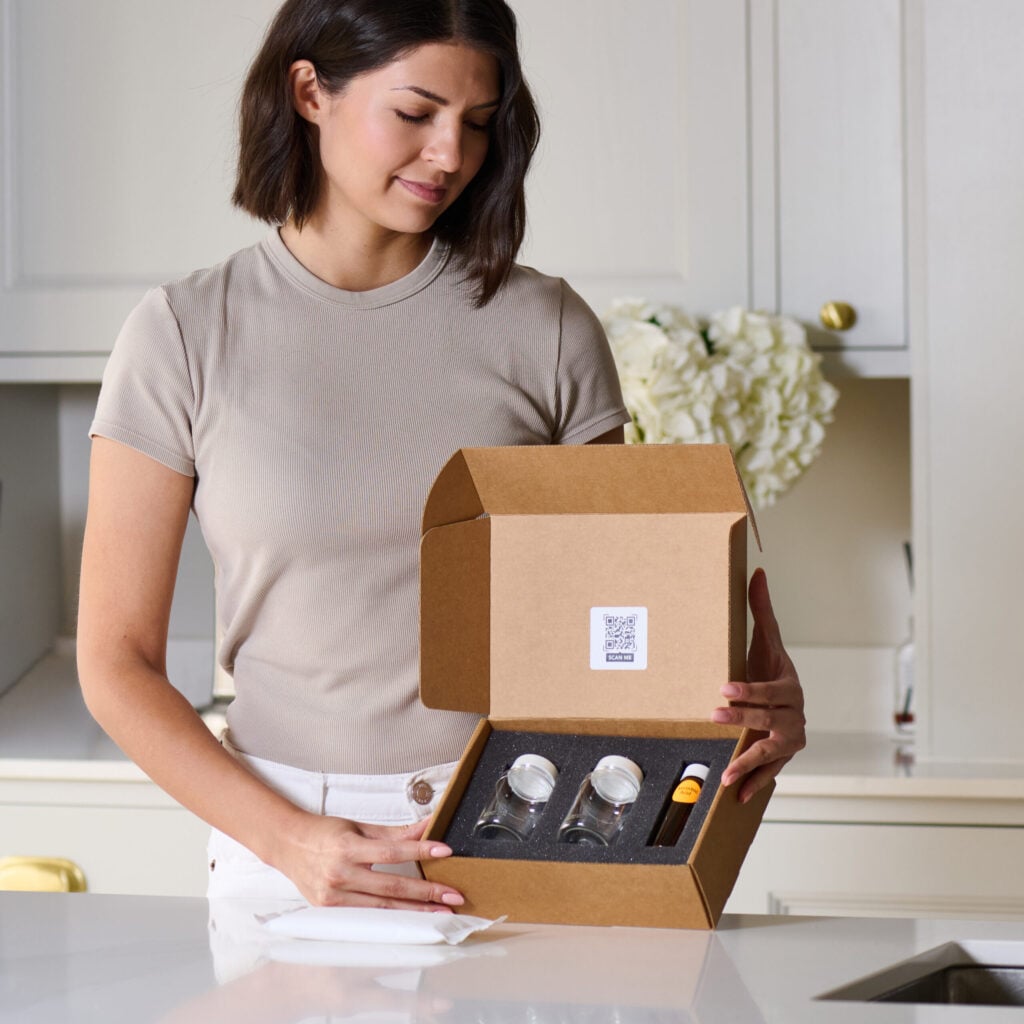
Every test comes with step-by-step instructions on how to prepare your water source, collect your water sample, and prepare your sample for return shipment to our lab.
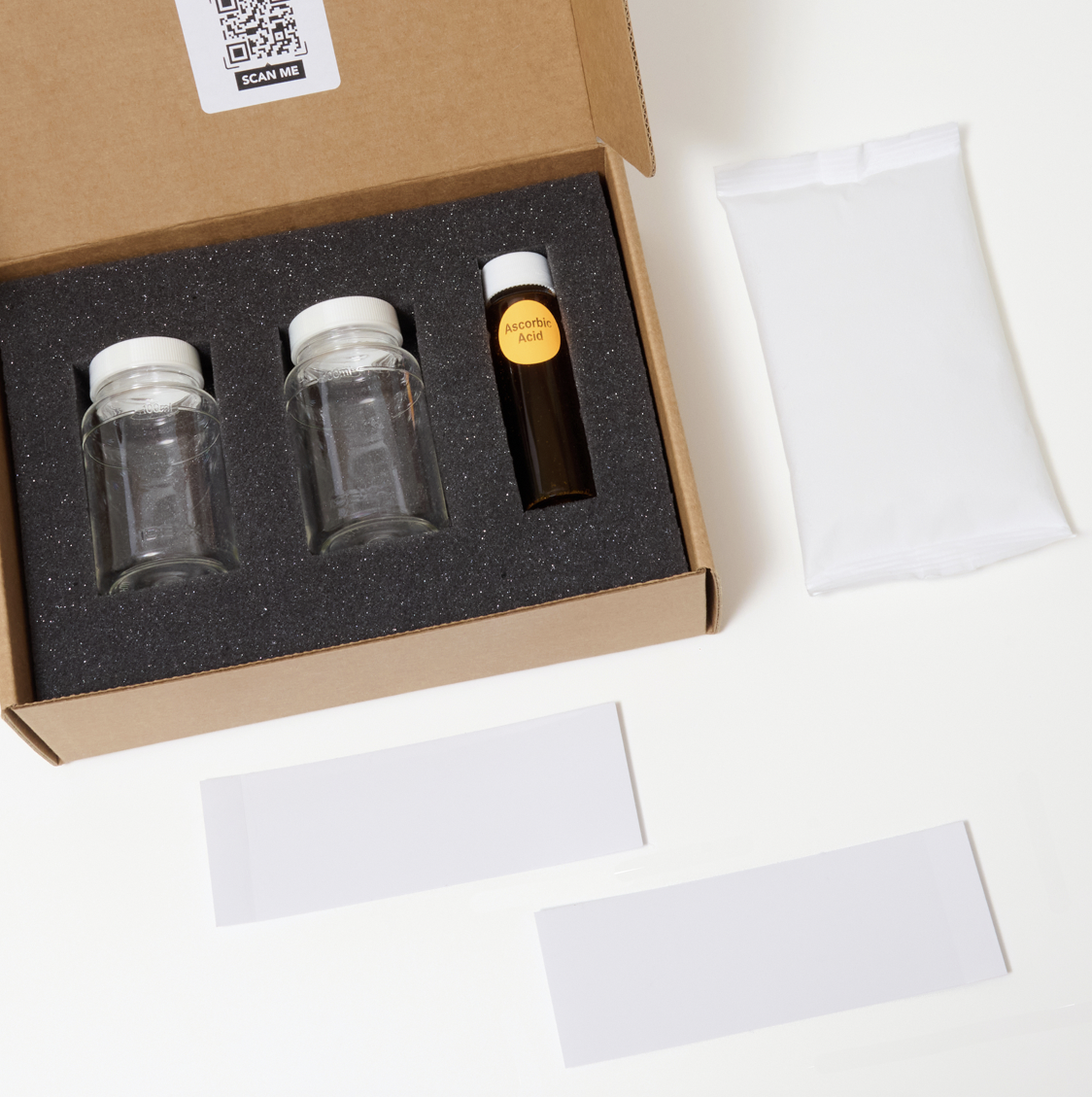
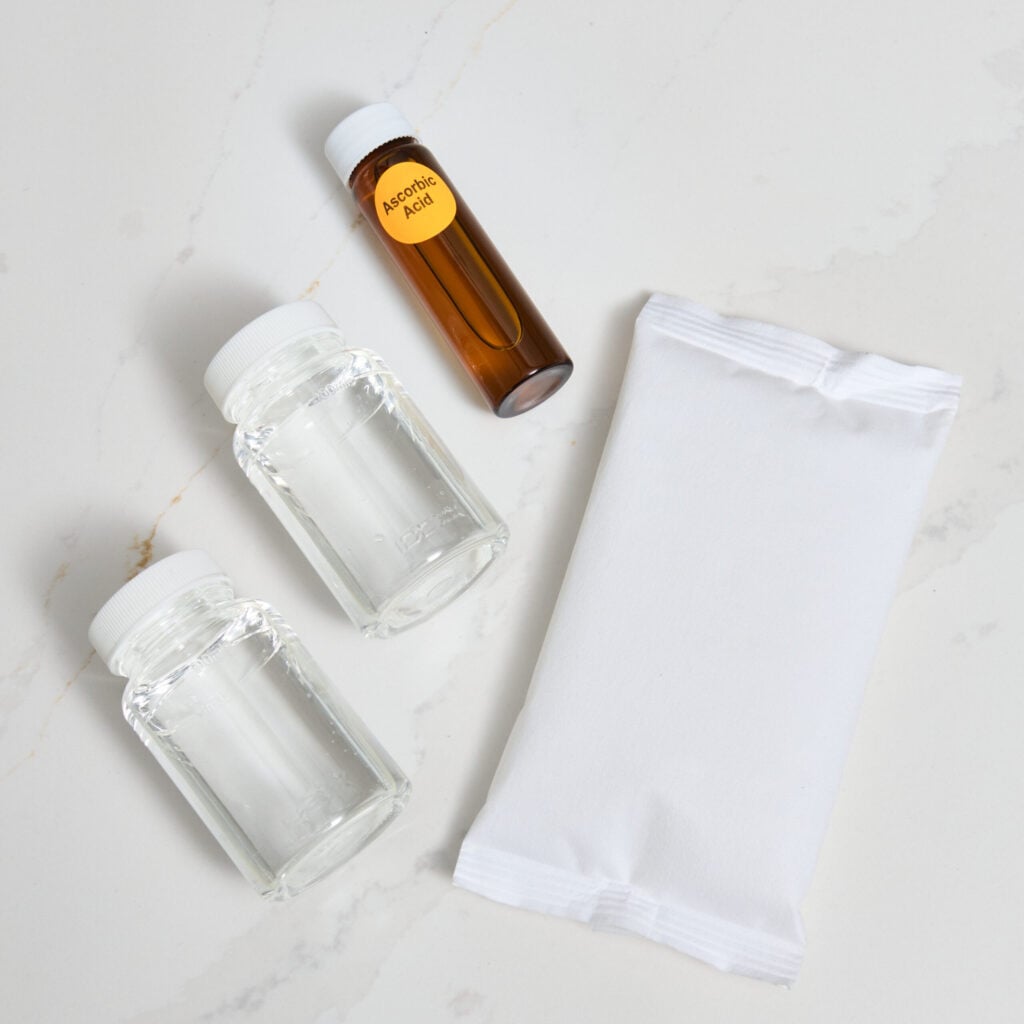
The appropriate sample containers are provided with sterility and sample volume requirements taken into consideration.
A short form to fill out with basic information about your water source. This helps our lab technicians process your results accurately.
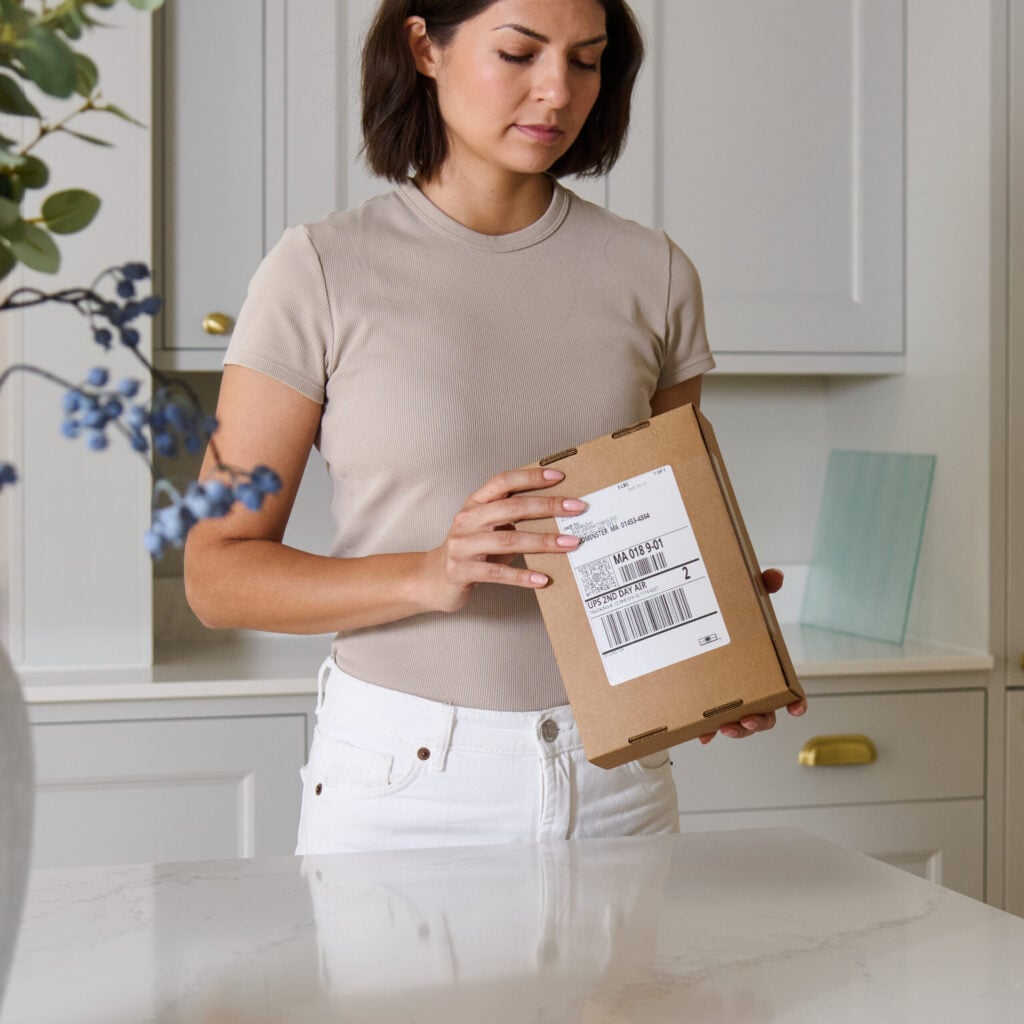
A pre-paid return shipping label is included — just drop the sealed package in any mailbox or hand it to your mail carrier. No extra cost.
“The test was simple—collect a water sample from a faucet in the home. We sent the test to the lab and received a water quality analysis within a few days. The test included analysis of the water sample for the presence of: coliform bacteria, E. coli, iron, lead, pH, turbidity, and nitrates/nitrites.”
Taylor L.
“Incredible lab, they really care about their customers. As someone who doesn’t know a whole lot about water quality, they took their time to help me understand everything about my water quality situation.”
Brad R.
“I’ve used ETR for several tests, both water and air. The test kits are easy to understand and the reports are very comprehensive. But what really makes them stand out is their quality of service. There is a lot of terminology in these reports that I don’t understand, but their staff is very knowledgeable and always available to assist. They really take their time to review the results with you on the phone, and answer any questions you may have.”
John T.
4.8
Average Rating
across all platforms
500K+
Water Tests Sold
nationwide since 1995
342+
Reviews on Angi
verified homeowner reviews
We run every test inside our own lab in Leominster, Massachusetts. Your results come straight from us, not a subcontractor. That keeps our pricing fair and our quality consistent across every kit we send out.
Most labs stop at handing you a report. We do not. Every result comes with a free call to one of our water quality experts, so you understand what your numbers mean and what to do next.
ETR Laboratories has run water tests for over 30 years. We hold membership in the national Water Quality Association and the Massachusetts Ground Water Association.
Our reviews reflect the work we do. We hold a 4.8 out of 5 rating on Google, a 4.8 out of 5 rating on Angi from 342 reviews, and five-star ratings on Trustpilot.

Our Premium Water Test screens your water for 113 substances in one round, including bacteria, radon, heavy metals, and industrial chemicals, providing homeowners and landlords with a thorough assessment for peace of mind. We have run…
Some can be, depending on the compound and the level. Long-term exposure to certain VOCs is linked to liver and kidney damage, nervous system effects, and higher cancer risk. Benzene and vinyl chloride are known human carcinogens. Many VOCs give no taste or smell warning, so our lab result is the best way to know if your water carries any at levels of concern.
There is no single number for VOCs in water, because each compound has its own EPA limit. Benzene, TCE, and PCE are capped at 5 parts per billion, and vinyl chloride at 2 ppb. Total trihalomethanes are capped at 80 ppb. Any detection on a private well is worth a retest and a look at nearby sources.
Gasoline is a mixture that contains several VOCs. Benzene, toluene, ethylbenzene, and xylenes, often called BTEX, are among the main ones, along with the fuel additive MTBE. All of them are on this 60-compound panel. If your well is near a gas station or a buried fuel tank, these are the compounds most worth checking, and your state environmental agency can help if a leak is suspected.
It can help. Chlorine used at treatment plants can form trihalomethanes as water travels to your home, and this panel measures all four regulated ones. Your utility tests for VOCs and publishes an annual water quality report, but those results come from the system, not your tap. A home test shows what reaches your faucet. If you notice a strong chlorine smell, a VOC panel shows the byproduct side of the picture.
Yes, treatment can reduce many VOCs. How well a filter works depends on the specific compound and how much is present, since some compounds are harder to catch than others. That is why it helps to have your results in hand first. Our free consultation helps you decide on the appropriate filtration approach for the compounds on your report.
Both tests measure the same 60 volatile organic compounds, including vinyl chloride. The Vinyl Chloride Scan is named for buyers searching for that one compound, often near PVC plastics plants or chlorinated solvent spills. This VOC test is the general option. If you are unsure which to order, the results you receive are the same.
No, and it can make exposure worse. These chemicals evaporate easily, so heating the water sends them into the air in your kitchen, where you breathe them in. Some heavier compounds can also stay behind in the pot. If your result shows a VOC above its EPA limit, bottled water for drinking and cooking is a safer short-term step, and our free consultation helps you decide on the appropriate filtration approach.
There is no set schedule, so many well owners test once to set a baseline and retest when something changes nearby. A gas station or dry cleaner opening close by, or work on a buried fuel tank, are good reasons. If an earlier test found a VOC, a yearly retest helps you track it. Chemical plumes in groundwater can move slowly, so a clean result near a known spill may not stay clean forever.
No shared results. Our laboratory holds our clients privacy to the highest regard, your results and information will never be shared. Be aware that state certified laboratories may be required to report your results to various government agencies.