
How Renters Can Test Tap Water for Lead in Old Buildings
You don't have to own your apartment to find out
Free Shipping on Orders of $100 or More
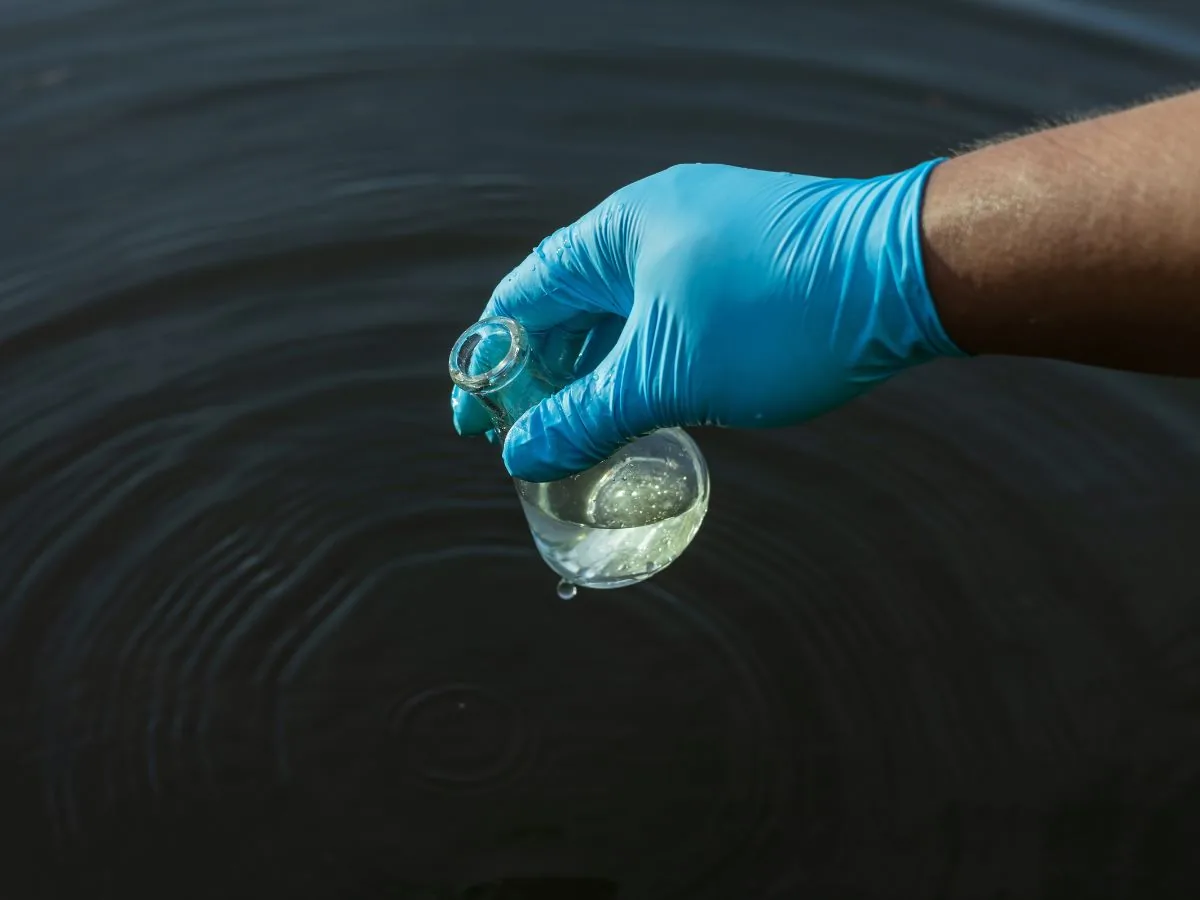
You don't have to own your apartment to find out whether there's lead in your tap water. Renters can collect a sample at home and send it to a laboratory for testing, usually without needing a technician to visit the property.
Lead won't change the taste, smell, or appearance of your water, so there's no reliable way to recognize it just by turning on the faucet. This is especially worth considering in older buildings, where pipes, solder, and plumbing fixtures may contain lead.
ETR Laboratories provides mail-in water testing kits to renters and homeowners across the country. This guide explains which lead test to choose, how to collect a sample, and what to do with the results if you're renting.
Yes. In most cases, you can collect water from your own kitchen faucet without arranging a visit from a technician or making changes to the property.
A mail-in test works much like any other laboratory water test. You order a kit, collect the water according to the instructions, and send the sample to the lab for analysis. Our guide to mail-in water testing explains the process in more detail.
You generally won't need your landlord to be present, although it's worth checking your lease and local rules if you have concerns about access or testing requirements.
The results belong to the sample you collected. A test from your kitchen sink won't necessarily describe the water in another apartment, even within the same building.
If lead is detected, the laboratory report gives you a written record to discuss with your landlord, utility, or local health department.
Lead in drinking water usually comes from plumbing materials rather than the water leaving the treatment plant. Older service lines, pipes, solder, and brass fixtures can contain lead, which may enter the water under certain conditions.
Buildings constructed before 1986 deserve particular attention because lead-containing plumbing materials were more widely used before federal restrictions took effect. However, the construction date alone doesn't establish whether your water contains lead. Some buildings have undergone plumbing replacements, while certain fixtures installed in more recent decades may still contain lead.
Water chemistry also matters. Factors such as pH, mineral content, and corrosion control can affect how much lead is released from plumbing.
As a renter, you may not know which materials are behind the walls or beneath the street. Testing at the faucet provides information about the water you're using without requiring you to inspect the plumbing yourself.
If you're concerned about the pipe connecting the property to the water main, our guide on how to check for a lead service line explains where to begin.
Even apartments in the same building may have different lead concentrations.
One unit might have newer fixtures connected to older shared pipes, while another may still use its original plumbing. Water use also varies between households, affecting how long water remains in contact with plumbing materials.
A result from one apartment therefore shouldn't be treated as proof that every unit has the same water quality.
Lead exposure is especially concerning for children and during pregnancy. EPA states that no safe level of lead exposure has been identified, and even relatively low exposure can have serious health implications. Our article on the effects of lead exposure in drinking water explains these concerns in greater detail.
The right test depends on whether you want to check one faucet, compare water before and after flushing, or look for other contaminants.
ETR Laboratories offers several options:
| Your Situation | Recommended Test | What You'll Learn |
| You want to check lead at your kitchen tap | Lead Water Test — $45 | Measures lead in the collected sample, with results typically available within 1–3 business days after the laboratory receives it |
| You want to investigate whether household plumbing contributes lead or copper | First Draw and Flush Lead and Copper Test — $100 | Compares water collected after standing in the pipes with water collected after flushing |
| You want a broader assessment of municipal water | Basic City Water Test — $169 | Measures 48 substances and water quality parameters, including lead |
| You have a young child or someone pregnant in the household | Begin with a suitable lead test | Provides a measured result that can help guide discussions with your healthcare provider and local health authorities |
The Lead Water Test costs $45 and includes a free consultation with ETR's water quality experts.
For more information about possible plumbing contributions, the First Draw and Flush Lead and Copper Test costs $100. The results may help narrow down where lead or copper is entering the water, although they cannot always identify the exact pipe or fixture responsible.
If you're also concerned about other metals and water quality parameters, the Basic City Water Test offers broader coverage for $169.
Households with infants, young children, or someone who is pregnant may have additional testing considerations. Our guide to tap water for baby formula and pregnancy explains what to consider.
A first-draw sample captures water that has remained in the plumbing for at least six hours. This can help reveal lead released from pipes and fixtures while the water was standing.
For example, you might collect the sample early in the morning before anyone has used the kitchen faucet.
The collection method matters, so follow the instructions supplied with your particular laboratory kit. Different tests may require different sampling procedures.
For a first-draw lead test, the general steps are:
Avoid changing the faucet or removing its aerator unless the laboratory specifically instructs you to do so. These details can affect the sample and make comparisons less reliable.
Our guide on how to test for lead in water covers sampling considerations in more detail. You can also review how to collect a water sample for general collection and shipping guidance.
If you're uncertain whether your kit requires a first-draw or another type of sample, contact ETR Laboratories before collecting it.
Your kitchen faucet is usually the best place to begin, since it's where you get water for drinking and preparing meals.
If the test detects lead, additional sampling may help narrow down the possible sources.
For example, comparing first-draw and flushed samples can provide information about how lead concentrations change after water has moved through the plumbing.
Testing another faucet may also be useful if the fixtures are different ages or you've noticed differences between taps.
In a multi-unit building, shared plumbing can influence water quality across several apartments. However, a result from your unit cannot establish the concentration in someone else's water.
If multiple residents have concerns, ask the landlord or water utility whether building-wide testing has been conducted or whether additional sampling would be appropriate.
Laboratories commonly report lead concentrations in micrograms per liter (µg/L), also expressed as parts per billion (ppb). For drinking water, these units are approximately equivalent.
Check the number, its units, and the laboratory's reporting limit before drawing conclusions.
EPA's current lead action level for public water systems is 15 ppb. Under the 2024 Lead and Copper Rule Improvements, that action level is scheduled to decrease to 10 ppb beginning November 1, 2027.
These figures are regulatory thresholds used to determine when public water systems must take specific actions based on compliance monitoring. They are not safety limits for an individual household sample.
EPA's maximum contaminant level goal for lead is zero because there is no known safe level of exposure.
If your result shows detectable lead, don't assume it's harmless simply because the concentration falls below 15 ppb. You can ask the laboratory about the result and contact your water utility or local health department for further guidance.
You can review the current federal regulations on EPA's lead drinking water page.
For help understanding measurement units, detection limits, and other report details, see how to read a water test report.
If your test detects lead, keep a copy of the full laboratory report and note when and where the sample was collected.
Useful records include:
Send your landlord a brief written message explaining the result and requesting information about the building's plumbing or previous testing.
For example:
"I recently had the kitchen tap tested for lead, and I've attached the laboratory report. The sample was collected on [date]. Could you let me know whether the building has any known lead service lines or older plumbing, and whether previous lead testing has been done? I'd also appreciate knowing what steps can be taken to investigate the result."
This gives your landlord the relevant details without making assumptions about the source of the lead.
Keep copies of your messages and any responses. Written communication can be useful if the issue requires further investigation or follow-up with local authorities.
Tenant rights and landlord responsibilities for drinking water vary by state and municipality.
If you're unable to get a response, contact your local health department, housing authority, or tenant assistance organization to ask what procedures apply in your area.
Your public water utility may also be able to provide information about the building's service line or available lead testing resources.
For more background, our guide to the Lead and Copper Rule Improvements explains the federal requirements affecting public water systems.
EPA's Protect Your Tap resource also offers guidance on identifying potential lead service lines.
If lead may be present in your drinking water, there are practical steps you can take while arranging testing or waiting for additional information.
EPA recommends:
If you're using water to prepare infant formula, pay particular attention to guidance from your child's healthcare provider and local water utility.
You can also ask a pediatrician whether a blood lead test is appropriate if a child may have been exposed. The CDC's lead prevention guidance provides additional information.
Our guide to water filters for lead removal explains what to look for when comparing filtration options.
These measures can help reduce potential exposure, but they don't replace investigating and addressing the source of lead.
Usually not for collecting an ordinary water sample from your own faucet. A mail-in test generally doesn't require modifying the property or arranging a technician's visit. However, lease terms and local rules vary, so check them if you're unsure. Testing shared plumbing or accessing restricted building areas may require permission.
Some consumer kits provide useful screening information, but their accuracy and reporting capabilities vary. Laboratory testing provides a measured concentration and documentation that may be more useful when discussing the results with your landlord, utility, or health department. Check the test's analytical method and reporting limit before choosing one.
Contact your landlord and water utility to ask about the service line's status and any replacement plans. Responsibility for the line may be divided between the utility and property owner, depending on local rules. Testing your faucet can help assess current lead exposure, although it won't identify the precise source by itself.
ETR Laboratories' Lead Water Test generally provides results within 1–3 business days after the sample arrives at the laboratory. Shipping time is separate. Check the current turnaround on the product page or contact ETR before ordering if you need results by a particular date.
Yes. You can usually collect the sample using the bottles and instructions supplied by the laboratory. A first-draw test requires the water to remain unused for the specified standing period before collection. The laboratory performs the actual analysis.
No. Boiling doesn't remove dissolved lead and may increase its concentration as water evaporates. Use cold water for drinking and cooking, follow appropriate utility guidance, and consider a filter certified for lead reduction while the source is being investigated.
Not necessarily. Begin with the faucet used most often for drinking and cooking. Testing another tap may help if the first result detects lead, the fixtures are different ages, or you want to investigate whether concentrations vary within the apartment.
If you're concerned about lead in your rental, you can arrange laboratory testing without waiting for a building-wide inspection. The report can help you decide what to ask your landlord or water utility and whether further investigation is needed.
ETR Laboratories offers a Lead Water Test for $45, including a free consultation to help you understand the findings.
If you want to compare water collected before and after flushing, the First Draw and Flush Lead and Copper Test costs $100. For broader municipal water testing, the Basic City Water Test covers 48 substances for $169.
Not sure which test makes sense for your apartment? Call ETR Laboratories at (800) 344-9977 or visit our contact page for help choosing the appropriate option.
You don't have to own your apartment to find out
Before buying vacant land, you need to know whether the
If your well water has started tasting salty, the cause
Related Post.
How Renters Can Test Tap Water for Lead in Old Buildings
You don't have to own your apartment to find out whether there's lead in your
Buying Vacant Land With a Well: Water Tests Before Closing
Before buying vacant land, you need to know whether the property can support the home
Salty Well Water: Sodium, Chloride and Road Salt Explained
If your well water has started tasting salty, the cause may be closer to home
Strontium, Barium, Boron, Vanadium in Wells: What to Test
Your well water may test negative for bacteria and nitrates but still contain naturally occurring
How to Read UCMR 5 Results and Confirm Them With a Lab Test
If you’ve looked up your water system’s UCMR 5 results, you may have found measurements
Lithium in Well Water: What EPA Data Means and How to Test
Lithium occurs naturally in groundwater, but most private well owners don’t know how much, if
Water Treatment Quote vs Lab Report: What to Check First
A water treatment quote may recommend a softener, filtration system, disinfection equipment, or several of
Pharmaceuticals in Drinking Water: Should You Worry?
Trace amounts of prescription drugs and other medications have been found in some drinking water
Is Plastic Piping Safe for Drinking Water? PEX, PVC, CPVC
Plastic pipes are common in modern plumbing, but are they safe for drinking water? Materials
Black Gunk on Faucets: Iron and Manganese Bacteria Explained
Black slime around your faucet, shower head, or inside the toilet tank can be frustrating,
How to Test Your Water for Carcinogens: A Homeowner Guide
Some drinking water contaminants, including arsenic, benzene, and certain PFAS, have been linked to cancer.
Pesticides in Drinking Water: What to Test For and Why
Pesticides used on farms, lawns, and golf courses can sometimes make their way into nearby