Unknown Residue in Water? FTIR, SEM and Microanalysis
Black flakes in the sink, orange crust around a faucet,

Search for advice on what to ask before hiring a water company, and most of what you’ll find is about buying a filter or treatment system. Far less of it covers the test itself, which is the purchase that tells you what’s in your water to begin with.
A poorly matched test can leave you with a report that doesn’t answer your question or meet a lender’s requirements, and the final bill may run higher than the price you first saw online. This guide from ETR Laboratories covers the questions to ask a water testing company before you pay, so you know what you’re buying and which lab will analyze your sample. It also helps you judge if the result will hold up for the reason you’re testing.
If you’re still working out what kind of testing you need, our water testing guide walks through how panels differ and how to choose one.
Five points will keep you from paying for the wrong test:
Keep this checklist open while you compare providers, and ask each company the same questions:
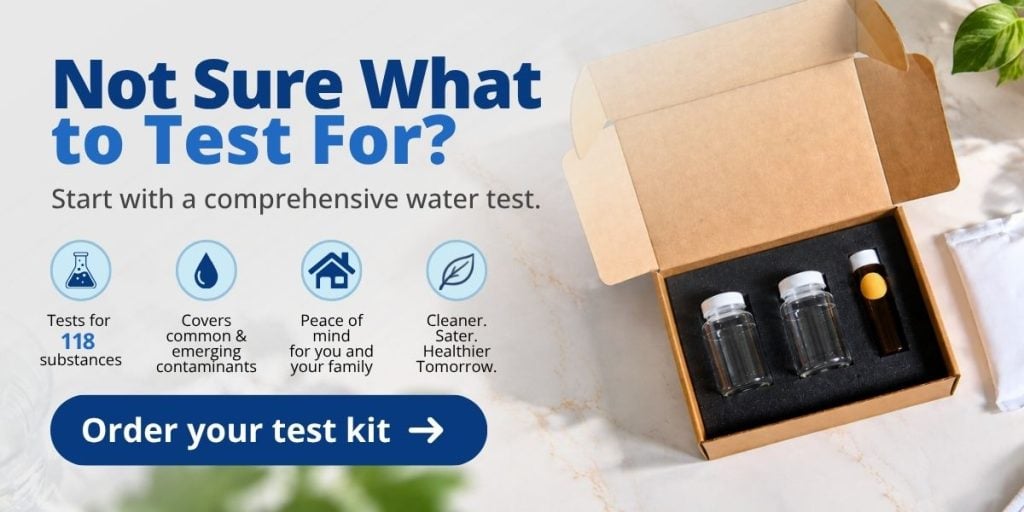
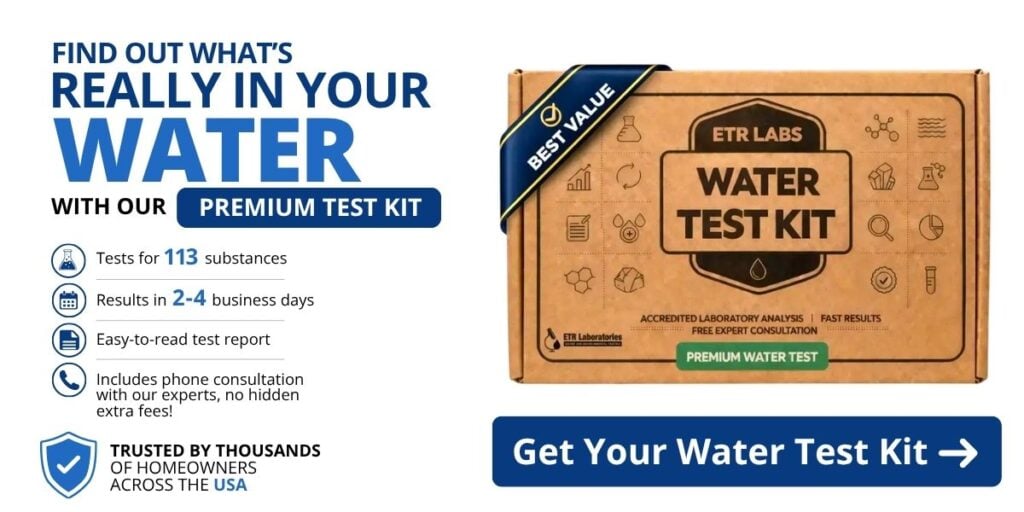
Want to see how one lab answers these? Browse our water test options, where each panel lists its full parameter set, and call our team with anything the listing doesn’t cover.
Start with the lab’s credentials. Ask what accreditation or certification it holds and who issued it, then confirm that it’s current and that its scope covers the specific analysis you need.
ISO/IEC 17025 accreditation and state drinking water certification are different credentials, and neither substitutes for the other. A lab can hold a credential for one type of analysis without holding it for everything it sells, so the scope is the part to check. Our guide to what makes a water testing lab certified explains how to read a lab’s scope parameter by parameter.
You can verify credentials yourself. The NELAC Institute runs NELAP, a national program for environmental lab accreditation, and the EPA maintains links to each state’s drinking water lab certification program so you can find your state’s lookup tool.
A credential tells you about the lab and the tests on its scope. It can’t tell you if the test fits your situation. For a look at the quality systems behind a credential, our tour of what happens inside the ETR laboratory covers the instruments and quality checks involved.
Before you compare packages, get clear on why you need the result. You might be checking your water for your own information, investigating a specific concern, buying a home, or applying for a permit.
Each purpose sets its own bar. Ask if the test and the lab’s credentials will satisfy it, and check the same for the analytical methods and collection process, along with the documentation. A household test meant for general information doesn’t automatically meet the requirements of a lender, health department, regulator, buyer, or permit authority.
When a third party will use the report, ask that organization what it requires before you order. A lender may specify the parameters and collection method, along with acceptable lab credentials and how recent the results must be. For the broader side of this decision, including what to ask before hiring a water testing lab in the first place, our guide to choosing the right water testing lab covers provider selection in more depth.
Package names tell you very little. “Basic,” “standard,” “premium,” and “comprehensive” can mean very different things from one company to the next, so ask for the full parameter list and compare what each test measures.
Then ask what the price covers, including:
Knowing what’s included makes it much easier to compare two tests that look similarly priced.
Water testing cost can include more than the advertised panel price. Ask for the expected total, including shipping and any fees for rush service or added documentation. Our breakdown of well water testing prices shows what typical panels and add-ons run.
Timing needs its own set of questions. Water test turnaround time depends on the analysis, and different contaminant groups follow different lab timelines:
Ask for the expected turnaround for each analysis in your test, and ask when that clock starts. It may start when the lab receives the sample or when you place the order. That detail can decide if results arrive in time for a home closing or a permit deadline.
If you need results fast, ask if a rush option exists for that specific analysis and what it costs. Some methods can’t be expedited because of incubation or preparation time.
Ask what containers and collection instructions the lab provides before you collect anything. Sampling requirements vary by analysis, and a test may have specific rules for:
The most useful single question is this one: “What do I need to do so this specific sample arrives in a condition the lab can analyze?”
You should also know what you’ll receive afterward. Ask how results are delivered and what information appears on the report. Check that reference values or applicable benchmarks are listed, and ask if someone can explain the findings and if that consultation costs extra. A report only helps you if you can understand what was measured and what the result means for your reason for testing.
Ask this before you ship anything. Find out what the lab does if your sample:
Companies handle these situations differently. Depending on its policy and what went wrong, a lab may contact you, ask you to recollect, send replacement materials, or charge for another kit or analysis. Knowing the policy upfront keeps a shipping delay or collection mistake from turning into an unexpected bill or a missed deadline.
Price alone doesn’t tell you if a test is good. Pay attention to how clearly the company can explain what you’re buying, and look closer if you notice any of these:
A low price or a free screening is not a red flag on its own. Free testing can give useful information about the parameters it measures. The issue is when conclusions and recommendations reach past what the test covered. If the offer comes with a softener or treatment sales visit, our guide to free water tests from softener companies explains what those screenings can tell you and when an independent lab result helps.
Yes. Parameters, credentials, sampling requirements, turnaround, reporting, and intended use are all normal details to clarify before ordering.
Some technical questions may need input from laboratory staff, so an answer might take a little time. The goal is to get enough information to understand what you’re buying and how it fits your situation.
If your purpose requires a particular credential, verify it independently before ordering. Check the accrediting body’s directory or the lab’s published scope, or use your state’s drinking water certification resource.
An unclear answer is a reason to verify further. It doesn’t prove on its own that the company or laboratory is illegitimate.
No. Analyte count alone doesn’t tell you if a test is right for you. A better approach is to check that the panel covers the parameters relevant to:
A broader panel makes sense when you need broader screening, but more analytes don’t automatically make a test the better choice.
You should know what you’re paying for before your sample leaves your hands. Here is how ETR Laboratories answers the core questions on this list:
For anything not covered here, our well water FAQ answers common sampling and testing questions, and you can contact the ETR team with any other questions about the test you’re considering.