City Water vs Well Water: Different Tests, Different Risks
City water and private well water are managed differently, so
Free Shipping on Orders of $100 or More
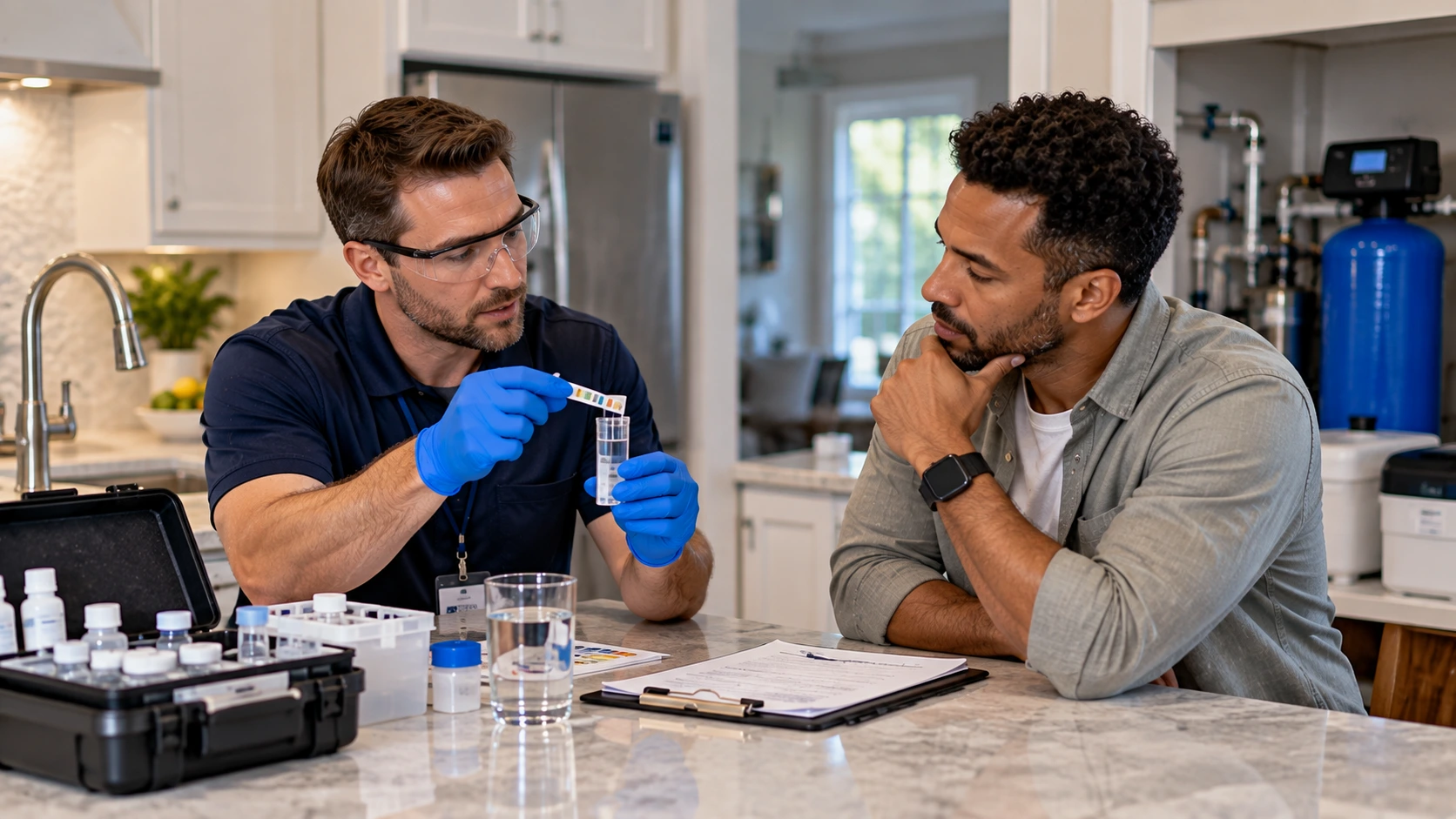
A free test a salesperson performs in your kitchen is a sales demonstration. It differs from an accredited laboratory result in ways that shape how far you can rely on it, and that difference is the real cost of “free.”
A free test is not automatically deceptive. Softener companies usually offer it as part of their sales process, and the business that tests your water may also sell and install the treatment system it recommends. Many companies describe the test as a no-obligation service, and a limited onsite screening can give you useful information about what it measures.
The question is whether those readings support everything you’re being told about your water and the system on the table. This guide from ETR Laboratories explains how these tests work and what they can tell you. It also covers which water softener sales tactics deserve a closer look and when a lab result can help before you sign anything.
If you’re starting from scratch, our water testing guide helps you choose a panel based on your water source and concerns.
A free test helps a treatment company understand the characteristics of your water that affect the equipment it recommends. At the same time, the visit introduces you to the company’s products, so the test works as both a screening tool and a step in the sales process.
Hardness readings, for example, help a company judge if a softener fits your home and how much capacity it may need. Iron and chlorine readings, along with pH, can also shape which type of treatment the company discusses with you.
Companies handle this differently. Some advertise free testing as a no-obligation service with no quote attached. Others pair the test with a treatment recommendation and a price during the same appointment. Neither setup tells you on its own if the test is good or bad, so ask a few things before you book:
On-site methods vary by company. Some technicians use test strips or liquid reagents that change color based on a substance’s concentration, while others use handheld meters or similar field tools. Common measurements include:
Some visits also include a visible demonstration. The technician adds a reagent to a sample, and the color change illustrates one characteristic of the water. That can be a reasonable way to show a specific result, as long as you understand what the reaction represents.
A hardness test, for example, shows you something about calcium and magnesium levels. It says nothing about lead, arsenic, bacteria, or PFAS, because none of those were part of the test.
The most useful question during the visit is a simple one: “What exactly is this test measuring, and what number did my sample produce?” Two companies can advertise the same free water test and measure very different things, so don’t assume the parameter lists match.
A hardness test run with an appropriate method tells you about hardness. The same logic applies to every other onsite reading. An iron test tells you about iron, a chlorine test tells you about chlorine, and a pH reading tells you how acidic or alkaline your water is.
Trouble starts when a narrow screening gets treated as a full assessment of water quality. A hardness result can’t establish if bacteria, nitrate, arsenic, lead, or PFAS are present or absent. The hardness measurement still has value, and the conclusions drawn from it should stay within the limits of what was tested.
Before you agree to a treatment system, ask for:
If all you hear is “your water is bad” or “you need this system,” ask for the numbers behind that conclusion.
On-site screening and accredited laboratory analysis are different kinds of evidence. Depending on the test, a kitchen screening may skip formal chain-of-custody records, and it may use strips or meters in place of lab instruments that detect contaminants at much lower levels. The method also typically falls outside any laboratory’s accredited scope.
That doesn’t make the onsite result worthless. It means the result should be read for what it is. Our walkthrough of how ETR tests your water shows what happens when a sample moves through collection and lab analysis, including the quality control behind the final report.
The conflict of interest comes from the business relationship. The same company may:
That arrangement doesn’t make the measurements wrong or the recommendation unnecessary. When you’re weighing a substantial purchase, though, it’s reasonable to want to know which findings support the recommendation and what was left untested. Ask to keep a copy of your readings and the proposed system so you have something concrete to review or compare with an independent result later.
Free testing, onsite visits, color-change demonstrations, and treatment recommendations are not red flags by themselves. The warning signs show up in how the results are explained and used. Watch for these:
A softener company recommending a softener because your water tested hard is a logical conclusion. Claiming your water is unsafe to drink because it’s hard is a different claim, since hardness and drinking water safety are separate questions.
If you sign a sales agreement at home, consumer protection rules apply separately from the accuracy of the test. The FTC’s Cooling-Off Rule gives you three days to cancel certain sales made at your home, including when you invite a salesperson in for a presentation, though some sales fall outside the rule. Your state attorney general’s office handles state-specific consumer protections and complaints, and you can find yours through the USAGov directory of state attorneys general.
Already had a free test? If the recommendation goes beyond what was measured, get an independent second opinion before you buy, and compare our water testing options against the questions your onsite results left open.
Clear answers to a short list of questions will tell you if the recommendation follows from the test. Before you agree to a purchase, ask:
A company confident in its recommendation should be able to answer each of these before you commit to a substantial purchase. If the explanation stays vague, or the proposed system doesn’t clearly match what was measured, slow down and verify the findings first. Our guide to questions to ask before you pay for a water test covers credentials, cost, turnaround, and reporting in a broader pre-purchase checklist.
Independent laboratory testing adds the most value when it answers a question the onsite screening didn’t. Consider it when:
You don’t need a second test every time a softener company checks your water. When hardness is the only issue and the proposed system targets a clear hardness reading, another test may not change your decision.
A lab result becomes more useful when the question grows from “Is my water hard?” to “What else is in my water?” Our look at how far free water testing goes toward ensuring safety covers the broader gap between limited screenings and comprehensive testing, including free tests offered outside the softener-sales setting. When you’re ready to compare providers, our guide to choosing the right water testing lab explains what to look for before you send a sample to an independent water testing lab.
If the salesperson has already left and you’re looking at a quote, you don’t need to start over. Work from the information you have, and ask the company for written results if you didn’t receive them during the visit. You want to know:
Then compare the proposed equipment with the findings. If hardness was measured and the recommendation is a softener, the link is straightforward. If the recommendation includes treatment for iron, bacteria, arsenic, lead, or PFAS that was never measured, ask what evidence supports that part of the quote.
You can also ask if additional testing might change the proposed system. Broader results may show that the treatment addresses one issue and leaves another unanswered, or they may confirm the original recommendation. A second opinion helps ensure your money goes toward the problem you’re trying to solve.
No. Some treatment companies openly offer free onsite testing as a no-obligation service, and those tests can provide legitimate information about the parameters they measure. If you found this page by searching “free water test scam,” focus on how well the conclusions match the measurements. The bigger concern is a narrow result used to support claims or treatment that reach beyond what was tested.
A hardness test can give you useful information about hardness when an appropriate method is used correctly. Hardness is one characteristic of your water, though, and a hardness result can’t tell you if unrelated contaminants such as bacteria, nitrate, arsenic, or lead are present.
Most onsite demonstrations use a reagent that reacts with a particular substance in the water, which can cause a color change or another visible effect. The reaction reflects what that specific method is designed to show. A vivid color change doesn’t mean something dangerous suddenly appeared, and it can’t prove the presence of contaminants the test wasn’t built to measure. Ask the technician which reagent is being used and what it reacts with.
Not automatically. If the proposed treatment addresses a clearly measured condition such as hardness, and the result gives you enough to decide, a lab test may not be necessary. Independent testing becomes more valuable when broader water quality claims are being made, when the recommendation goes beyond what was tested, or when you want confirmation before a significant purchase.
Yes. Ask what method is being used and if any result comes from testing performed under an accredited laboratory scope. A company using onsite strips or meters should be able to tell you plainly that the demonstration is a field screening and that no accredited lab analysis is involved. If accreditation is important for your purpose, ask which laboratory would perform the analysis and check that lab’s scope independently.
A free onsite test is useful when its conclusions stay inside the parameters it measured, and that’s the line that separates a fair screening from a free water test scam. When a recommendation reaches beyond those readings, or you want confirmation before a significant purchase, an accredited lab result gives you a fuller set of data to work from.
ETR Laboratories offers accredited water testing panels for homeowners who want independent results before deciding what their water needs. Choose the panel that fits your water source and concerns, then use the results to guide your treatment decision.
City water and private well water are managed differently, so
When your ETR Lab’s water test kit arrives, the first
Water testing ads usually talk about the kit in your
Related Post.
City Water vs Well Water: Different Tests, Different Risks
City water and private well water are managed differently, so the reasons you may want
What Comes in an ETR Water Test Kit: A Full Breakdown
When your ETR Lab’s water test kit arrives, the first question is usually simple: what’s
How ETR Laboratories Tests Your Water, Step by Step
Water testing ads usually talk about the kit in your mailbox. The part that decides
Water Test Panel Guide: Basic, Premium, or Ultimate?
Ordering a water test sounds simple until you see the options. One lab sells Basic,
How to Get Your Well Tested Without a Local Lab Nearby
You searched for a well water testing lab nearby and found nothing. Maybe nothing was
Michigan Well Water Testing Requirements: What to Know
Michigan requires testing when a private residential well is constructed, and state guidance calls for
Why Free Water Tests From Softener Companies Are Not Free
A free test a salesperson performs in your kitchen is a sales demonstration. It differs
12 Questions to Ask Before You Pay for a Water Test
Search for advice on what to ask before hiring a water company, and most of
Water Filters That Actually Remove PFAS: A Lab Guide
Every filter box on the shelf claims to handle PFAS these days, but that claim
Legionella Testing for Building Water Systems: A Full Guide
Everyone expects you to already have a water management program running. An outbreak would end
ASHRAE 188 Compliance: What Water Testing Is Required
Standard 188 doesn’t tell you to test for Legionella every three months. It doesn’t hand
Do You Have a Lead Service Line? 10 Ways to Check
A notice from your water utility landed in the mail. It lists your pipe material