
Water Filters That Actually Remove PFAS: A Lab Guide
Every filter box on the shelf claims to handle PFAS
Free Shipping on Orders of $100 or More
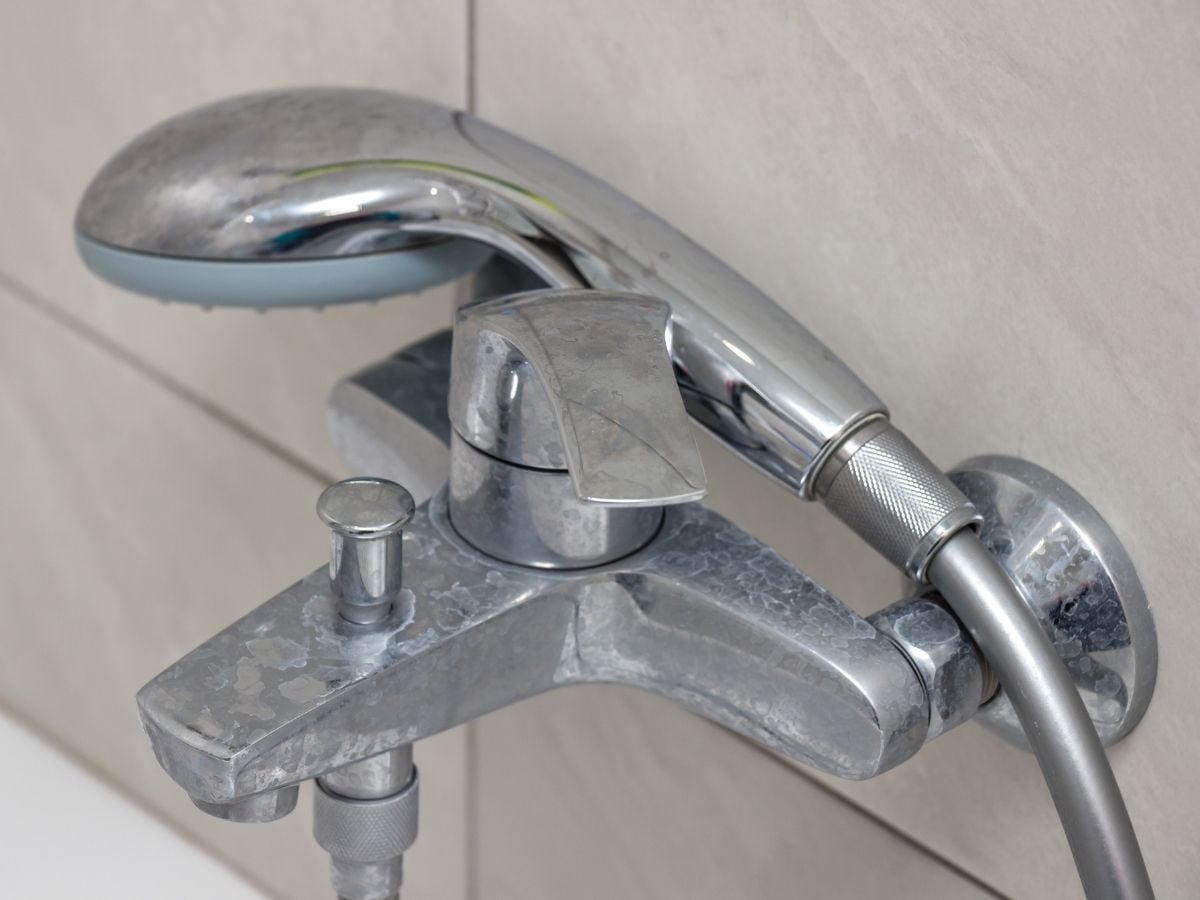
Run a glass through the dishwasher and pull it out cloudy. Wipe down the shower door and watch a chalky film reappear within days. Notice a white, crusty buildup creeping around your faucet no matter how often you clean it. If any of that sounds familiar, you’re dealing with one of the most common water quality complaints in the country, and it shows up in homes on city water and well water alike, coast to coast.
The residue itself has a name: limescale. And the cause is almost always the same thing, no matter where you live.
Hard water simply means water carrying a higher concentration of dissolved minerals, mainly calcium and magnesium. These minerals travel through your plumbing invisibly, dissolved in the water itself. The problem starts when the water evaporates. The minerals don’t evaporate with it. They stay behind, and over time, they build up into the chalky, crusty deposit most people call limescale.
Worth knowing upfront: hard water minerals aren’t a health risk. Calcium and magnesium are natural, and some research even points to health benefits from consuming them in drinking water. The real issue with hard water is aesthetic and mechanical. It stains, it builds up scale inside your appliances, and it makes soap and detergent noticeably less effective, which is part of why hard water households often go through more soap than they feel like they should need.
Here’s where most articles on this topic stop short, and it’s worth going further.
If you already have a water softener installed, or your water has genuinely tested low for calcium and magnesium, and you’re still seeing white residue or spotting on glass, the mineral behind it is probably not hardness at all. It’s likely silica.
Silica occurs naturally in much groundwater, which makes it more of a well-water issue than a city-water one. The tricky part is that a standard water softener won’t touch it. Softeners are built specifically to target hardness minerals like calcium and magnesium, not silica, so a softener working exactly as designed can still leave you with residue if silica is the real source.
Silica deposits start out almost invisible. Over time they build into a faint milky or slightly iridescent haze on glass, and if left unaddressed long enough, that haze can progress into actual etching, which is permanent damage to the glass surface rather than a film you can wipe away. There’s no strict regulatory threshold for when silica starts causing this kind of cosmetic problem, but many sources point to noticeable effects starting somewhere around 20 parts per million, and that can vary by household and surface.
This is exactly the kind of situation where guessing gets expensive. A homeowner who already softened their water and is still fighting residue can’t tell, just by looking, if the softener is malfunctioning, if some hardness is still getting through, or if silica is the real cause and needs a different treatment approach. Testing is the only way to know which one you’re actually dealing with.
Not every stain is a hardness stain. If what you’re seeing is reddish-brown or black and gray rather than white and chalky, you’re more likely looking at iron or manganese, not calcium and magnesium.
Here’s a convenient detail worth knowing. A properly functioning water softener typically removes iron and manganese too, since these are two of the most common other staining minerals found in well water, and softening media generally handles all three together. So if you already have a softener installed, there’s a decent chance it’s already working harder than you realized.
It’s also worth knowing that not everything that looks like a water problem actually is one. Harmless air bubbles or ordinary plumbing sediment can occasionally be mistaken for mineral residue.
If you’re dealing with residue and considering a softener as the fix, there’s a related issue worth understanding. Most softeners work through a process called ion exchange, swapping calcium and magnesium for sodium as water passes through the system. That’s an effective, well-established way to solve hardness, but it does mean softened water carries slightly elevated sodium as a natural byproduct of how the process works. If your water already carries elevated chloride, coming from a naturally salty water source or from road salt runoff into a private well, that chloride doesn’t just sit there quietly. Chloride actively interferes with the protective mineral layer that normally forms inside metal pipes and tanks, which otherwise helps slow corrosion. Without that layer, corrosion moves faster, and it shows up as rust, pinhole leaks, and shortened lifespans for pipes, water heater tanks, and other plumbing appliances.
This isn’t a reason to avoid softening hard water. It’s a reason to know what’s actually in your water, since elevated chloride from the source water itself can quietly accelerate damage you won’t notice until it’s a leak. It’s also a good reason to periodically check on a softener you already have installed, not just to confirm it’s still removing hardness effectively, but to make sure it isn’t overloading your water with more sodium than it should be. A softener that’s out of adjustment can push sodium higher than necessary, and periodic testing is the simplest way to catch that early.
For existing residue, diluted white vinegar is the standard, effective home remedy for dissolving mineral deposits on fixtures and glassware. A baking soda paste works well on tougher, more stubborn buildup. Regular wiping and drying of surfaces after use goes a long way toward preventing new buildup from forming in the first place.
One honest caveat: vinegar and similar treatments work on calcium and magnesium film, but they won’t fix silica-based etching. Once glass has etched, that damage is permanent, not something a cleaning product can reverse. It’s one more reason knowing the actual cause matters before you spend time and money treating the wrong one.
If you’re dealing with white residue and you’re not sure whether you’re looking at hardness, silica, or something else entirely, testing is the fastest way to find out for certain, rather than working through a list of treatments one at a time.
ETR Laboratories’ Water Hardness Test measures calcium and magnesium directly, so you’ll know exactly whether a softener is needed or whether an existing one is doing its job. And if you’re testing your water more broadly, hardness, silica, iron, and manganese are all included on most of ETR’s standard packages, so you’ll typically get a full picture of what’s behind the residue in one set of results, without needing to order anything extra. A standalone silica test is also available if you’ve already ruled out hardness and just want a fast, targeted answer. Testing broadly also covers sodium and chloride, which is worth knowing before or after installing a softener, given how directly those minerals connect to corrosion risk in your pipes and appliances.
Every test comes with a free consultation, so once your results are in, you’re not left interpreting a report on your own. We’ll walk through exactly what’s in your water and what it means for your fixtures, your appliances, and your next step.
From the Lab by ETR Laboratories
Every filter box on the shelf claims to handle PFAS
Everyone expects you to already have a water management program
Standard 188 doesn’t tell you to test for Legionella every
Related Post.
Water Filters That Actually Remove PFAS: A Lab Guide
Every filter box on the shelf claims to handle PFAS these days, but that claim
Legionella Testing for Building Water Systems: A Full Guide
Everyone expects you to already have a water management program running. An outbreak would end
ASHRAE 188 Compliance: What Water Testing Is Required
Standard 188 doesn’t tell you to test for Legionella every three months. It doesn’t hand
Do You Have a Lead Service Line? 10 Ways to Check
A notice from your water utility landed in the mail. It lists your pipe material
Can You Trust Your Water Test Results? 13 Red Flags
A water test is only as good as the lab behind it. The number on
How to Read Your Water Test Report
It’s normal to get a report that has 40 rows of information on the report.
What Makes a Water Testing Lab Certified? A Full Guide
Certification means a state or accrediting body has checked that a lab can run
Water Test Kits Compared: Which One Do You Actually Need?
Search for a way to check your water, and four different products show up.
Well Water Testing Near Me: How to Find a Certified Lab
People who search for well water testing nearby usually want a sample moving right away.
Well Water Testing Cost: What You Should Expect to Pay
A single bacteria test typically runs $40 to $80 in much of the country. A
How to Test for Lead in Water: The First Draw Method
Run the kitchen tap for two minutes, fill a bottle, and the result can come
Chain of Custody for Water Testing Samples: A Complete Guide
Chain of custody is a documented record of every person who held a water sample,