Free Shipping on Orders of $100 or More
Fast Turnaround Times
Ships free to your door
Takes under 5 minutes
Free return shipping
Expert Consultation
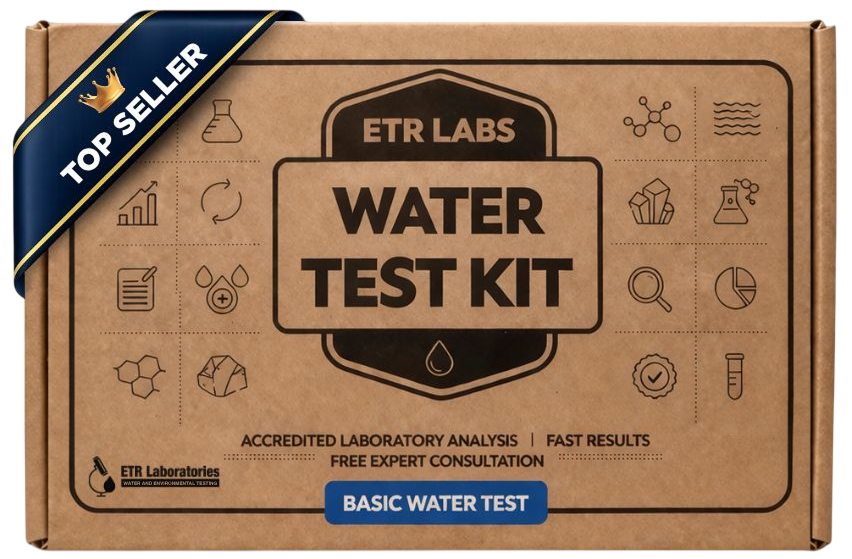
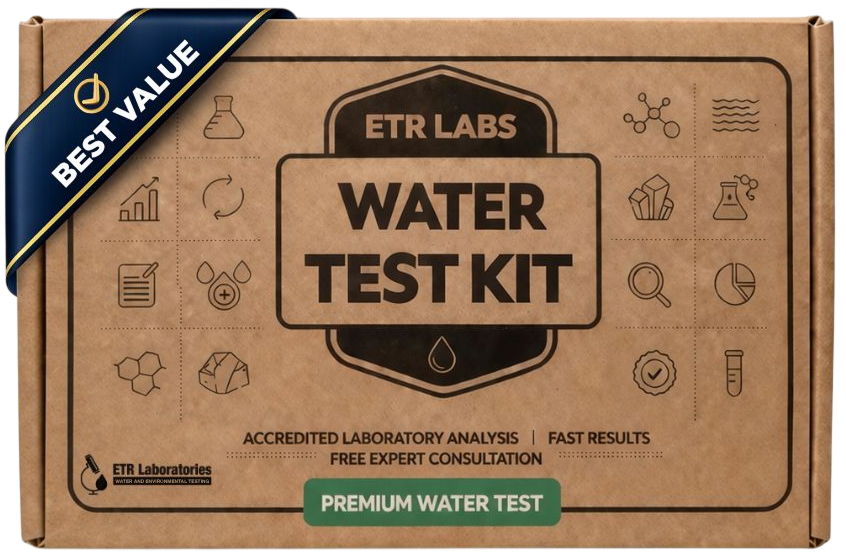
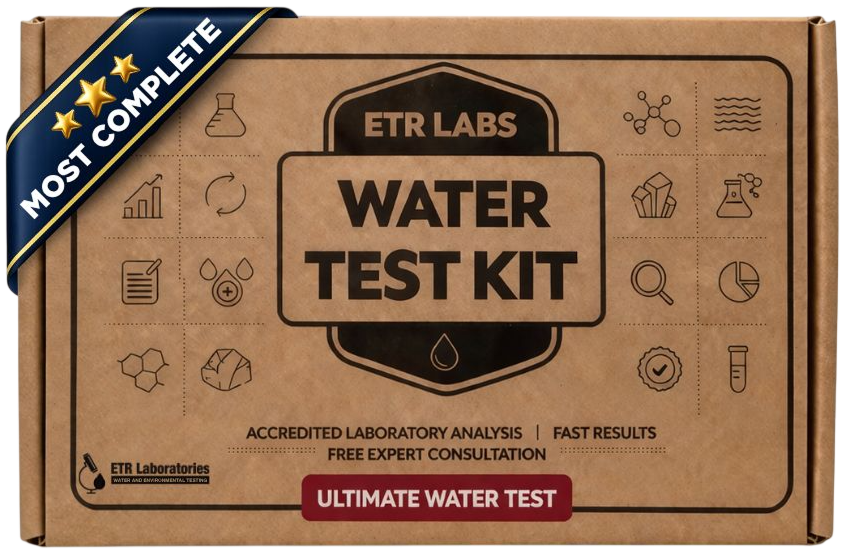
$415.00
$415.00
ETR Laboratories is accredited by ANAB for specific testing as listed in our scope of accreditation.
Madison's system has over 900 miles of water main and 21 active wells drawing from a deep sandstone aquifer hundreds of feet below the city, according to the utility's latest annual report coverage. PFAS were found at Well 15 in 2017, and the well was taken offline in 2019 amid community concern. After a $5.9 million hybrid treatment system using granular activated carbon and ion exchange resin was built, the city recommissioned Well 15 in September 2025. The 2025 report found PFAS present at levels well below the newly revised guidelines. Groundwater feels untouched, but Madison's own history shows that contamination at the surface can travel down. A tap test shows what reaches your glass today.
Public Health Madison and Dane County's 2023 Environmental Health Report found that about one in five private wells tested between 1988 and July 2021 had unsafe nitrate levels. Statewide, about 12 percent of private wells exceed the nitrate health standard, so Dane County runs high. Nitrate gets into groundwater from fertilizer and animal waste, and it is most dangerous for babies, young children and pregnant women. County officials note that well owners are not required to test regularly or fix problems, and that levels can be elevated without any warning in how the water looks. Test every year, and again after flooding, well work or any change in how the water looks, smells or tastes.
The City of Madison says road salt has reached 3 of its 22 drinking water wells. Well 14 on University Avenue shows the largest rise, with sodium at 71 mg/L in 2023 against an EPA guideline of 20 mg/L, and Wells 16 and 6 are rising too. The city says elevated chloride does not affect human health, though sodium can matter for people on low-sodium diets, and most people begin to taste salt around 250 mg/L of chloride. The lakes show the same pattern: Lake Wingra's chloride has risen about 2 mg/L per year since 1962 and averaged over 100 mg/L in 2016. Homes with private wells near salted roads, driveways and parking lots share the same groundwater.
Max substances in Ultimate panel
Money-back guarantee
Expert consult every order
“The test was simple–collect a water sample from a faucet in the home. We sent the test to the lab and received a water quality analysis within a few days. The test included analysis of the water sample for the presence of: coliform bacteria, E. coli, iron, lead, pH, turbidity, and nitrates/nitrites.”
“Incredible lab, they really care about their customers. As someone who doesn’t know a whole lot about water quality, they took their time to help me understand everything about my water quality situation.”
No shared results. Our laboratory holds our clients privacy to the highest regard, your results and information will never be shared. Be aware that state certified laboratories may be required to report your results to various government agencies.