- Accredited to ISO/IEC 17025 by ANAB · Est. 1995
Tap and Well Water Tests
2–4 Days
Fast Turnaround
2–4 Days
Fast Turnaround
Houston Water Testing
Houston’s water technically meets federal standards, but meeting standards and being clean are two different things. Arsenic, PFAS, disinfection byproducts, and industrial contaminants have all been detected in the region’s water supply, and none of them announce themselves at the tap. ETR Labs gives you certified lab results, a free consultation with a water quality expert, and free two-way shipping on every order.
4.8 Average Ratings
Fast Turnaround Times

Order Kit
Ships free to your door
Collect Sample
Takes under 5 minutes

Ship to Lab
Free return shipping
Get Result
Expert Consultation
Well Water Testing Kits
- Free Two-Way Shipping
- Fast Turnaround
- 4.8 / 5 Rating
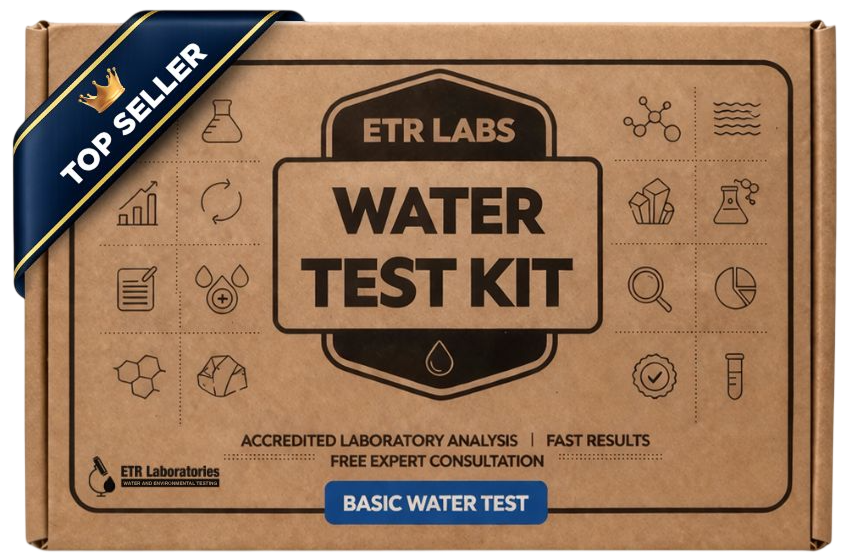
Basic Well Water Test
- 53 Substances
- 2–4 business days
$179
- Bacteria, Heavy Metals Incl. Lead and Arsenic, Minerals, Hardness, Radon and More
- Free expert consultation
- 100% money-back guarantee
- Free shipping both ways
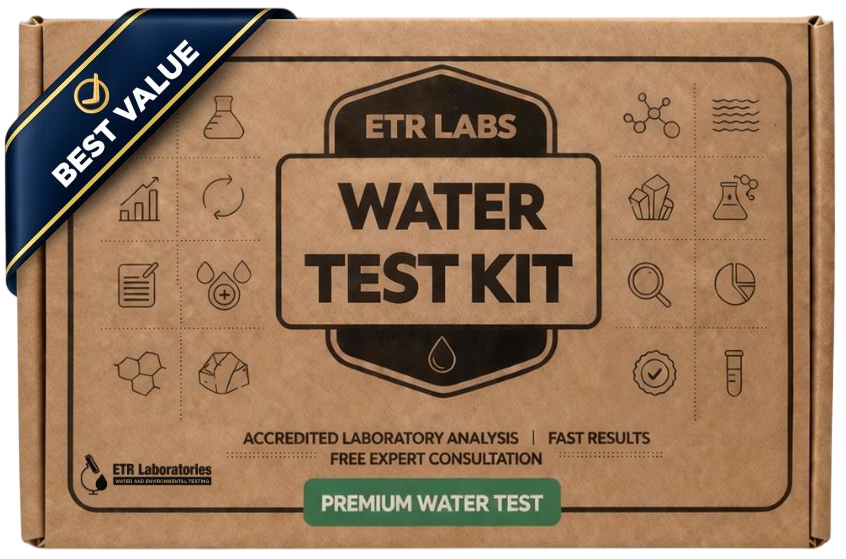
Premium Well Water Test
- 113 Substances
- 2–4 business days
$249
- Bacteria, Heavy Metals Incl. Lead and Arsenic, Minerals, Hardness, Radon and More
- VOC Panel: Tests industrial contaminants, disinfection byproducts, and other chemicals linked to health risks.
- Free expert consultation
- 100% money-back guarantee
- Free shipping both ways
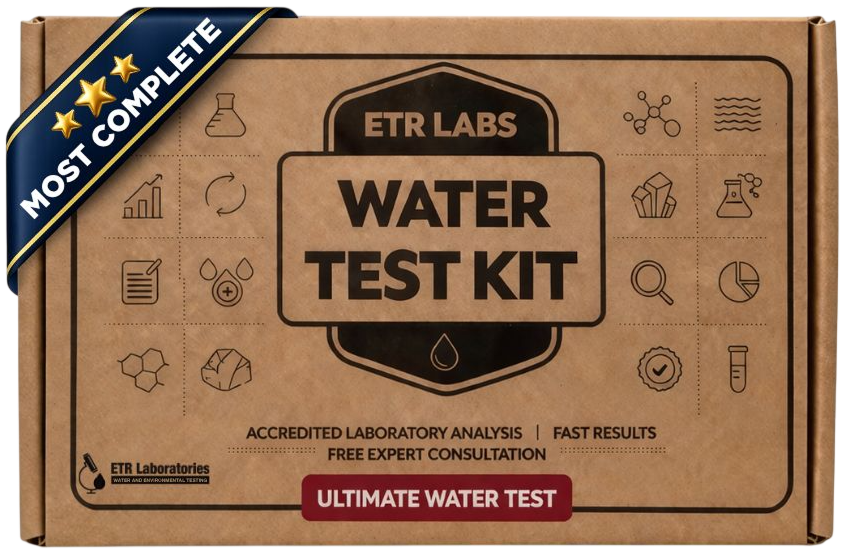
Ultimate Well Water Test
- 249 Substances
- 7–10 business days
$899
- Bacteria, Heavy Metals Incl. Lead and Arsenic, Minerals, Hardness, Radon and More
- VOC Panel: Tests industrial contaminants, disinfection byproducts, and other chemicals linked to health risks.
- Pesticides, Herbicides and SVOCs (toxic chemicals including phthalates)
- Fungi for full microbial picture
- Free expert consultation
- 100% money-back guarantee
- Free shipping both ways
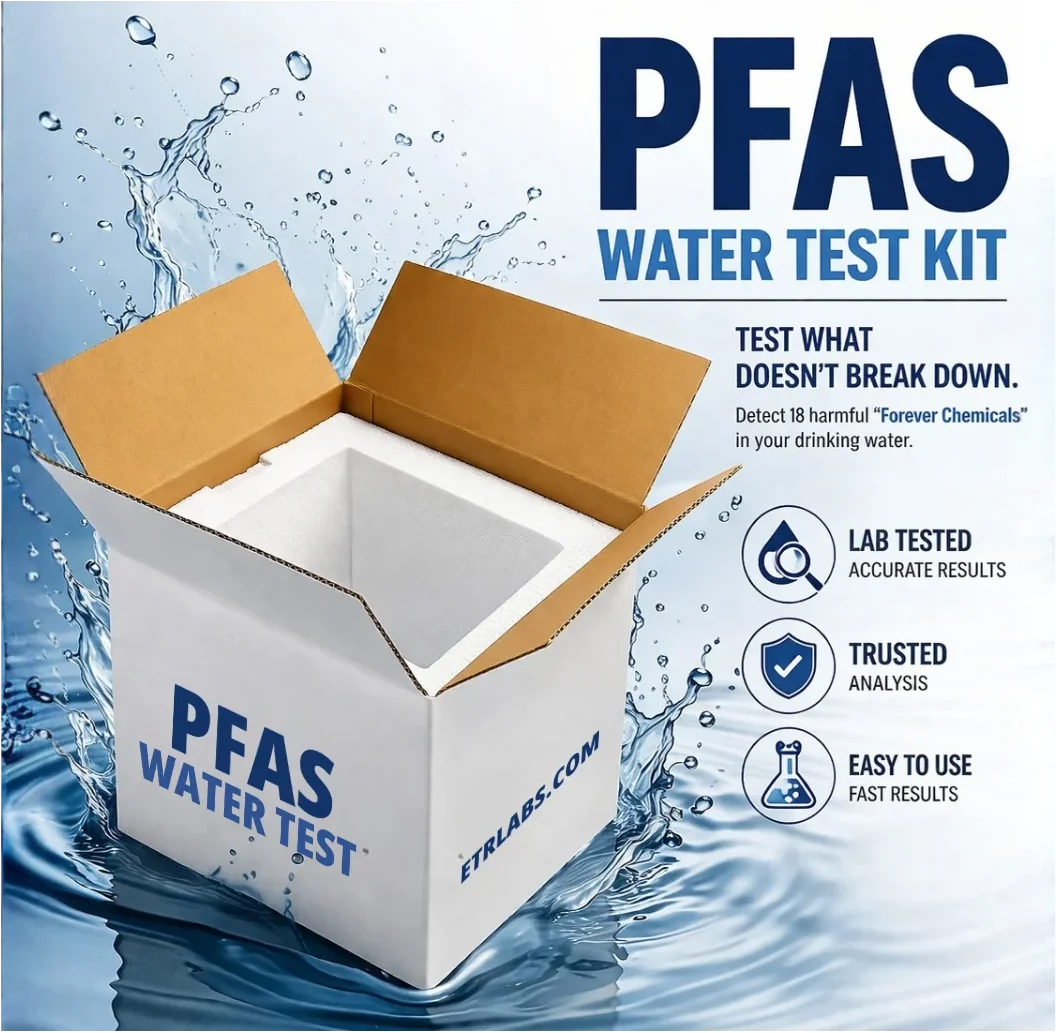
PFAS “Forever Chemical” Drinking Water Test – 18 Compounds
$415.00
City Water Testing Kits
- Free Two-Way Shipping
- Fast Turnaround
- 4.8 / 5 Rating
Basic City Water Test
- 48 Substances
- 2–4 business days
$169
- Heavy Metals Incl. Lead and Arsenic, Minerals, Hardness and More
- Free expert consultation
- 100% money-back guarantee
- Free shipping both ways
Premium City Water Test
- 108 Substances
- 2–4 business days
$239
- Heavy Metals Incl. Lead and Arsenic, Minerals, Hardness and More
- VOC Panel: Tests industrial contaminants, disinfection byproducts, and other chemicals linked to health risks.
- Free expert consultation
- 100% money-back guarantee
- Free shipping both ways
Ultimate City Water Test
- 244 Substances
- 7–10 business days
$889
- Heavy Metals Incl. Lead and Arsenic, Minerals, Hardness and More
- VOC Panel: Tests industrial contaminants, disinfection byproducts, and other chemicals linked to health risks.
- Pesticides, Herbicides and SVOCs (toxic chemicals including phthalates)
- Fungi for full microbial picture
- Free expert consultation
- 100% money-back guarantee
- Free shipping both ways
PFAS “Forever Chemical” Drinking Water Test – 18 Compounds
$415.00
All Our Tests Include:
Free Shipping Both Ways
Results in 2–10 Business Days
100% Money-Back Guarantee
ETR Laboratories is accredited by ANAB for specific testing as listed in our scope of accreditation.
- Water Quality Assoc.
- PFAS / forever chemicals
- ISO/IEC 17025 by ANAB
- PFAS Test
Why Water Testing Matters in Houston
What Houston's Own Data Shows
According to the City of Houston's 2024 Water Quality Report, the supply contains detectable levels of arsenic, trihalomethanes (TTHMs), haloacetic acids (HAA5), and unregulated contaminants currently under EPA review including PFAS and lithium. These substances are within legal federal limits, but several exceed the stricter health-based guidelines set by independent organizations like the Environmental Working Group. Chlorine used in Houston's disinfection process reacts with organic matter from the region's surface water sources, including Lake Houston and the Trinity River system, to form disinfection byproducts that carry long-term health concerns with chronic exposure.
Industrial Houston Creates Unique Water Risks
The Houston Ship Channel is one of the most industrially active waterways in the country. Petrochemical refining, manufacturing operations, and decades of industrial activity along the channel have contributed to contamination in local waterways and groundwater. Elevated PFAS levels have been identified in areas near the San Jacinto River, which feeds into Houston's surface water supply. Hurricane Harvey and subsequent major flooding events have disturbed Superfund site sediments, introducing additional industrial waste into the region's water network. For Houston residents, a water test is the clearest way to understand what that industrial history means for what comes out of your specific tap.
Well Water in Harris County Carries Its Own Risks
Private wells across Harris County face a distinct set of challenges. Documented contamination includes extreme hardness, iron and manganese, sulfur, bacteria, and in some northwest Harris County neighborhoods, industrial solvents like Tetrachloroethylene traced to decades of illegal dumping near active Superfund sites. Following Hurricane Harvey, preliminary testing of private wells in the affected counties found widespread presence of total coliform and E. coli. Private wells in Texas operate without any routine regulatory oversight, and every well water sample sent to ETR Labs is analyzed start to finish in our own lab by our own scientists, with no portion of the work outsourced to an outside facility.
30+ Years of Expertise
249
Max substances in Ultimate panel
Fast Turn Around Time
100%
Money-back guarantee
Free
Expert consult every order
1,000+ Verified Customer Reviews
Trusted By Customers Across The United States
“The test was simple–collect a water sample from a faucet in the home. We sent the test to the lab and received a water quality analysis within a few days. The test included analysis of the water sample for the presence of: coliform bacteria, E. coli, iron, lead, pH, turbidity, and nitrates/nitrites.”
Taylor L.
“Incredible lab, they really care about their customers. As someone who doesn’t know a whole lot about water quality, they took their time to help me understand everything about my water quality situation.”
Ron T.
William S.
FAQs
Even if Houston’s water meets federal standards, that does not always mean your household water is free from concern. Legal limits for many contaminants have not been updated in years, and some substances found in Houston’s supply, including chromium-6, arsenic, and disinfection byproducts, are still flagged by independent health researchers at levels above their recommended guidelines. Water can also pick up additional contaminants as it travels through aging pipes or home plumbing systems. Testing gives you a clearer picture of what is actually coming out of your tap so you can make informed decisions for your home and family.
Read more: Why Drinking Water Sickens a Million Americans a Year.
About 86.5% of Houston's water supply comes from surface water sources including Lake Houston and the Trinity River system. Surface water is more vulnerable to seasonal contamination shifts, agricultural runoff, storm events, and industrial discharge than groundwater. When that water is disinfected with chloramines and chlorine, it reacts with naturally occurring organic matter to form trihalomethanes and haloacetic acids. Heavy flooding events like Hurricane Harvey have also disturbed Superfund sediments along the San Jacinto River, introducing industrial compounds into the regional water network. Our Contaminant Glossary covers what each substance is and why it matters.
Proximity to the Ship Channel and the broader petrochemical corridor along the Texas Gulf Coast puts residents at elevated risk for industrial contaminants in both municipal water and private wells. PFAS from firefighting foam and industrial discharge has been detected in surface water sources feeding Houston's treatment plants. Legacy Superfund sites in Harris County have introduced solvents and heavy metals into local groundwater. The closer your property is to industrial activity, the stronger the case for a comprehensive screening that goes beyond a basic test.
Read more: PFAS Is Not Going Away.
Yes. The most common contaminants found in Harris County private wells, including bacteria, arsenic, nitrates, iron, manganese, and industrial solvents in areas near legacy dump sites, produce no reliable sensory signals. Following Hurricane Harvey, 60% of private well samples collected across affected Texas counties came back positive for total coliform and E. coli. Wells that showed no visible signs of damage were among those affected. Our PFAS "Forever Chemical" Drinking Water Test and full well panels are both available for Harris County well owners.
Yes, in practice. North Houston and the communities around it sit closer to agricultural operations and some of the region's legacy industrial zones, which increases the likelihood of nitrate, pesticide, and solvent contamination in private wells. South Houston and areas near the Ship Channel carry higher industrial contamination risk. The aquifer systems underlying Harris County also vary by location. The Ultimate Water Test covers 249 substances and is the most thorough option regardless of which part of the metro you are in. If you want a recommendation tailored to your specific area, contact us before ordering and one of our experts will point you in the right direction. Our Well and City Water FAQ also covers the most common regional scenarios.
Trusted by families across the United States
4.8
1,200+ customer reviews
Verified Customer
via Angie's List
Verified Customer
via Angie's List
Verified Customer
via Angie's List
Statement of Confidentiality
No shared results. Our laboratory holds our clients privacy to the highest regard, your results and information will never be shared. Be aware that state certified laboratories may be required to report your results to various government agencies.