Free Shipping on Orders of $100 or More
$299.00 Original price was: $299.00.$250.00Current price is: $250.00.
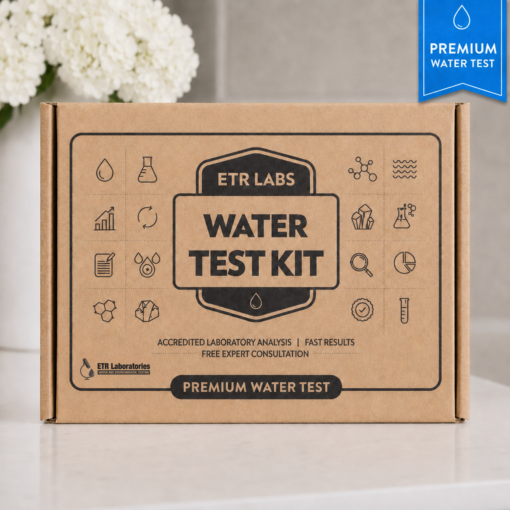
This test counts microplastics in water and sorts them by size, down to nanoplastics smaller than one micrometer. Public water systems are not required to measure plastic particles yet, so a private test is the main way to know your own levels. People order it for a baseline on tap or well water, to compare against bottled water, or to check whether a filter is doing its job.
Since no legal limit exists, your result works best as a baseline. A side-by-side test of your tap and your bottled brand, or a test before and after a filter, turns the numbers into something you can act on. It also helps you see which change lowers your count the most.
Microplastics are plastic particles smaller than five millimeters, and nanoplastics are the smallest of them, under one micrometer across. Many come from larger plastic breaking down over time, and they are too small to see in a glass of water.
Here are the main sources of microplastics in water:
Researchers are still working out what these particles mean for health, and tiny particles have been found in human blood and tissue. The World Health Organization's report on microplastics in drinking water summarizes what scientists know.
This microplastics water test is for you if you want to know how much plastic is in the water you drink every day. It works for city water, private wells, and the bottled brand you buy.
People often order it to:
This field is still new, so a free call with our team comes with every result.
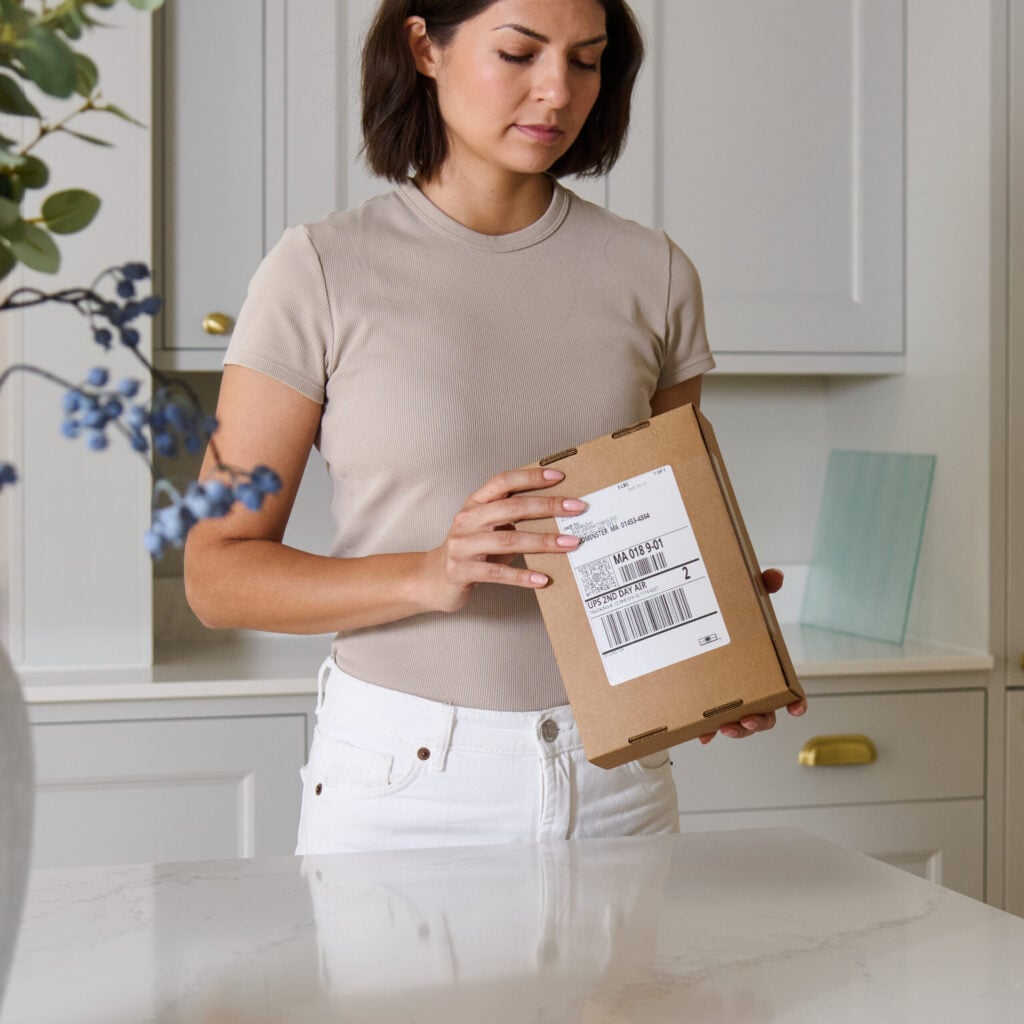
Orders of $100 or more ship free, and orders under $100 pay an $8 flat rate. Every kit includes a prepaid return label. Plastic particle counts are not affected by a day or two in transit, but please ship as soon as possible after sampling.
We analyze your sample in our accredited lab, using established testing methods and quality controls.
We have tested water since 1995.
Every test includes a free consultation with one of our water experts. We go over your results with you, explain what the numbers mean for your home, and help you decide on the appropriate next step, including any filtration approach.
Counts come from scanning electron microscopy. There is no federal limit for either group yet, so results are best read as a baseline and compared over time or before and after filtration.

Ships free to your door
Takes under 5 minutes
Free return shipping
Expert Consultation

Ships free to your door

Takes under 5 minutes

Free return shipping

Expert Consultation
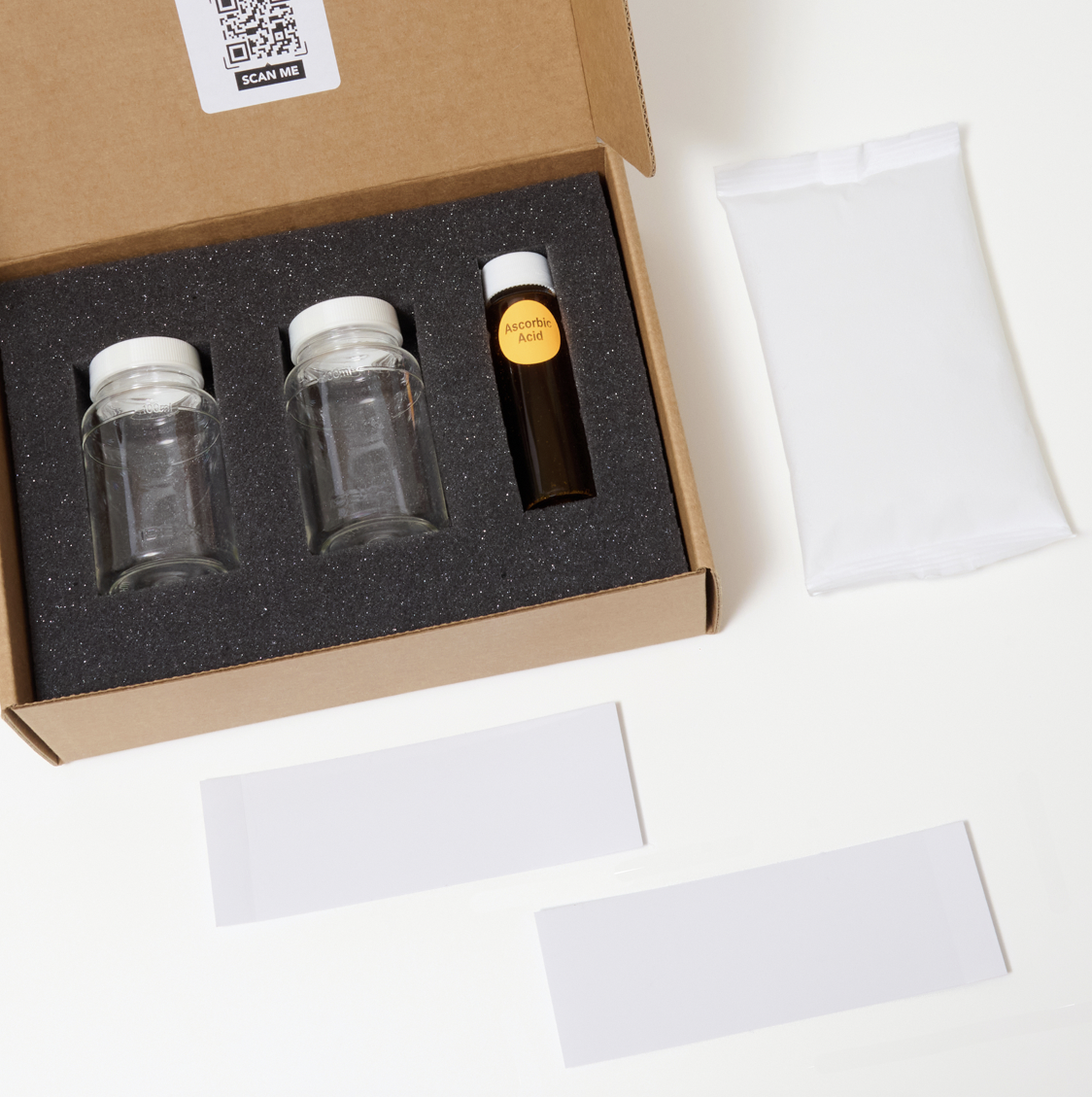
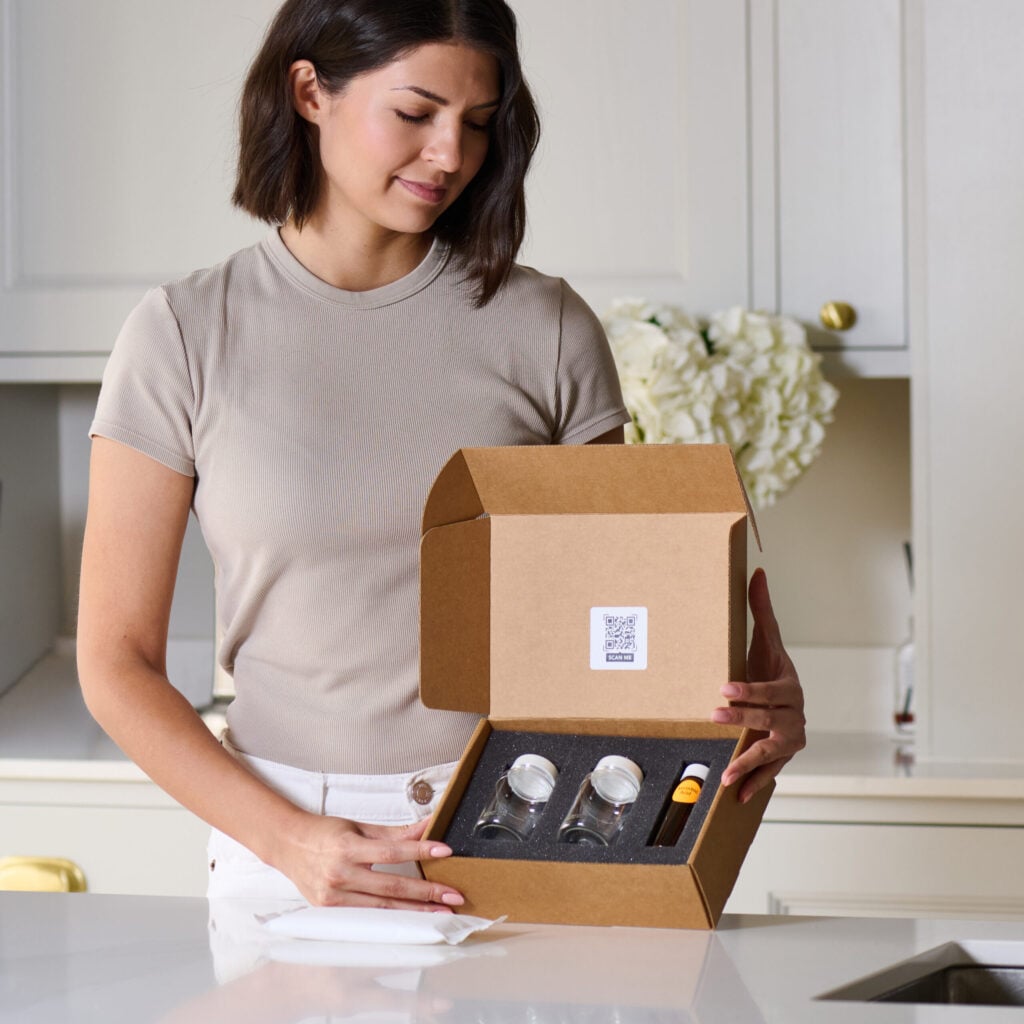
Every test comes with step-by-step instructions on how to prepare your water source, collect your water sample, and prepare your sample for return shipment to our lab.
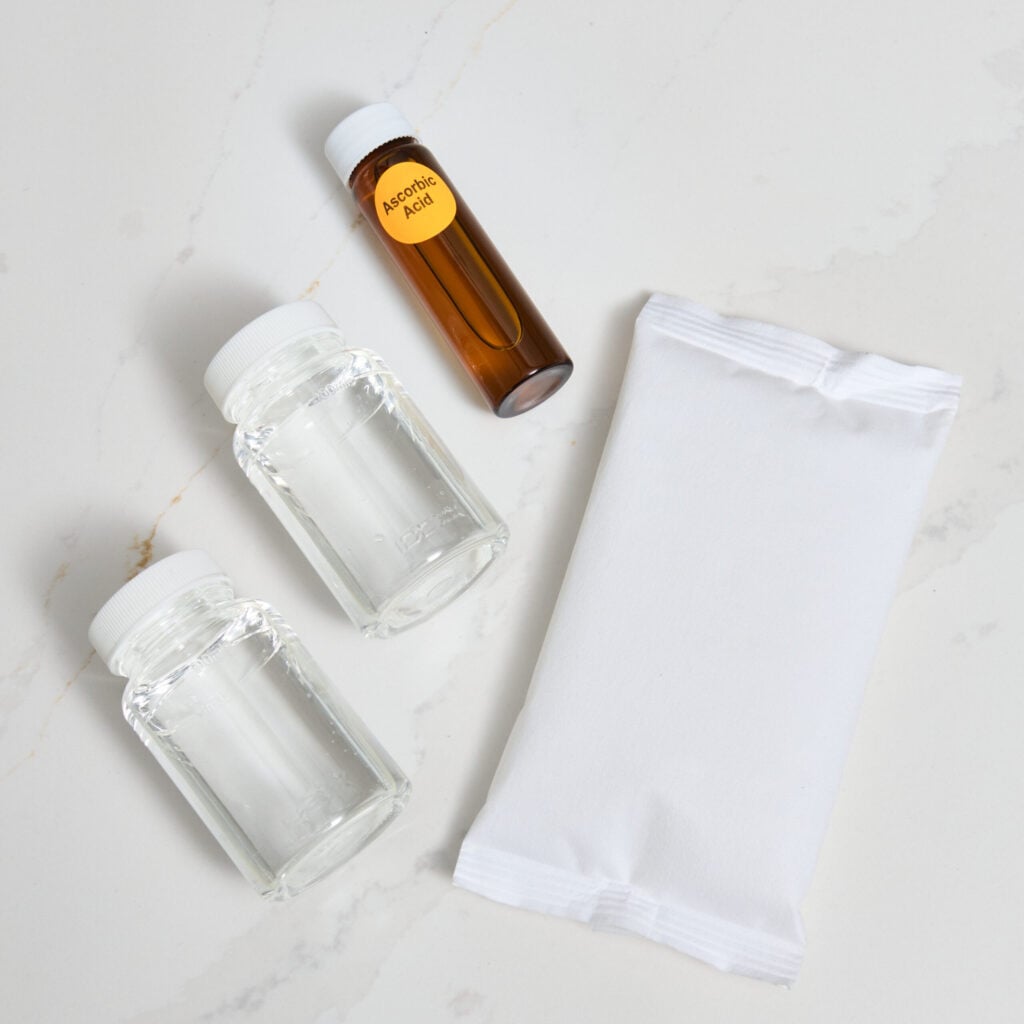
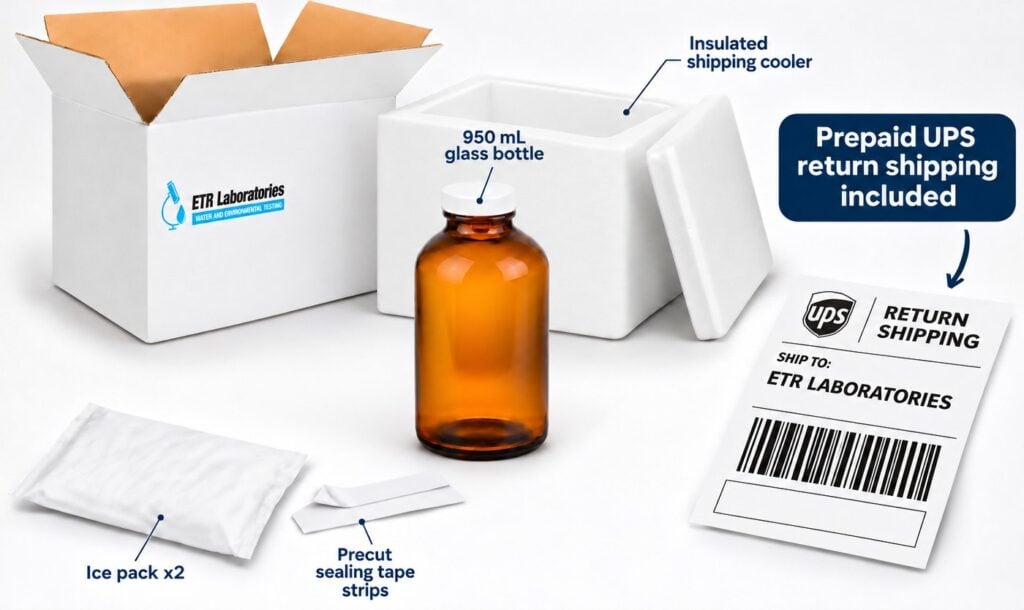
The appropriate sample containers are provided with sterility and sample volume requirements taken into consideration.
A short form to fill out with basic information about your water source. This helps our lab technicians process your results accurately.
A pre-paid return shipping label is included — just drop the sealed package in any mailbox or hand it to your mail carrier. No extra cost.

“The test was simple—collect a water sample from a faucet in the home. We sent the test to the lab and received a water quality analysis within a few days. The test included analysis of the water sample for the presence of: coliform bacteria, E. coli, iron, lead, pH, turbidity, and nitrates/nitrites.”
Taylor L.
“Incredible lab, they really care about their customers. As someone who doesn’t know a whole lot about water quality, they took their time to help me understand everything about my water quality situation.”
Brad R.
“I’ve used ETR for several tests, both water and air. The test kits are easy to understand and the reports are very comprehensive. But what really makes them stand out is their quality of service. There is a lot of terminology in these reports that I don’t understand, but their staff is very knowledgeable and always available to assist. They really take their time to review the results with you on the phone, and answer any questions you may have.”
John T.
4.8
Average Rating
across all platforms
500K+
Water Tests Sold
nationwide since 1995
342+
Reviews on Angi
verified homeowner reviews
We run every test inside our own lab in Leominster, Massachusetts. Your results come straight from us, not a subcontractor. That keeps our pricing fair and our quality consistent across every kit we send out.
Most labs stop at handing you a report. We do not. Every result comes with a free call to one of our water quality experts, so you understand what your numbers mean and what to do next.
ETR Laboratories has run water tests for over 30 years. We hold membership in the national Water Quality Association and the Massachusetts Ground Water Association.
Our reviews reflect the work we do. We hold a 4.8 out of 5 rating on Google, a 4.8 out of 5 rating on Angi from 342 reviews, and five-star ratings on Trustpilot.

Our Premium Water Test screens your water for 113 substances in one round, including bacteria, radon, heavy metals, and industrial chemicals, providing homeowners and landlords with a thorough assessment for peace of mind. We have run…
Scientists do not know yet. Studies on cells and animals point to possible effects on inflammation and immune response, but research on people is still early. Tiny particles have been found in human blood and tissue, which is why many health agencies are studying them closely. A baseline result lets you track your own exposure while the research catches up.
There is no agreed number. No federal limit exists, and public water systems are not required to test for plastic particles. The EPA's draft Contaminant Candidate List can lead to standards after years of study. Until then, people read their microplastics in water results as a baseline and work to lower the count over time. A lower count after a filter change is a good sign.
Yes, many can. Some home filtration systems have been shown to reduce microplastics, including very small particles, and our free consultation helps you decide on the appropriate filtration approach. Results vary with the filter, its condition, and how often cartridges are changed. A test before and after the filter is the most direct way to see how much it removes.
Often it is higher. A 2024 Columbia and Rutgers study found an average of about 240,000 plastic particles per liter of bottled water, roughly 90% of them nanoplastics. Some of those particles likely shed from the bottle and cap. Tap water also contains microplastics, and levels vary by source, so a test of both is the best way to compare.
Yes. Many customers use this test to compare a bottled brand with their tap water. The collection steps for bottled water differ from a tap sample, so please call us before you start and we will explain how to collect it. A test of both at the same time gives you a side-by-side comparison. Some customers retest the same brand later to see if it changes.
A first test sets your baseline. A retest makes sense after you install or change a filter, replace plastic plumbing or a storage tank, or switch water sources, since each can change your count. Some households also retest once a year to see if anything has shifted. Results from the same tap are the easiest to compare.
Boiling may help somewhat, but it is not a proven fix. A 2024 study found that boiling hard tap water and then pouring it through a fine filter removed a large share of small plastic particles, because the particles got trapped in the mineral scale that formed. The effect was weaker in soft water. Research is still early, and a before-and-after test is the clearest way to see what any step does for your water.
Yes, they can be. Groundwater is often expected to carry fewer particles than surface water, but studies have found microplastics in wells too, carried down from septic systems, fertilizers, and surface runoff. Plastic well casings, pipes, and storage tanks may add their own. Levels vary so much from one well to the next that a test of your own water is the only way to know your number.
No shared results. Our laboratory holds our clients privacy to the highest regard, your results and information will never be shared. Be aware that state certified laboratories may be required to report your results to various government agencies.