Free Shipping on Orders of $100 or More
Fast Turnaround Times
Ships free to your door
Takes under 5 minutes
Free return shipping
Expert Consultation
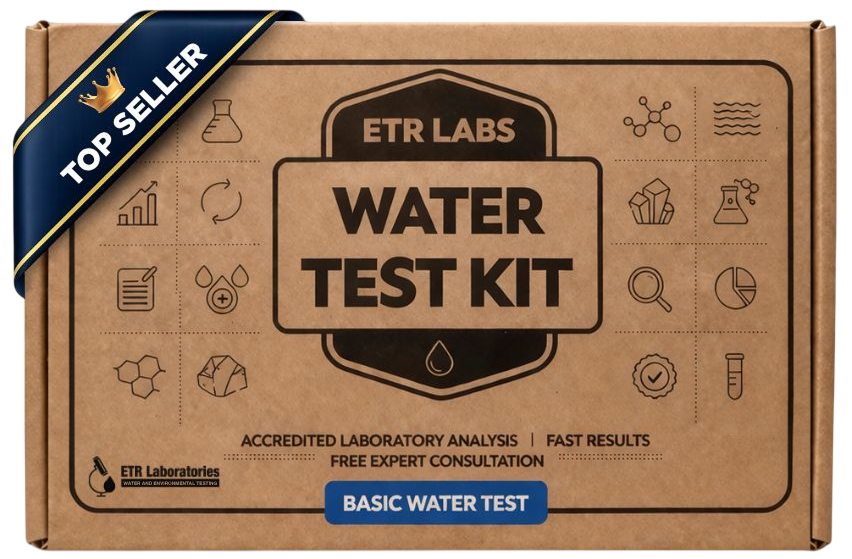
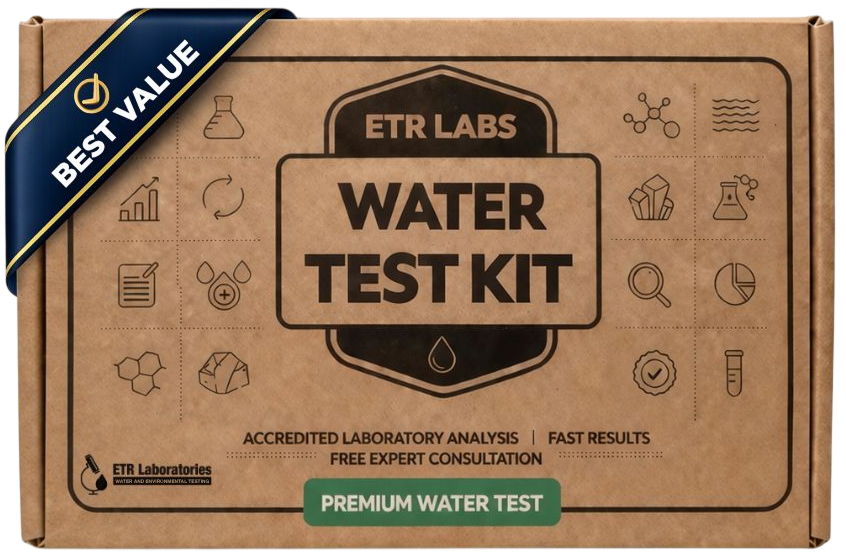
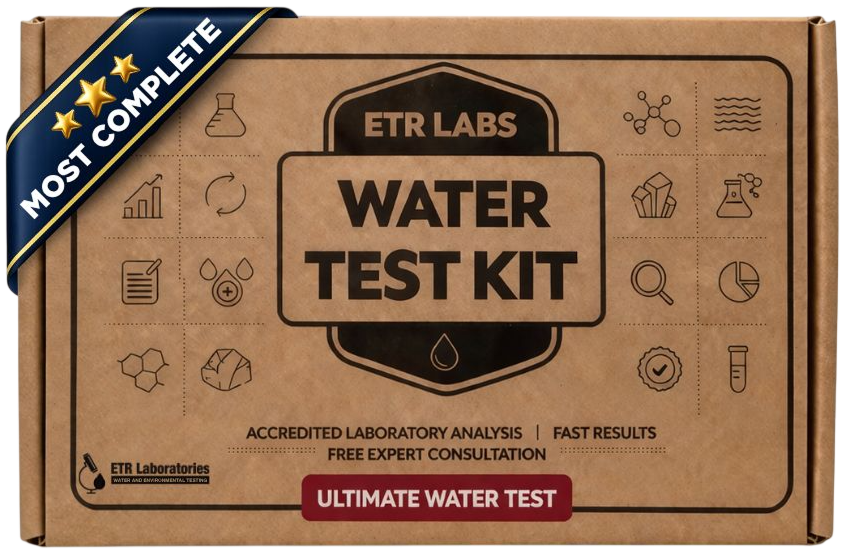
$415.00
$415.00
ETR Laboratories is accredited by ANAB for specific testing as listed in our scope of accreditation.
Minneapolis pumps about 21 billion gallons a year from the Mississippi River and delivers an average of 57 million gallons a day. Treatment includes lime softening that removes about 65,000 pounds of hardness daily, filtration at the Fridley plant through granular activated carbon or at Columbia Heights through ultrafiltration membranes, chlorine disinfection, fluoride, and a corrosion control additive meant to keep lead and copper from dissolving. The city runs about 500 tests a day on the system. Some of that water also leaves Minneapolis: seven suburbs, including Bloomington, Edina's Morningside area, Golden Valley and New Hope, buy it. Whichever side of the city line you live on, a kit from your own faucet adds a data point nobody else is collecting.
The Minnesota Department of Health reports that arsenic has been detected in about 40 percent of new wells drilled since 2008, and that about 10 percent of private wells exceed 10 micrograms per liter. Contractors have had to test new wells for arsenic since August 2008, but older wells often have no such record. Manganese is the other quiet one. MDH says it occurs naturally in groundwater statewide, with some groundwater above its guidance of 100 micrograms per liter for homes where an infant drinks tap water, and 300 for everyone else. MDH describes no clear pattern across much of the state, so a neighbor's result is a weak guide to yours. Testing the well you actually drink from is the only reliable answer.
The Minnesota Pollution Control Agency estimates that about 365,000 tons of road salt are applied in the Twin Cities metro area each year, and cites a University of Minnesota study finding that about 78 percent of winter maintenance salt either reaches groundwater or stays in local lakes and wetlands. The agency reports that 27 percent of monitoring wells in the metro's shallow aquifers exceeded EPA drinking water guidelines for chloride. Monitoring wells are not household wells, and deeper aquifers are better protected, but a shallow or older well close to roads, parking lots or a salted driveway is the kind of well that deserves a mineral panel. Chloride is also a number you can trend from year to year.
Max substances in Ultimate panel
Money-back guarantee
Expert consult every order
“The test was simple–collect a water sample from a faucet in the home. We sent the test to the lab and received a water quality analysis within a few days. The test included analysis of the water sample for the presence of: coliform bacteria, E. coli, iron, lead, pH, turbidity, and nitrates/nitrites.”
“Incredible lab, they really care about their customers. As someone who doesn’t know a whole lot about water quality, they took their time to help me understand everything about my water quality situation.”
No shared results. Our laboratory holds our clients privacy to the highest regard, your results and information will never be shared. Be aware that state certified laboratories may be required to report your results to various government agencies.