How ETR Laboratories Tests Your Water, Step by Step
Water testing ads usually talk about the kit in your
Water testing ads usually talk about the kit in your mailbox. The part that decides whether your result is right happens later, on a lab bench you never see.
At ETR Laboratories, the water testing process runs in five stages: intake and chain of custody, sample preparation, instrument analysis, quality control review and reporting. Good results also depend on what happens before the sample arrives, since a poorly collected or late sample limits what any lab can do with it.
In this article, we walk through each stage inside our lab, what it checks and how it makes your report more reliable.
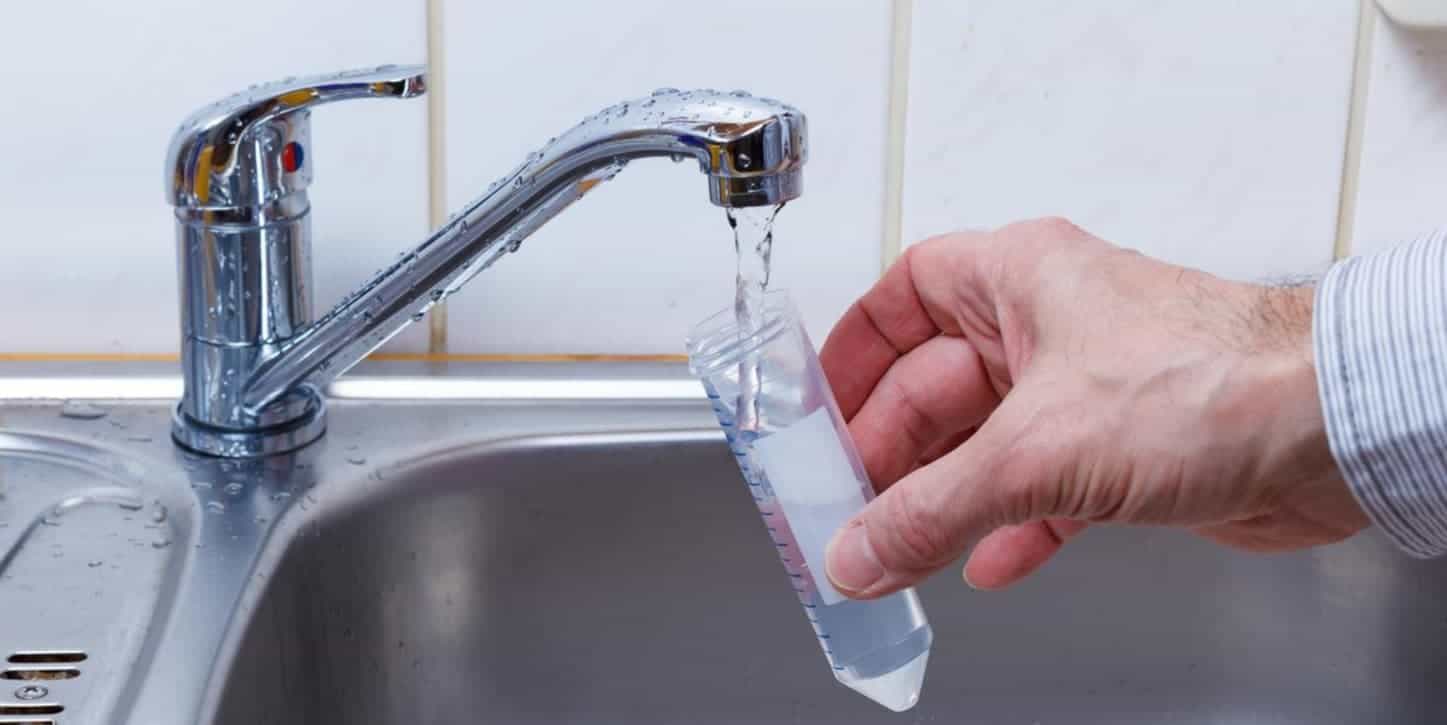
The water testing process starts at your tap, before the sample ever reaches us. How you prepare the faucet, fill the bottles, complete the form and ship the box all shape whether the sample arrives in usable condition.
Here is what each step protects against:
A contaminated or late sample can produce a misleading result, or no usable result at all. Our sample collection instructions give the exact procedure for each bottle, and the lab side begins as soon as your box arrives.
The first thing we do is log your sample and check its condition. A technician records when it arrived, confirms the bottles match the form and checks details such as temperature and how long ago the sample was collected.
Holding time is the limit on how long a sample can wait before analysis. Bacteria samples have one of the shortest windows, and under EPA drinking water rules, compliance samples for coliform bacteria must be analyzed within 30 hours of collection. That short clock is why prompt shipping comes up so often.
Intake also starts the chain of custody, the signed record of every person who handled the sample. Our guide to chain of custody water testing explains when that record needs to hold up for a legal or real estate purpose. At this stage we also confirm that the sample and its paperwork meet the requirements for the tests you ordered, and only then does it move on to preparation.
Preparation gets each portion of your sample ready for its specific test. One kit can hold several bottles, and each bottle goes to a different part of the lab.
Metals samples are often preserved with a small amount of acid so the metals stay dissolved until analysis. Some samples are filtered, and bacteria bottles are handled under sterile conditions so nothing new gets introduced.
Some tests need special handling before the bottle is even filled. A first-draw lead sample has to be the first water out of a tap that sat unused for at least six hours, which is why it comes with its own instructions. Our guide on how to test for lead in water covers that method in full.
With the portions prepared, each one goes to the instrument built for its contaminant group.
No single instrument tests water for everything. Different contaminants need different analytical methods, so one sample may run through several instruments depending on the panel you ordered.
Here are the main instrument classes and what each one measures:
Labs follow published procedures for each of these tests, and the EPA keeps a list of approved drinking water analytical methods. Bacteria and chemical tests follow very different timelines, which the next two sections explain.
Bacteria testing depends on growth, so it takes time. In membrane filtration, the lab passes a measured volume of water through a fine filter that traps bacteria, then places the filter on a nutrient medium and incubates it.
After roughly 24 hours, the colonies that grew are counted. That incubation period is why a bacteria result cannot come back the same day, while some chemical readings finish in hours.
Metals and chemical tests measure concentration directly. ICP-MS can detect many metals at parts per billion, and ICP-OES, a related method, handles higher concentrations of minerals like calcium and iron.
Every method still has a detection limit, which is the lowest level it can reliably find. As an illustration, if a report lists arsenic as not detected with a reporting limit of 1 part per billion (ppb), the lab did not find arsenic at or above 1 ppb. A smaller amount could still be present, so the reporting limit column deserves a close look.
Before any of those numbers reach you, they have to pass quality control.
Quality control is a set of checks run alongside customer samples to show the analysis worked as intended. When a check falls outside its expected range, results from that batch are reviewed before anything is reported.
Here is what each check does:
These controls are a large part of what accreditation assessors review. ETR Laboratories is an ISO/IEC 17025 accredited laboratory through ANAB, and our accreditation page explains how regular assessments verify our processes within our scope of accreditation.
We also keep a full-time quality control specialist on staff whose only job is reviewing this work. On top of that, we take part in voluntary proficiency testing that benchmarks our results against labs nationwide.
Curious what your own report will look like? Contact our team and we can walk you through a sample report before you order.
Reporting turns verified instrument data into a document you can read. Each result is listed with its unit, the lab’s reporting limit and the benchmark it is compared against, such as an EPA maximum contaminant level.
There is no single normal water test result. Your report covers only the parameters in the panel you ordered, and each one needs to be read on its own terms. For a line-by-line walkthrough, see how to read your water test report.
We email your report, usually within two to four business days, and send results only to you and anyone you authorize. Every order also includes a free consultation with a water quality expert who can explain what the numbers mean for your home.
Each stage of the water testing process protects the accuracy of the next, so a shortcut anywhere weakens the final number. Here is how the stages fit together:
Accreditation is your best outside check that a lab follows these steps. It gives independent evidence that the lab works under defined quality and technical requirements, though it does not guarantee that every single result is flawless. Our guide to what makes a water testing lab certified explains how to check a lab’s credentials.
A test also speaks only to what it measured. A clean report for bacteria and metals does not show whether your water contains PFAS, so it helps to match the panel to your concerns before you order.
Here are answers to the questions people ask most about our lab process.
At ETR, results are usually reported within two to four business days of the sample reaching the lab. Bacteria tests need about a day of incubation before colonies can be counted, while many chemical tests run faster. Some specialty tests may take longer.
The accreditation belongs to the laboratory. ETR Laboratories is an ISO/IEC 17025 accredited laboratory through ANAB, and that accreditation applies to the specific methods and analytes listed on our scope. You can confirm our status through ANAB or ask us for a copy of the scope.
If a sample arrives damaged, leaking or late, the lab has to decide whether it is still suitable for the tests you ordered. Some tests may still be possible, while others may need a new sample. Our team can explain your options if that happens.
The easiest way to see this process is to put your own water through it. Order an ETR water test and your sample goes through every step in this article, followed by a free consultation on your results.