
Free Shipping on Orders of $100 or More

Arsenic Speciation Water Test

$75.00

Our arsenic speciation test measures the two inorganic forms of arsenic in your water, arsenic III and arsenic V, as separate results. People usually order it after a standard test finds arsenic, because the two forms respond differently to treatment. It suits private well owners and water treatment pros who want to choose a filter based on what the water holds.

Speciation works best as a second step. It is most helpful once a total arsenic result has come back near or above 10 ppb. Arsenic III is common in deep, low-oxygen wells, so its share can be high even where the total looks modest. It earns its place when you are about to buy or adjust treatment, or when an existing system is not bringing your levels down as expected.

What is arsenic speciation?

This test splits inorganic arsenic into its two forms. Arsenic III (arsenite) is common in low-oxygen well water, while arsenic V (arsenate) tends to dominate in water that holds more oxygen.

Here is where arsenic in well water usually comes from:

  • Natural deposits in bedrock, the most common source
  • Old orchard pesticides in some areas
  • Industrial and mining sites

Many treatment systems remove arsenic V more readily than arsenic III, which is why the split shapes your plan. The EPA chemical contaminant rules page covers the federal arsenic rule, and our Arsenic Water Test confirms total arsenic first.

Is this test right for me?

This test fits you best when our lab has already found arsenic in your water and you are about to buy or adjust a treatment system. Knowing which form you have helps you and your installer avoid a filter that removes only part of the problem.

It is also useful if an existing arsenic filter is not bringing your levels down as expected. A high share of arsenic III is one common reason, and a speciation result can confirm or rule it out.

Well owners in areas with known natural arsenic, such as parts of New England and the West, often run this test after a first positive result. If you have never tested for arsenic, a total arsenic test is usually the better first step.

Shipping info

Orders of $100 or more ship free, and smaller orders ship for an $8 flat rate. Every kit includes a prepaid return label. Because arsenic III can slowly convert to arsenic V after collection, we suggest you collect and ship as soon as possible after sampling, ideally the same day.

Tested in Our Accredited Lab

We analyze your sample in our accredited lab, using established testing methods and quality controls.

We have tested water since 1995.

Free Expert Consultation

Every test includes a free consultation with one of our water experts. We go over your results with you, explain what the numbers mean for your home, and help you decide on the appropriate next step, including any filtration approach.

What does this test check for?
  • Arsenic III (arsenite), the reduced form often found in low-oxygen groundwater.
  • Arsenic V (arsenate), the oxidized form.

Results are reported in parts per billion. The EPA limit of 10 ppb applies to total arsenic, so we look at both forms together when reviewing your report with you.

Order Kit

Ships free to your door
Collect Sample

Takes under 5 minutes

Ship to Lab

Free return shipping

Get Results

Expert Consultation

Order Kit

Ships free to your door

Collect Sample

Takes under 5 minutes

Ship to Lab

Free return shipping

Get Result

Expert Consultation

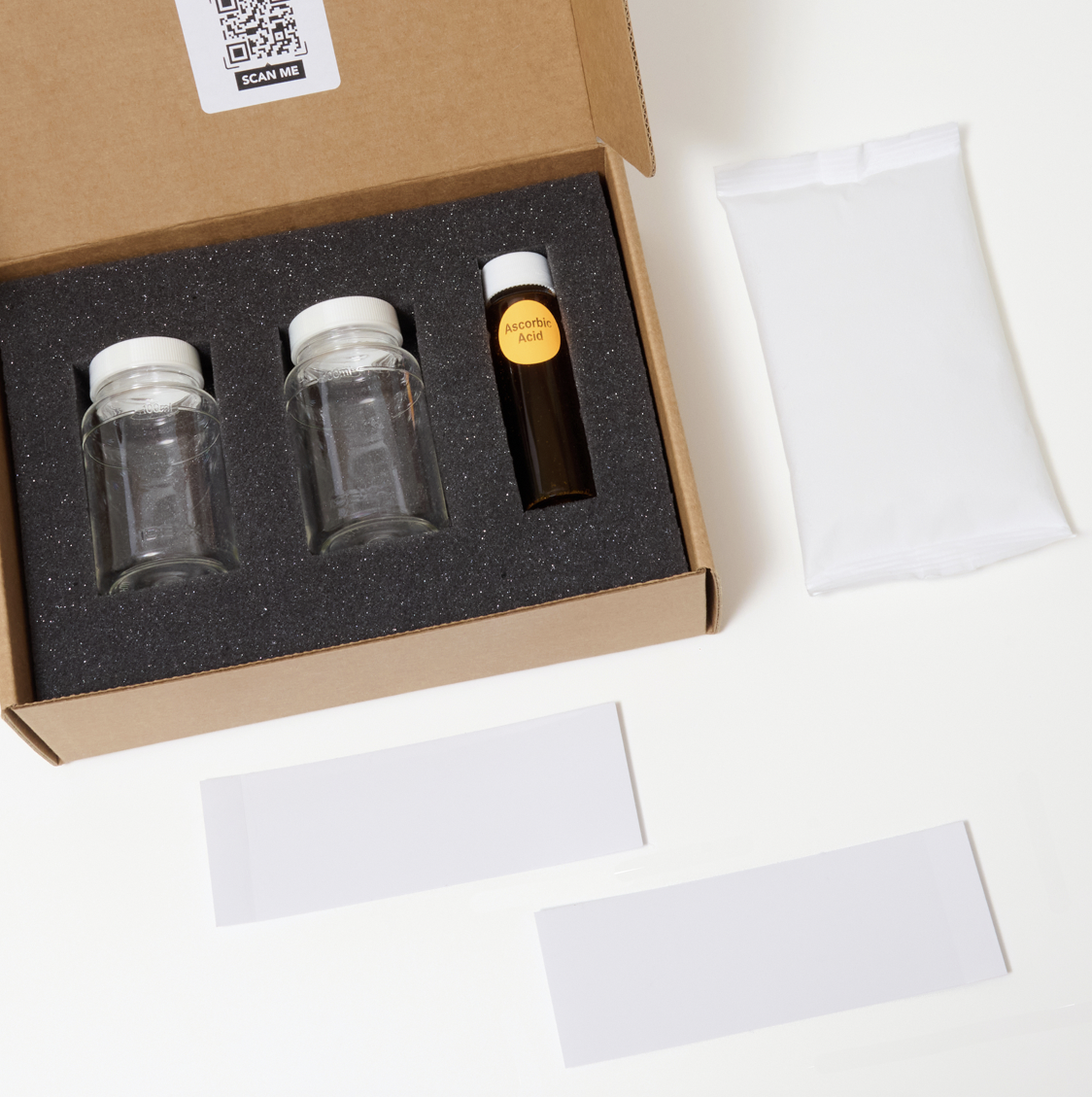
What’s Inside Your Testing Kit?

Sampling Instructions

Every test comes with step-by-step instructions on how to prepare your water source, collect your water sample, and prepare your sample for return shipment to our lab.

Collection Bottles

The appropriate sample containers are provided with sterility and sample volume requirements taken into consideration.

Sample Information Form

A short form to fill out with basic information about your water source. This helps our lab technicians process your results accurately.

Prepaid Shipping Label

A pre-paid return shipping label is included — just drop the sealed package in any mailbox or hand it to your mail carrier. No extra cost.

Our Reviews

★★★★★
ANGI

“The test was simple—collect a water sample from a faucet in the home. We sent the test to the lab and received a water quality analysis within a few days. The test included analysis of the water sample for the presence of: coliform bacteria, E. coli, iron, lead, pH, turbidity, and nitrates/nitrites.”

Taylor L.

★★★★★
TRUSTPILOT

“Incredible lab, they really care about their customers. As someone who doesn’t know a whole lot about water quality, they took their time to help me understand everything about my water quality situation.”

Brad R.

★★★★★
GOOGLE

“I’ve used ETR for several tests, both water and air. The test kits are easy to understand and the reports are very comprehensive. But what really makes them stand out is their quality of service. There is a lot of terminology in these reports that I don’t understand, but their staff is very knowledgeable and always available to assist. They really take their time to review the results with you on the phone, and answer any questions you may have.”

John T.

4.8

Average Rating

across all platforms

500K+

Water Tests Sold

nationwide since 1995

342+

Reviews on Angi

verified homeowner reviews

Why Choose ETR Labs to Test Your Water

Results You Can Trust

Accuracy is at the core of everything we do, and through strict quality standards and a commitment to scientific excellence, we deliver results you can trust.
 

No Middleman

We run every test inside our own lab in Leominster, Massachusetts. Your results come straight from us, not a subcontractor. That keeps our pricing fair and our quality consistent across every kit we send out.

Free Follow-Up Consultations

Most labs stop at handing you a report. We do not. Every result comes with a free call to one of our water quality experts, so you understand what your numbers mean and what to do next.

Respected Name in the Water Industry

ETR Laboratories has run water tests for over 30 years. We hold membership in the national Water Quality Association and the Massachusetts Ground Water Association.

We're Trusted by Our Customers

Our reviews reflect the work we do. We hold a 4.8 out of 5 rating on Google, a 4.8 out of 5 rating on Angi from 342 reviews, and five-star ratings on Trustpilot.

Our Recommended Test

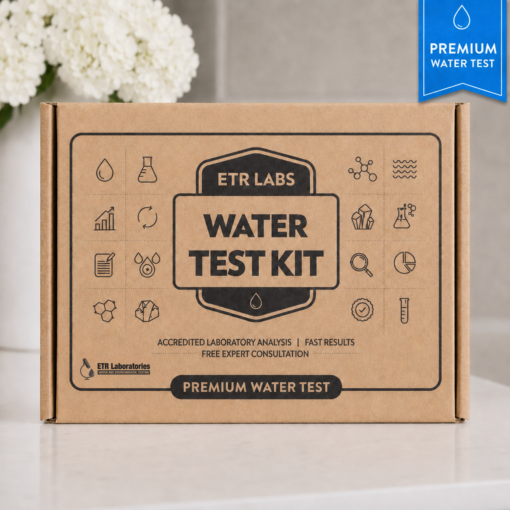
We recommendPremium Water Test

Premium Water Test

Our Premium Water Test screens your water for 113 substances in one round, including bacteria, radon, heavy metals, and industrial chemicals, providing homeowners and landlords with a thorough assessment for peace of mind. We have run…

  • Bacteria
  • Radon
  • Heavy Metals
  • Industrial Chemicals
  • Minerals & Water Attributes
$249.00

FAQs

Is arsenic in well water harmful?

Yes, over time. Long-term exposure to elevated arsenic is linked to skin, bladder, and lung cancers, as well as heart and blood vessel effects. Both inorganic forms are considered toxic. Arsenic has no taste, color, or smell, so our lab result is the only way to know your exposure, and short-term use of affected water is far less of a concern than years of drinking it.

How much arsenic in water is too much?

The EPA limit is 10 parts per billion (ppb) of total arsenic, which means arsenic III and arsenic V added together. That Maximum Contaminant Level applies to public water, and private well owners use it as a household benchmark. The EPA's health goal for arsenic is zero, so some households choose to treat levels below 10 ppb as well.

Is arsenic III more toxic than arsenic V?

Generally, yes. Arsenic III is usually described as the more toxic of the two inorganic forms, and it is also harder for many filters to remove. Both forms count toward the EPA limit of 10 ppb, though, so a high total calls for attention whichever form dominates.

How is arsenic III removed from well water?

Arsenic III is usually harder to remove than arsenic V, so it often needs a different setup than water that holds mostly arsenic V. Treatment options exist for both forms, and the right one depends on your levels and the rest of your water chemistry. Once your speciation report is in, our free consultation helps you decide on the appropriate filtration approach.

Does this test measure organic arsenic?

No. This test reports the two inorganic forms, arsenic III and arsenic V. Organic forms such as arsenobetaine come mostly from seafood and are generally considered low in toxicity, so they are rarely the concern in drinking water. If you need organic forms measured for research or another reason, please contact us before you order.

Do I need speciation if my arsenic is under 10 ppb?

Usually not. Speciation is most helpful when arsenic is detected near or above 10 ppb and you are planning treatment. If you have decided to treat a lower level anyway, knowing the form can still help you pick a filter that fits your water. A total arsenic test every few years is a sensible way to watch for changes in the meantime.

Can arsenic levels in a well change over time?

Yes. Total arsenic and the balance between arsenic III and arsenic V can both shift with the seasons, the water table, and how much the well is pumped. Oxygen levels in the aquifer play a big part, since low oxygen favors arsenic III. A treatment system sized from one old result may fall behind if levels drift. Retesting every year or two, and after any change to the well, keeps your plan matched to your water.

Does boiling water remove arsenic?

No. Boiling does not remove arsenic in either form, and it can raise the concentration slightly as water evaporates. That is worth knowing for cooking water, infant formula, and foods like pasta or rice that soak up a lot of water. If your total arsenic is above 10 ppb, bottled or treated water for drinking and cooking is a common short-term step. Our free consultation helps you decide on the appropriate filtration approach after that.

Statement of Confidentiality

No shared results. Our laboratory holds our clients privacy to the highest regard, your results and information will never be shared. Be aware that state certified laboratories may be required to report your results to various government agencies.